
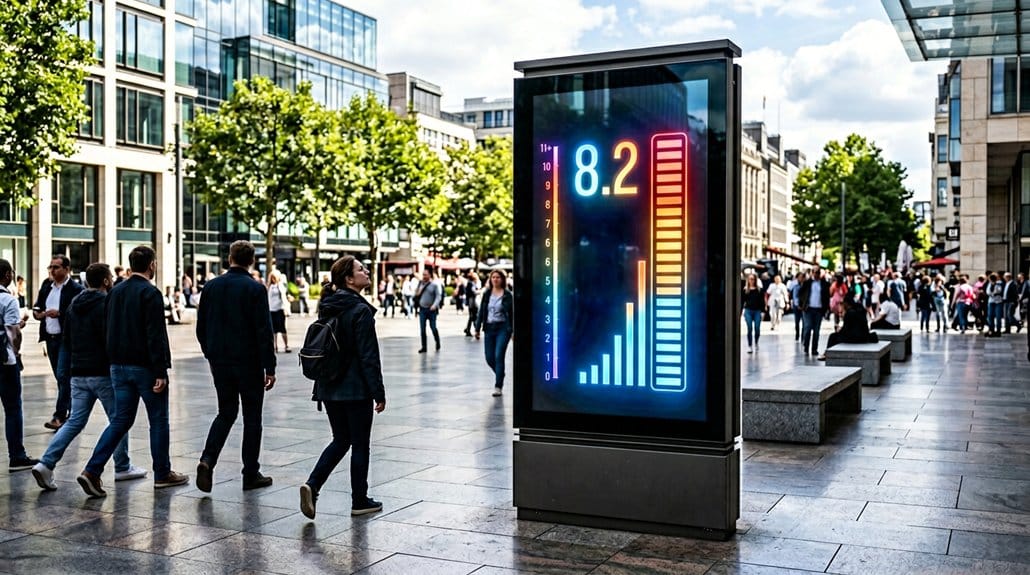
Utilizing UV Index data on digital signage boosts awareness by providing real-time updates that inform sun safety decisions. You’ll see how eye-catching graphics and dynamic messaging encourage protective behaviors, while interactive displays engage communities with educational content, especially in areas with fluctuating UV levels. Evidence suggests that displaying UV data can lower sunburn incidents by up to 30%. Discover how combining technology with community outreach enhances public understanding and fosters proactive health measures.
Key Takeaways
- Real-time UV index updates on digital signage guide community sun safety practices.
- Visual graphics and color codes enhance public understanding of UV risks and protective measures.
- Interactive displays engage the community, illustrating consequences and solutions for UV exposure.
- Digital signage informs outdoor activity planning and alerts during peak UV hours for higher awareness.
- Placement in busy areas supports visibility and impact of sun safety initiatives.
Enhancing Sun Safety Awareness With UV Index
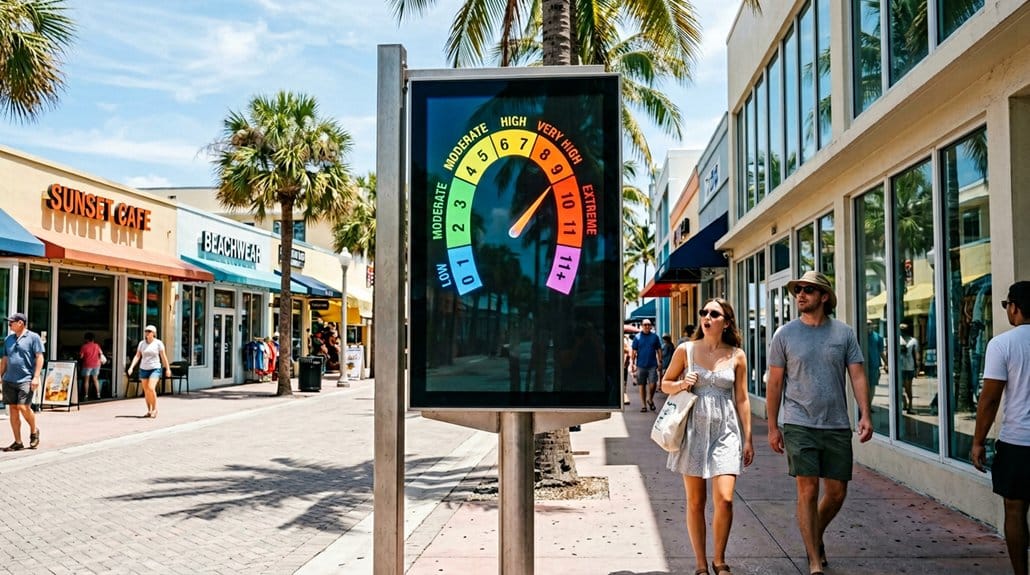
Although many people are aware of the dangers posed by prolonged sun exposure, leveraging real-time UV Index data enhances sun safety awareness by providing a precise measure of UV radiation levels. This data is essential for maintaining skin health, as it enables you to adjust your sun exposure habits dynamically. Public digital signage displaying these updates plays a significant role in community outreach. It effectively informs you and your community about dangerous UV levels instantly. By incorporating eye-catching graphics and alerts, digital displays drive compliance with sun safety guidelines, such as applying sunscreen or seeking shade. This increased awareness is vital in regions with high UV exposure, as it promotes behavioral changes that prioritize your skin health and protect against UV-induced damage.
Real-Time UV Index Updates Foster Sun Safety
Because understanding UV exposure is essential for skin health, real-time UV index updates on digital signage play an important role in fostering sun safety. By delivering immediate, actionable data, these updates influence individual behavior, prompting the use of sunscreen or protective clothing. In regions like New Zealand, where UV levels often exceed 10 due to a thinner ozone layer, such adjustments are vital. Integrating UV index data into public spaces has a notable community impact, promoting widespread sun safety awareness and reducing sunburn and long-term skin damage risks. Digital signage not only supports informed decision-making but also enhances public safety initiatives, creating an environment where sun protection becomes a collective responsibility, ultimately mitigating health risks effectively.
How to Educate Communities on Sun Exposure Risks

To effectively educate communities on sun exposure risks, use digital signage displays to present real-time UV risk assessments that engage viewers with interactive elements. Integrate factual, evidence-based messaging illustrating the consequences of UV radiation alongside strategic visuals showing protective methods, aiming to foster a richer understanding of sun safety. In addition, leverage these displays to boost community engagement through the promotion of local events focused on skin health, which can statistically reduce UV-related health issues by encouraging preventative practices.
Effective Sun Safety Messaging
Even in today’s digitally connected world, communities often overlook the critical importance of sun safety messaging. When digital signage displays real-time UV index readings, you gain an essential tool in health education regarding sun exposure. These systems inform you about current UV levels, promoting precise planning for outdoor activities. You can understand associated health risks like skin cancer, heatstroke, and premature aging, thereby prompting protective behaviors such as using sunscreen and wearing protective gear. By providing alerts during peak UV hours, especially for vulnerable groups like children and the elderly, these signs guide you to seek shade. Additionally, digital signage serves as a platform for promoting community events centered on sun safety, ensuring you stay engaged and informed.
Interactive UV Risk Displays
Although you might typically think of digital displays just as tools for advertising, they serve a crucial role in public health when repurposed as interactive UV risk displays. These displays deliver real-time UV index readings, offering invaluable interactive education for regions like New Zealand, where the UV index often reaches extreme levels. By featuring educational graphics and alerts on UV radiation’s harmful effects, these displays promote sun safety habits such as sunscreen application and protective clothing during peak UV hours. Through community outreach, people can scan QR codes on the displays for further information on reducing sun exposure. The dynamic updates and vivid visuals make these displays an effective tool in encouraging proactive behaviors, greatly bolstering community awareness and promoting sun protection strategies.
Community Engagement Through Technology
Digital signage, with its ability to display real-time UV index readings, serves as a powerful tool for educating communities about sun exposure risks. By integrating technology with community collaboration, these displays provide tailored information that highlights the dangers of high UV levels, such as skin cancer and prolonged exposure effects. They foster community engagement by sharing practical tips on sun protection: applying sunscreen, wearing protective clothing, and seeking shade. The integration of localized weather data with UV index guarantees that communities receive updates that are relevant, enhancing their ability to plan outdoor activities safely. Regular updates encourage a proactive culture of sun safety, promoting behaviors that reduce UV radiation risks and support community health awareness and public safety initiatives.
Driving Proactive Sun Safety Measures
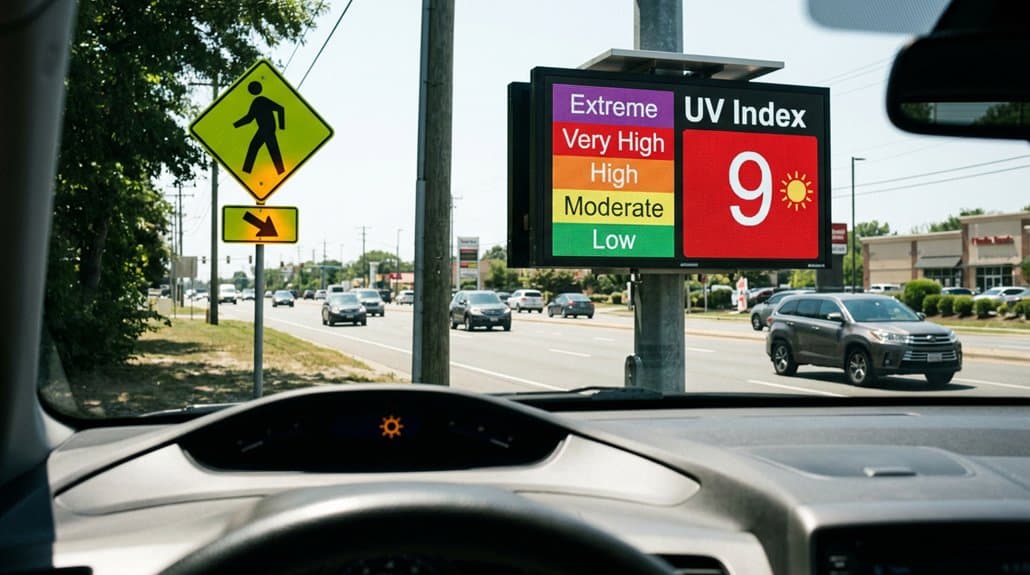
While the integration of real-time UV index data into digital signage displays serves as an innovative tool for driving proactive sun safety measures, its effectiveness lies firmly in its ability to provide immediate, actionable information to the public. Proactive messaging through these displays guarantees that individuals are informed about current UV levels, allowing them to engage in protective actions such as applying sunscreen or wearing hats. This approach not only enhances personal safety but also fosters community collaboration. By harmonizing municipal efforts with public awareness, digital signs contribute to reducing sun-related health issues, such as skin cancer. Additionally, localized UV index data aids outdoor event planners in recommending safety measures, guaranteeing both individual and community-level protection during periods of high sun exposure.
Integrating UV Index in Interactive Displays
Incorporating UV index data into interactive displays is transforming how communities address sun safety by delivering real-time exposure alerts directly to the public. These displays provide location based updates, ensuring users receive timely, accurate information about the UV levels specific to their area. Personalized alerts can notify individuals when they should seek shade or apply sunscreen, fostering healthier outdoor habits. By integrating localized UV index data, digital signage plays a pivotal role in public education on sun protection. This integration not only enhances community engagement but also contributes to public health campaigns. For outdoor businesses, UV index displays can influence customer behavior by indicating the safest times for outdoor activities, thereby optimizing foot traffic and promoting sun-safe practices.
Implementing UV Alerts in Busy Outdoor Areas
Incorporating UV alerts on digital signage in congested outdoor areas can substantially enhance public health awareness by informing you of high UV index levels in real-time. Research shows that these timely notifications enable you to adopt preventive measures, such as applying sunscreen or finding shade, thereby bolstering safety against UV radiation. Moreover, engaging the community with regular updates not only fosters better health practices but also strengthens the reputation of businesses as proactive participants in public wellbeing initiatives.
Improving Public Health Awareness
Deploying UV alerts on digital signage in bustling outdoor areas serves as an essential tool for enhancing public health awareness about the dangers of UV radiation. By focusing on health communication, these real-time displays elevate UV awareness, prompting immediate preventive actions. Evidence suggests these alerts can directly influence behaviors, reducing skin cancer instances through informed decisions. Here’s how they effectively contribute:
- Real-time information: They provide up-to-the-minute updates on UV index levels, allowing individuals to act when UV risks are highest.
- Behavior change: Sun safety behaviors such as wearing sunscreen or seeking shade are encouraged.
- Targeted messages: Content is tailored to specific locales, reaching both tourists and residents.
- Community health: Fosters local sun safety initiatives, promoting a proactive culture around UV protection.
Enhancing Safety Through Alerts
While enhancing public health awareness through UV alerts establishes a baseline, increasing safety demands strategic implementation in busy outdoor areas. UV safety initiatives can leverage digital signage displaying real-time UV indices to inform and protect the public. By utilizing timely alerts, you can effectively prompt passersby to adopt sun safety practices, such as wearing sunscreen and protective clothing, especially during peak UV hours. Evidence suggests that integrating these alerts into existing awareness campaigns helps mitigate the risk of sunburn and long-term skin damage. Data-driven signage offers immediate guidance, reducing health risks in high-UV regions like New Zealand. Ultimately, such initiatives not only enhance individual safety but also play a significant role in public health promotion through informed UV awareness.
Engaging Community With Updates
Captivate community attention and enhance public safety by implementing real-time UV alerts on digital signage in bustling outdoor spaces. These alerts serve as a significant digital strategy, fostering community involvement through timely, location-specific information.
- Enhance Awareness: Display real-time UV index, empowering the public to take immediate safety measures, especially in regions like New Zealand with a high UV index.
- Increase Engagement: Use engaging graphics and clear messages to effectively communicate UV risks, promoting proactive behavior.
- Leverage Localization: Combine UV alerts with local event info, maximizing content value and ensuring attention capture.
- Automate Updates: Utilize data integration for dynamic updates, adjusting notification urgency as UV levels change, ensuring the community receives pertinent information.
This strategy underscores a commitment to community safety through effective digital communication.
Boosting Health Campaigns With UV Alerts
When aiming to enhance public health campaigns, integrating UV alerts into digital signage stands out as a highly effective strategy. Using UV technology to display real-time UV index data, digital signage facilitates UV education by broadcasting alerts about hazardous UV radiation levels. Research indicates that proactive UV alerts can markedly reduce sunburn incidents—by up to 30%—by prompting preventive actions like applying sunscreen or wearing protective clothing. This strengthens the message of sun safety awareness and reduces the risk of UV-related conditions, such as skin cancer. Furthermore, digital signage reaches diverse audiences effectively, ensuring that essential UV education penetrates various community segments. The integration of UV alerts in public health initiatives fosters informed decision-making and promotes a healthier, sun-smart population.
Case Examples: Successful UV Index Usage
In discussing successful implementations of UV index usage, it’s noteworthy that digital signage displays consistently provide essential real-time information about UV levels, which can greatly improve public health outcomes. Several cases exemplify this integration, illustrating how these systems serve as crucial tools in health initiatives and community outreach.
- New Zealand’s Approach: Digital signage here addresses the region’s elevated UV risks with success due to ozone layer challenges.
- Outdoor Recreational Areas: Strategically placed signs alert visitors, fostering sun-safe habits like sunscreen use.
- Schools’ Role: Incorporating UV index updates on campus enhances students’ sun safety awareness, resulting in better health practices.
- Collaborative Campaigns: Partnerships between health organizations and municipal signage networks effectively educate communities, notably reducing skin cancer risks.
Success lies in strategic placement and context-specific application.
Practical Tips for Displaying UV Index on Digital Signs
Building on the successful use of the UV index in various settings, practical techniques for displaying this information on digital signs can significantly extend its impact. Confirm your digital signage utilizes high-brightness screens (2,500-4,500 cd/m²) to maintain visibility in direct sunlight, essential for enhancing UV awareness. Integrating real-time data feeds allows for precise UV index updates, keeping the content relevant and engaging. Time-of-day scheduling is crucial; increase display brightness and frequency during peak UV exposure to catch attention. Use simple graphics and color coding, like green for low and red for high UV levels, to deliver clear, actionable messages. These strategies improve public understanding, encouraging protective measures when UV levels surpass 3, reducing skin damage risk effectively.
Frequently Asked Questions
What Are the Benefits of Digital Signage?
Digital signage benefits you by offering content personalization that boosts audience engagement. Real-time updates guarantee timely communication, while high-brightness displays maintain visibility outside. Analytics tools measure performance, helping optimize campaigns and maximize your return on investment.
What Are the 7 Key Elements of Digital Signage?
Digital signage’s key elements include interactive content, real-time updates, audience engagement, design aesthetics, content management, location targeting, and analytics tracking. You’ll find these components essentials for effective communication, optimizing strategy, and personalizing messages based on precise data analysis.
How Do LED Display Signs Enhance Brand Visibility?
Think LED displays aren’t bright enough for brand visibility? Think again. LED technology enhances brand recognition and audience engagement with vibrant colors, reflective LCD for clearer visuals, and dynamic visual storytelling, ensuring your message cuts through any digital noise.
What Are the Best Practices for Digital Signage?
You’ve got to focus on content management and audience engagement for ideal digital signage. Use high-brightness displays, anti-glare coatings, and real-time brightness adjustments. These practices maximize visibility, guarantee reliable performance, and promote content effectiveness, engaging viewers consistently.
Conclusion
Imagine strolling through a sunlit park as digital displays, like vigilant sentinels, flash real-time UV index updates. These vibrant beacons transform awareness into action, guiding you to seek shade when UV levels spike. By weaving sun safety seamlessly into daily life through interactive signage, communities harness technology to drive proactive health behaviors. As you’ve seen, fostering sun safety through UV alerts not only informs but empowers, turning everyday strolls into informed decisions for better health.