
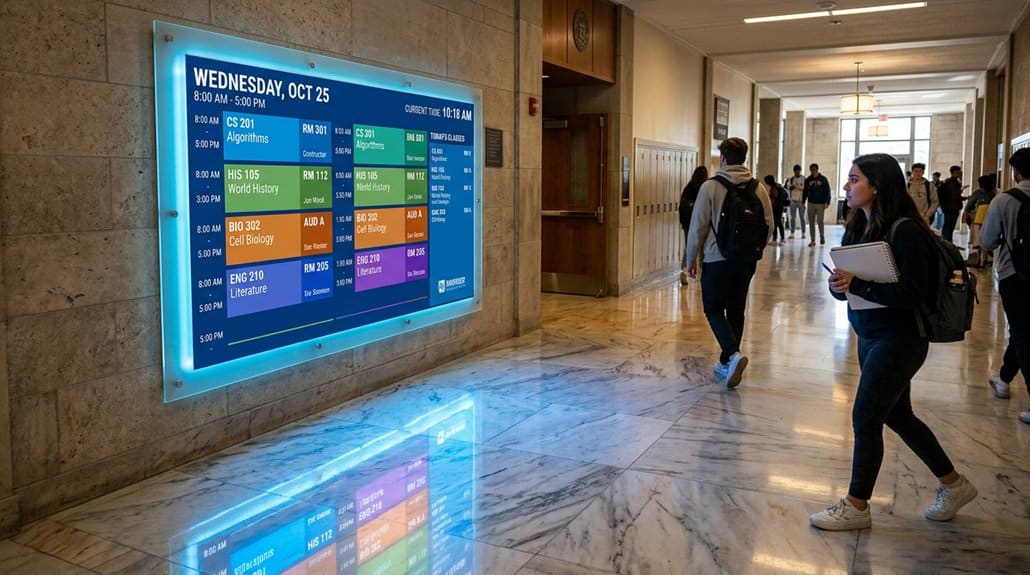
You’ll find digital signage essential for revolutionizing class schedule communication on campuses. It provides real-time updates, enhancing student accessibility and engagement while being environmentally friendly. These displays offer dynamic, interactive content, improving students’ academic experiences by reducing schedule confusion. With a centralized CMS and network reliability, content delivery is seamless and up-to-date. Learn how implementing these strategies results in increased satisfaction and improved information flow. Stay tuned for insights on optimizing digital signage deployment.
Key Takeaways
- Digital signage delivers real-time class schedule updates, reducing confusion from last-minute changes.
- Interactive displays enhance student engagement, increasing awareness and interaction with class schedules.
- Campuses use automated systems to provide consistent schedule updates through a centralized content management system.
- Touch-screen and QR code features promote accessibility and link students to additional online resources.
- Digital signage supports sustainable practices by minimizing the need for paper-based schedule communication.
Challenges in Traditional Class Schedule Communication
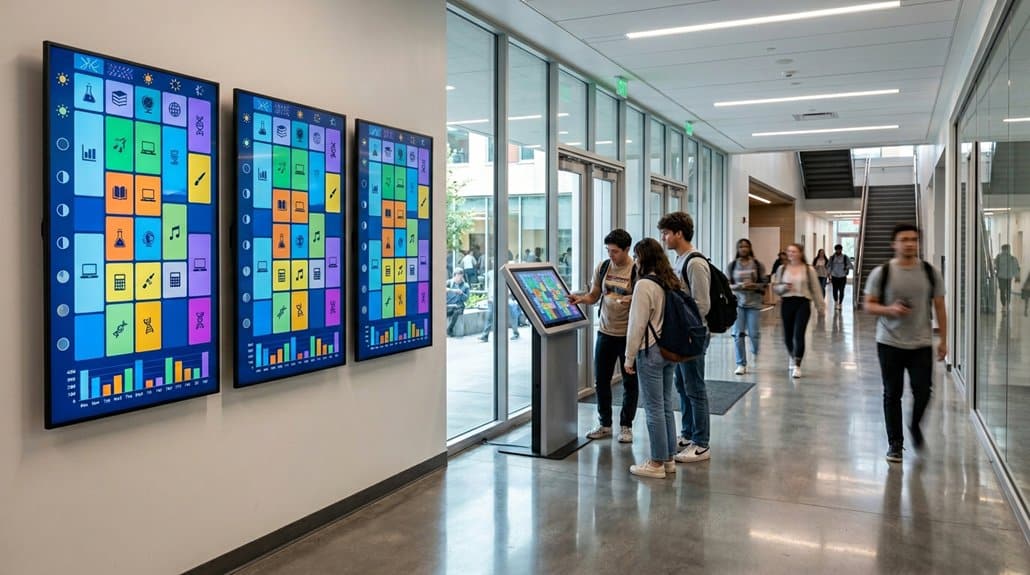
Traditional class schedule communication methods come with significant challenges. These methods often create communication barriers due to their outdated nature. Printed handouts or bulletin boards frequently result in information becoming obsolete, making it difficult for you to access updated class schedules promptly. Studies highlight that 70% of students face issues tracking changes, primarily because these methods foster information overload without clear organization. Finding the necessary details becomes cumbersome, especially for 40% of students overwhelmed by these traditional systems. In addition, the static nature of such postings doesn’t support real-time updates, leading to confusion and increased tardiness when last-minute changes occur. A lack of accessibility compounds these issues, as 25% of students struggle to find schedule information fitting their needs.
Why Digital Signage Is a Game-Changer for Class Schedules
Embracing digital signage for class schedules revolutionizes how students interact with their educational environments. By providing real-time updates, digital signage guarantees that students have instant access to the most current information, minimizing confusion about schedule changes or cancellations. Enhanced accessibility through interactive displays allows you to easily find your classrooms and stay informed about important announcements.
Moreover, digital signage promotes sustainability by reducing reliance on paper schedules. Visually appealing and dynamic, these displays capture attention more effectively than traditional methods, increasing student engagement and satisfaction.
| Feature | Benefit |
|---|---|
| Real-time updates | Minimizes confusion |
| Enhanced accessibility | Improves navigational ease |
| Visually dynamic displays | Boosts engagement and attention |
In essence, digital signage transforms the way you experience and manage your academic schedules.
Key Steps for Digital Signage Implementation
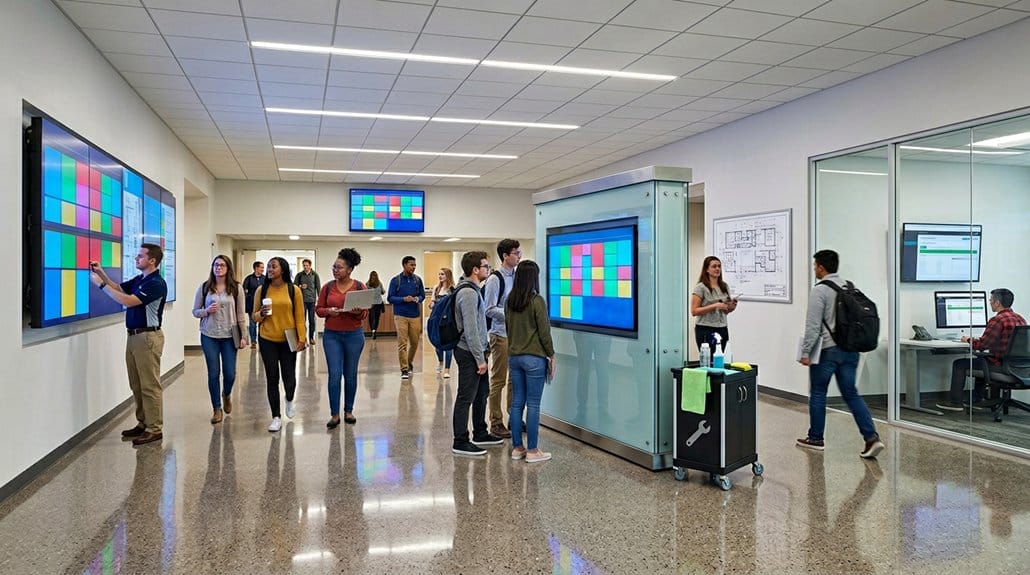
To successfully implement digital signage for class schedules, start by thoroughly evaluating the needs of both students and faculty to confirm the selected solution fits the campus requirements. Analyze how student feedback can inform system preferences and address specific challenges. Next, prioritize technology integration by selecting a centralized content management system (CMS) for consistent content updates across all displays. Make sure the CMS can integrate with existing campus systems like student information systems for streamlined, automated schedule updates. It reduces staff workload and enhances accuracy. Educate staff and student volunteers on these technologies’ use to facilitate seamless operations. Finally, regularly conduct assessments to gather feedback, refine the digital signage system, and continuously enhance user experience and functionality on campus.
How Interactive Displays Boost Student Engagement
Implementing digital signage efficiently sets the stage for enhancing student engagement through the use of interactive displays. These displays capture students’ attention with their visual appeal and dynamic content. By offering real-time updates on class schedules and events, they make it easy for students to stay informed. Interactive displays boost student interaction, resulting in a 30% increase in student usage of displayed information and a 25% uptick in participation in extracurricular activities. Touch-screen capabilities invite spontaneous engagement, allowing you to explore class offerings and access campus resources effortlessly. In addition, features like QR codes or links to online resources facilitate deeper learning, encouraging students to quickly find additional information and potentially enhance their academic performance.
Solutions to Common Deployment Issues
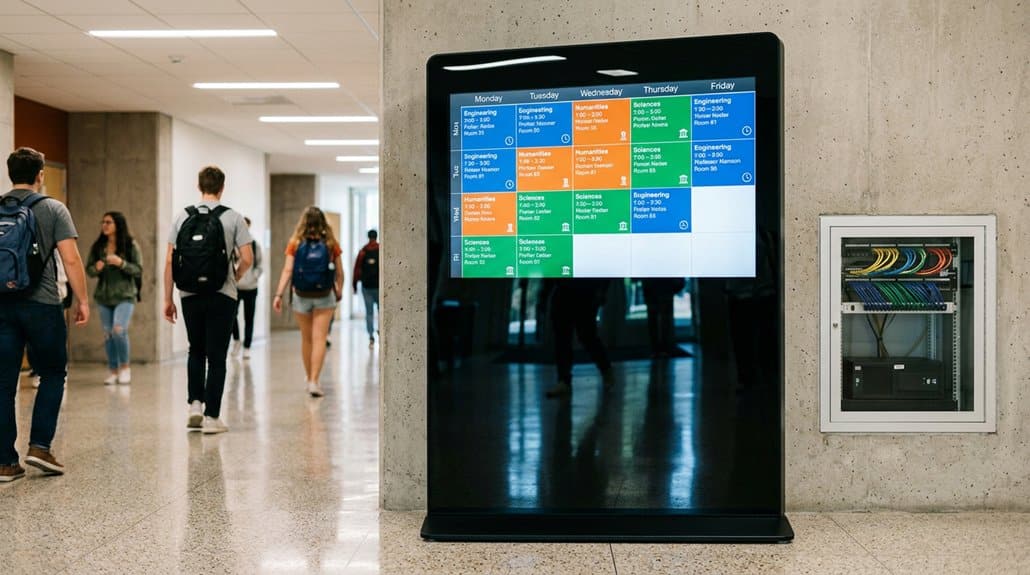
While deploying digital signage on campus offers immense benefits, it’s vital to address common deployment issues to guarantee a smooth implementation. Ensuring network reliability is paramount. A robust network infrastructure enables seamless content delivery, keeping class schedules, room changes, and announcements up-to-date. Overcome integration challenges with existing campus systems by selecting signage software that supports strong API capabilities. This facilitates hassle-free synchronization with systems like the student information systems and learning management systems (LMS).
Address content management difficulties by employing a centralized content management system. Such a system allows personnel to update and schedule content efficiently across multiple displays from one interface. Regular maintenance and timely software updates are critical to prevent equipment failures, reducing downtime and maintaining uninterrupted information flow to students.
Frequently Asked Questions
What Is the #1 Least Educated State?
West Virginia is currently recognized as the least educated state based on education statistics, with a low percentage of residents holding a bachelor’s degree or higher, similar to Mississippi’s challenges in educational attainment and resource accessibility.
What Are the 7 Principles of Education?
You’ll find the 7 principles of education emphasize learner engagement and teaching methodology. They focus on active learning, assessment, objectives, diversity, feedback, and community. Engaged education energizes learners by employing effective, equitable, and empirical techniques.
What Are 5 Causes of Slow Learning?
You’re facing slow learning due to cognitive overload, learning disabilities like dyslexia, stress and anxiety, a lack of motivation, and insufficient foundational skills. These factors can hinder information retention and processing, affecting your academic performance.
What Is the Biggest Problem in Education Today?
The biggest problem in education today is balancing accessibility issues and engagement challenges. You must address technology integration, curriculum alignment, and resource allocation effectively to enhance student motivation and guarantee equitable access to quality education for all.
Conclusion
With digital signage, campus communication is transformed, providing real-time updates that enhance student engagement by 25%. Imagine traversing hectic hallways with ease, as interactive displays guide you seamlessly to your next class. Implementing this technology resolves common scheduling bottlenecks, ensuring that everyone stays informed and on time. By embracing digital signage, you’re not just adopting a tool—you’re elevating the educational experience, ensuring clarity and connection in a bustling academic environment.