
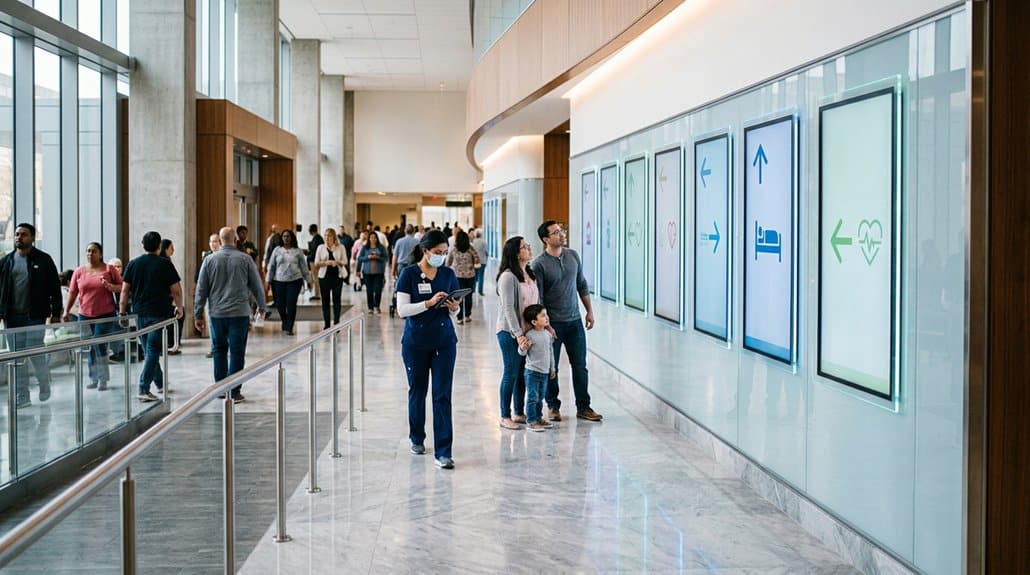
You might not realize that hospitals use digital signage for wayfinding by employing real-time interactive maps and multilingual support. This technology enhances navigation, personalizes patient journeys, and reduces anxiety with clear, updated directions. You’ll find that cloud-based systems offer dynamic updates, ensuring accurate guidance and a seamless experience. In addition to improving efficiency, these solutions prioritize inclusivity, supporting diverse populations through multilingual features. Discover how trust is built with technology-driven solutions as you explore further.
Key Takeaways
- Digital signage provides real-time interactive maps for efficient hospital navigation and reduced patient stress.
- Multilingual digital displays support diverse populations, ensuring accessible and inclusive wayfinding for all users.
- Cloud-based platforms enable instant updates and synchronized displays for accurate and dynamic route information.
- Personalized interactive displays integrate with health records for customized patient greetings and accurate routing.
- Clear, real-time directions and soothing visuals reduce anxiety and minimize staff interruptions.
Enhancing Hospital Navigation With Digital Signage
Maneuvering a hospital can be a challenging task, but digital signage transforms this experience into a more manageable one. With real-time interactive maps, these displays greatly enhance user experience by improving navigation efficiency in complex hospital layouts. Multilingual capabilities further guarantee that diverse patient populations, including non-English speakers, can find their way without difficulty. By reducing stress and confusion, digital wayfinding aids in minimizing late arrivals and prevents unnecessary disruption of medical staff. Strategically placed digital signage, designed to be highly visible to all users, including the elderly and individuals with disabilities, promotes inclusivity. The integration with cloud-based content management systems means the information is always current, swiftly reflecting any changes in the hospital’s internal layout or department locations.
Personalizing Patient Journeys Through Interactive Displays
Building on digital signage‘s ability to enhance hospital navigation, personalizing patient journeys through interactive displays represents the next frontier in patient experience. With customized greetings based on appointment types or history, these displays add a thoughtful touch right from the start. Interactive wayfinding systems, when integrated with electronic health records (EHR), guarantee that all routing information remains accurate, guiding you seamlessly from check-in to your intended destination. Multilingual capabilities further enhance patient engagement by making navigation accessible to diverse populations. By minimizing confusion, these displays allow healthcare staff to focus on delivering quality care rather than fielding directional queries. Ultimately, adopting personalized interactive displays in healthcare not only improves the navigation experience but also enhances the overall patient journey.
Lowering Patient and Visitor Anxiety With Digital Solutions
Interactive wayfinding technology equips you with real-time, step-by-step directions, reducing the stress of traversing complex hospital environments. With access to timely information on route changes or temporary closures, you can make informed decisions quickly, minimizing any feelings of uncertainty. Additionally, these systems offer multilingual options to accommodate diverse language needs, further alleviating anxiety by ensuring clear communication.
Interactive Wayfinding Technology
Maneuvering complex hospital environments can be an overwhelming experience, but interactive wayfinding technology dramatically eases this process by offering real-time maps and step-by-step directions. By utilizing wayfinding apps, patients and visitors enhance their spatial awareness, effectively traversing through intricate hospital layouts. These solutions accommodate diverse populations with multilingual signage, ensuring language barriers don’t heighten anxiety.
Digital wayfinding minimizes late arrivals, reduces staff interruptions, and allows healthcare professionals to concentrate more on delivering patient care. Additionally, displaying soothing visuals alongside navigational information on wayfinding displays helps foster a calming atmosphere within the hospital. Reports indicate hospitals adopting these technologies see elevated patient satisfaction and lower visitor stress. Interactive wayfinding technology stands as a pivotal tool in modern healthcare environments.
Real-Time Information Access
When guiding through a hospital, real-time information access through digital wayfinding displays greatly reduces anxiety and confusion for both patients and visitors. These digital systems offer precise location accuracy, ensuring users receive accurate navigation within complex hospital layouts. Multilingual options and user feedback capabilities enhance the experience for diverse populations, simplifying navigation and fostering inclusivity. Interactive displays offer step-by-step directions and real-time updates on appointments, promoting on-time arrivals and eliminating the stress of late check-ins. Additionally, displaying expected wait times manages visitor expectations, considerably lowering anxiety in waiting areas. Calming visuals and positive health messages contribute to a soothing atmosphere, enhancing patient comfort. Embracing digital solutions dramatically improves hospital visits, providing clarity and reassurance to all involved.
Making Wayfinding Inclusive With Multilingual Support
Integrating multilingual support into wayfinding displays is essential for guaranteeing that diverse populations can navigate environments like hospitals with ease and confidence. By prioritizing cultural awareness and an accessibility focus, digital signage can serve non-English speakers and those with limited language skills effectively. Incorporating multiple languages into your signage can greatly reduce confusion and stress, particularly in high-pressure situations like emergencies. Hospitals with these systems often see improved patient satisfaction due to the inclusive atmosphere they foster.
Interactive displays offer users the option to select their preferred language, enhancing user engagement. Additionally, including symbols and visual aids alongside multilingual text guarantees comprehension across various literacy levels, further promoting inclusivity. Adopting these features can transform patient navigation into a seamless experience.
Using Cloud Platforms for Consistent Wayfinding Updates
By utilizing cloud platforms for wayfinding, you can achieve centralized content management that guarantees all digital displays across the facility are synchronized with real-time map adjustments. This approach helps you efficiently provide multilingual support, catering to diverse visitors without any hassle. With cloud-based systems like Samsung VXT, you can update navigational information instantly, minimizing confusion and enhancing the visitor experience.
Real-Time Map Adjustments
Though rapidly changing environments often bring uncertainties, digital wayfinding displays have harnessed the power of cloud-based platforms like Samsung VXT to offer precise real-time map adjustments. You can benefit from dynamic routing and contextual mapping, which provide immediate responses to layout changes or service updates. This guarantees that you’re directed through the most efficient paths while considering ongoing alterations.
Real-time updates reduce confusion, guaranteeing timely arrivals with step-by-step navigation. In addition, integration with appointment systems means personalized guides for each visit, considerably easing your navigation experience. By offering multilingual support, the system guarantees inclusivity—navigating diverse patient needs effectively. Automated cloud solutions maintain accuracy by promptly reflecting current information, like temporary closures, enhancing overall patient satisfaction with adept navigation.
Centralized Content Management
Leveraging cloud platforms like Samsung VXT for centralized content management enhances the efficiency and accuracy of wayfinding updates in healthcare facilities. This advanced content strategy allows for instant signage updates, guaranteeing real-time accuracy across multiple displays. Cloud solutions minimize discrepancies, save resources, and improve user engagement by reducing reliance on physical updates. Consistent branding and messaging across all signage reinforce trust and facilitate seamless navigation.
| Feature | Benefit |
|---|---|
| Real-time updates | Guarantees current, accurate information |
| Multilingual management | Supports diverse patient demographics |
| Consistent branding | Reinforces trust |
| Resource allocation | Frees staff for patient care |
| User engagement | Enhances navigation experience |
Centralized management is crucial for maintaining consistent, effective wayfinding systems in hospitals, guaranteeing patients and visitors navigate without confusion.
Multilingual Navigation Support
Extending from centralized content management, multilingual navigation support in healthcare facilities leverages advanced cloud platforms to maintain consistent wayfinding updates. By integrating bilingual signage benefits, these platforms enable real-time updates, guaranteeing patients and visitors get accurate and timely directions regardless of language barriers. Interactive kiosks offer multilingual support, providing step-by-step navigation, thereby enhancing accessibility and reducing confusion.
With cultural sensitivity awareness, healthcare environments can tailor wayfinding solutions to meet diverse linguistic needs, creating a user-friendly experience for non-native speakers. Consistent updates across digital signage guarantee that even first-time visitors can navigate complex layouts without stress. Employing data-driven delivery, signage customization aligns with user language proficiency, improving overall engagement and satisfaction within healthcare facilities, and fostering an inclusive environment.
Empowering Patients Through Real-Time Wayfinding Tools
Real-time wayfinding tools are revolutionizing patient navigation in hospitals by minimizing confusion and enhancing efficiency. By offering interactive maps and step-by-step directions, these digital tools empower you, granting seamless navigation across complex hospital layouts. This empowerment translates into enhanced navigation efficiency, guaranteeing you reach appointments without unnecessary setbacks.
With real-time updates on routes and potential delays, your hospital journey becomes less stressful and more predictable. Multilingual options guarantee accessibility for diverse patient populations, enhancing your understanding and interaction with the hospital environment. By integrating QR codes, you can access navigation assistance directly from your smartphone, promoting independence and personalization in your healthcare experience. This efficiency not only aids you but also lets healthcare staff concentrate on crucial patient care.
Building Trust With Technology-Driven Wayfinding Solutions
As healthcare environments become more complex, the need for trust in navigation systems takes on paramount importance. Digital wayfinding solutions play an essential role in trust building by enhancing the user experience with interactive maps and step-by-step directions. By incorporating multilingual signage, they guarantee accessibility for all, improving the overall visitor experience. Real-time updates provide critical information on route changes or closures, minimizing stress and fostering a user-friendly environment. Integration with hospital systems offers accurate, timely data, reducing late arrivals and unnecessary staff disturbances. Enhanced visibility and usability further build confidence among patients and visitors, showcasing the hospital’s commitment to care. This seamless interaction fosters a positive perception, aligning technology-driven solutions with healthcare’s core mission of support.
Frequently Asked Questions
How Do Digital Wayfinding Systems Comply With Patient Privacy Regulations?
Guarantee digital wayfinding systems comply with patient privacy by obtaining patient consent and employing data encryption. You must prioritize securing sensitive information, following HIPAA regulations closely, to protect patients’ rights while seamlessly guiding them through healthcare facilities.
Can Digital Signage Systems Integrate With Existing Hospital Management Software?
Absolutely, digital signage systems can integrate with existing hospital management software. It’s as smooth as butter, enhancing user experience by ensuring system compatibility for seamless data flow and personalized content delivery across hospital platforms.
What Security Measures Protect Digital Signage From Cyber Threats?
To protect digital signage from cyber threats, you’ll implement robust encryption standards and maintain strong network security. Regularly update software and hardware, use firewalls, intrusion detection systems, and conduct vulnerability assessments to guarantee thorough protection.
How Do Digital Displays Accommodate Visually Impaired Individuals?
Digital displays accommodate visually impaired individuals by incorporating tactile feedback for easy interaction and audio navigation to provide verbal instructions. You’ll find these features enhance accessibility, ensuring a seamless experience for those with visual limitations.
What Is the Average Installation Cost of Healthcare Digital Wayfinding Systems?
The average installation cost for healthcare digital wayfinding systems varies between $20,000 to $200,000. Your installation budget depends on cost factors like system complexity, hardware quality, software integration, and customization requirements. Plan carefully to optimize expenditure and efficiency.
Conclusion
So, you’re traversing a hospital maze again, huh? Who knew getting lost could be so high-tech? Thanks to digital signage, you’re no longer just a wandering soul but an interactive explorer on a personalized journey. No need to panic, even if you only speak Klingon—there’s likely a translation for that. And, don’t worry about outdated directions; the cloud’s got your back with real-time updates. Welcome to the future of hospital navigation—one digital sign at a time!