
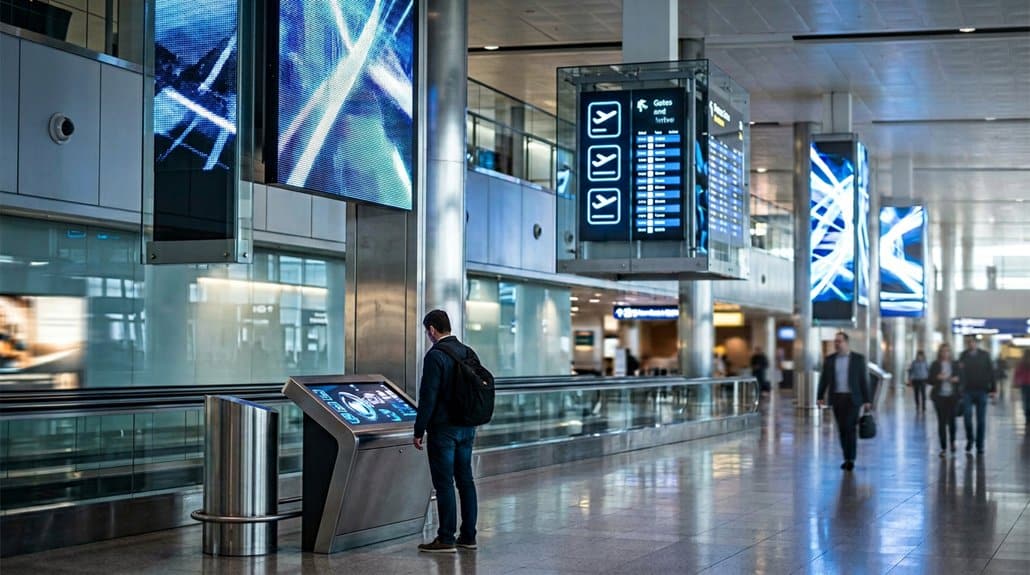
You’ll find digital signage in airports and transportation hubs essential for real-time updates. These systems streamline navigation by providing clear directions and intuitive interfaces. You’ll receive timely flight and transit updates, reducing anxiety. Digital signage boosts retail and dining experiences with targeted promotions, enhancing airport aesthetics while increasing revenue. Emergency alerts are rapidly broadcasted, ensuring passenger safety. Future trends focus on AI, AR, and sustainability in digital signage. Stay tuned for more insights.
Key Takeaways
- Digital signage provides real-time flight status updates, reducing passenger anxiety and enhancing airport operations.
- Interactive kiosks offer personalized navigation, guiding passengers to gates, lounges, and amenities.
- Displays broadcast emergency alerts quickly, ensuring rapid communication during critical situations.
- Signage integrates with mobile apps for seamless updates on flights and transit, improving passenger engagement.
- Advertising on digital signage directs passengers to retail and dining, boosting sales and revenue.
Why Digital Signage Is Essential in Airports
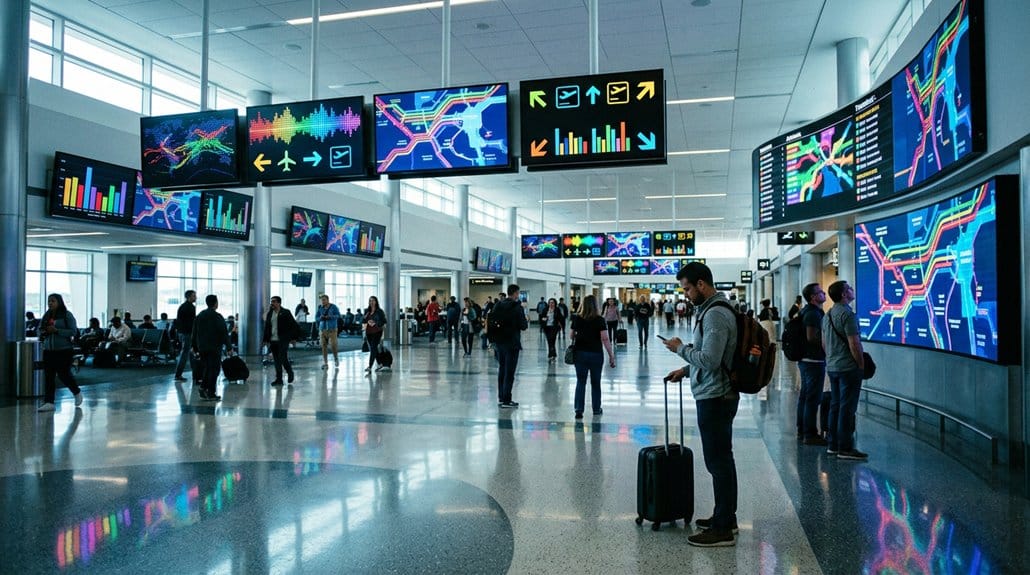
Although many travelers may overlook its role, digital signage is essential in airports for enhancing the overall travel experience. By leveraging visual communication, airports effectively engage passengers by providing real-time information on flight statuses, such as arrivals, departures, and gate changes. This timely dissemination of information helps reduce anxieties and keeps you informed, ensuring smoother shifts throughout your journey. Additionally, digital displays streamline communication by broadcasting vital announcements, minimizing reliance on often-missed voice announcements in noisy environments. They also promote passenger engagement by showcasing retail and dining options, which are strategically advertised near high-traffic areas to optimize airport revenue. The overall result is a more informed, engaged, and satisfied traveler, demonstrating the indispensable role digital signage plays in airport operations.
Streamlining Navigation With Digital Signage
Building upon the essential role digital signage plays in enhancing the travel experience, it also revolutionizes how passengers navigate airport environments. By deploying intuitive interfaces, digital displays engage passengers with real-time updates on vital information like flight changes and boarding times, greatly reducing confusion. These interactive elements are key for effective passenger engagement as they provide personalized directions to gates, lounges, or airport amenities via interactive kiosks. Strategic placement of clear digital signage throughout the airport simplifies navigation through complex airport layouts, directing you towards important areas such as check-in counters, baggage claim, and transportation options. Additionally, dynamic digital displays enable quick updates with emergency information, promoting a sustainable and efficient airport operation by decreasing reliance on printed materials.
Enhancing Flight Updates With Real-Time Signage
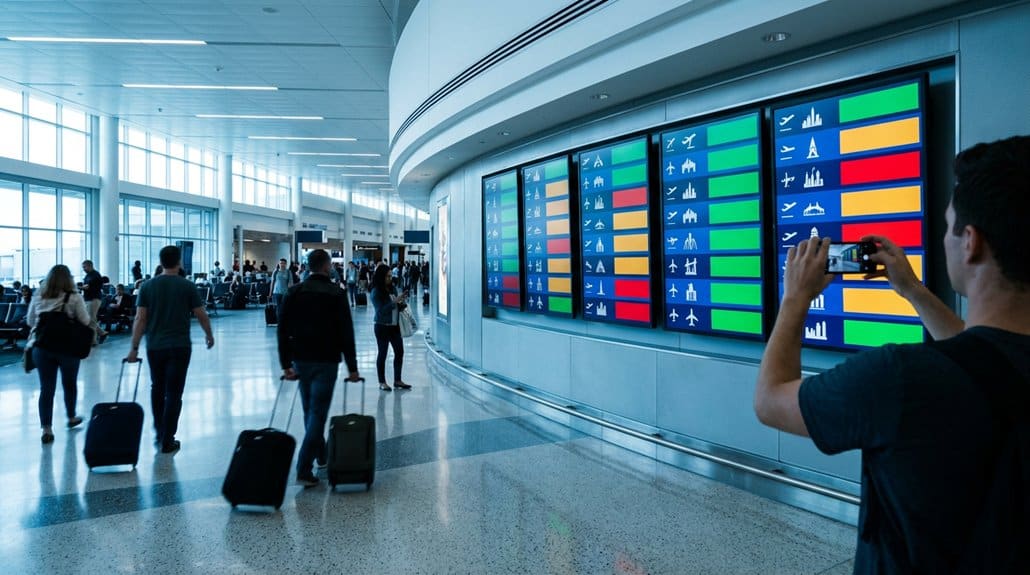
As airports endeavor to enhance passenger experiences, the integration of real-time digital signage for flight updates has become essential. These systems deliver immediate information on flight statuses, such as arrivals, departures, and gate changes, directly engaging passengers to minimize confusion. Through sophisticated dynamic content management systems, updates occur within seconds, ensuring you’re always informed with the latest data. Incorporating flight tracking, this responsive system effectively manages passenger flow, reducing wait times, essential in bustling hubs like Hartsfield-Jackson Atlanta. Often coupled with mobile apps and websites, passengers receive flight notifications on their devices, maximizing convenience and accessibility. This digital approach not only simplifies the experience but distinguishes airports prioritizing seamless passenger engagement and satisfaction from their competitors.
Boosting Airport Retail and Dining With Signage
With digital signage, you’re enhancing wayfinding and navigation by directing passengers to retail and dining locations with ease. Dynamic displays promote special offers and integrate real-time updates, ensuring travelers are aware of the latest promotions and changes. This approach not only streamlines the passenger journey but also maximizes retail and dining opportunities, ultimately boosting sales and customer satisfaction.
Enhancing Wayfinding and Navigation
While maneuvering through the complexities of modern airports, digital signage plays a critical role in enhancing wayfinding and elevating your overall travel experience. With innovative wayfinding technology at your fingertips, you can overcome navigation challenges effortlessly. These systems provide real-time updates on flight information and guide you to your gate or nearest service. Interactive displays strategically placed throughout terminals help you locate retail shops and dining areas, ensuring you maximize your time.
| Feature | Benefit | Impact |
|---|---|---|
| Real-time flight updates | Accurate gate directions | Reduces missed flights |
| Interactive maps | Easy navigation | Streamlines passenger flow |
| Location-based services | Tailored recommendations | Enhances customer satisfaction |
Promoting Special Offers
Maneuvering through an airport is just one part of the travel equation; enhancing your overall airport experience requires a focus on convenience and engagement. Digital signage is strategically placed to deliver targeted advertising across terminals. By showcasing special offers on retail and dining, this dynamic system captures passenger attention and influences up to 70% of travelers’ decisions on where to shop or dine. Airports can boost revenue enhancement by updating promotions in real time, tailoring them to seasonal demands and current passenger trends. Interactive displays provide detailed information about offers, menus, and discounts, sparking impulsive purchases while awaiting flights. By combining wayfinding with promotional content, digital signage helps guide passengers and increase foot traffic to nearby stores and eateries, maximizing profitability.
Integrating Real-Time Updates
Harnessing the power of digital signage with real-time updates in airports offers transformative benefits, enhancing the retail and dining experience for travelers. By integrating technology that provides prompt flight information such as delays and gate changes, you can reduce passenger confusion and anxiety. This technology integration doesn’t just stop at flights; interactive wayfinding screens direct you seamlessly to desired retail shops and dining options, boosting foot traffic. Dynamic advertising on these screens further drives passenger engagement by promoting real-time deals and menu highlights at airport restaurants and shops. The system’s rapid update capability allows for customized messaging based on passenger flow, optimizing satisfaction. Studies show airports utilizing such advanced digital signage achieve a 30% increase in customer satisfaction.
Using Digital Signage for Emergency Alerts
Digital signage systems play a critical role in airport safety by rapidly broadcasting emergency alerts to vast numbers of passengers, helping maintain order during crises. In the domain of crisis management and emergency preparedness, these systems are essential. They allow for:
- Real-time Updates: Emergency messages can be changed instantly, delivering immediate instructions on evacuation procedures or addressing flight disruptions.
- Integration with Systems: Digital signage syncs with alarms and weather alerts, ensuring cohesive and rapid information delivery across multiple displays.
- Enhanced Communication: By using visual and audio cues, digital signage improves message visibility, aiding passengers in comprehending critical information even in stressful situations.
Such systems enhance passenger safety by reducing confusion, thereby increasing compliance with safety protocols during emergencies.
Customization of Signage Across Transportation Modes
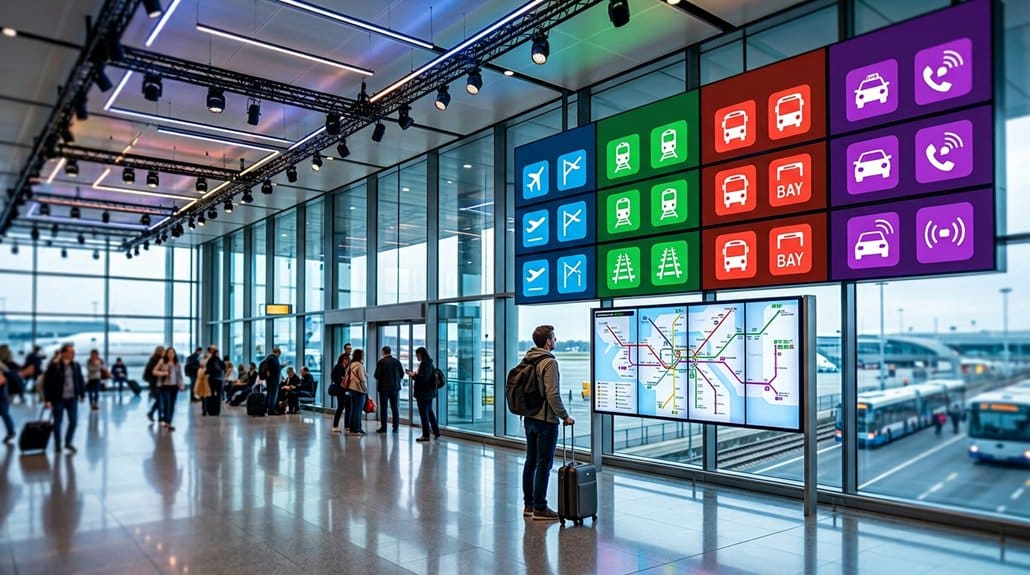
When customizing digital signage across various transportation modes, you’ll benefit from dynamic information display systems capable of real-time transit updates. These systems guarantee passengers receive timely notifications about their specific journey, optimizing both communication and navigation. Additionally, tailoring messages to individual passenger needs, including language preferences and accessibility requirements, enhances user experience and operational efficiency.
Dynamic Information Display Systems
Although dynamic information display systems are ubiquitous in modern airports, their ability to seamlessly customize signage for diverse transportation modes sets them apart. These systems use digital signage to guarantee passenger engagement by furnishing real-time updates on flight status, gate changes, and more. Through demographic customization, signage can be tailored to accommodate language preferences and travel statuses, vastly improving individual experiences. Here’s how you benefit from these systems:
- Passenger Engagement: Interactive kiosks guide you to terminals and amenities efficiently.
- Demographic Customization: Signage adjusts to suit specific needs, making your journey smoother.
- Operational Efficiency: By integrating with mobile apps, these systems deliver personalized notifications, streamlining your travel.
Such customization not only enhances user experience but also optimizes airport operations.
Real-Time Transit Updates
Seamlessly delivering real-time transit updates across multiple transportation modes, modern digital signage systems guarantee that you receive accurate and timely information at every stage of your journey. Tailored to enhance passenger engagement, these systems employ data analytics to integrate flight, bus, and train schedules, offering cohesive travel information. Aviation hubs use advanced software for automatic updates, cutting down manual intervention and ensuring instant communication.
| Mode | Update Type | Benefit |
|---|---|---|
| Flights | Status & Delay Info | Reduced Anxiety |
| Trains | Departure Platforms | Improved Engagement |
| Buses | Arrival Times | Enhanced Connectivity |
| All | Language Options | Greater Accessibility |
| Combined | Integrated Schedules | Seamless Changes |
Strategically positioned screens minimize confusion and aid navigation, contributing to higher customer satisfaction.
Personalized Passenger Messaging
Anyone traveling through modern airports will encounter personalized passenger messaging systems integrated across various transportation modes. These systems utilize travel personalization and demographic targeting to optimize your journey. Here’s how it works:
- Localized Content Delivery: Based on passenger demographics, digital signage offers content in multiple languages, ensuring effective communication across diverse travelers.
- Data Analytics: By analyzing travel patterns and behaviors, these systems customize messages and offers. You receive relevant promotions and updates tailored to your specific trip needs.
- Interactive Experiences: Touch screens and mobile apps enhance interaction by providing access to flight information, wayfinding, and essential travel alerts. Real-time updates adapt dynamically to changes like delays or cancellations, ensuring your travel information remains current and engaging.
Design Techniques for Engaging Airport Signage
Effective airport signage design is essential for ensuring smooth passenger navigation through bustling terminals. Prioritizing visual hierarchy is important; clear typography and high-contrast colors enhance readability, making essential information quick to absorb. Accessibility features, such as icons and images alongside text, cater to international travelers and those who may not speak the local language, enhancing comprehension across diverse audiences.
Digital signage in airports offers the benefit of dynamic content updates—important for conveying real-time information on flight status, gate changes, and weather conditions. Additionally, interactive digital displays can further engage passengers by offering wayfinding assistance and information on amenities, shopping, and dining options. Therefore, engaging airport signage combines these techniques to maintain awareness and reduce confusion in chaotic environments.
Optimizing Passenger Flow With Strategic Signage
To optimize passenger flow, you’ll find that strategically placed digital signage enhances wayfinding, effectively guiding travelers through high-traffic airport zones. By providing real-time updates on flight information and gate changes, these displays reduce congestion, allowing passengers to navigate terminals more efficiently. Interactive kiosks further aid in minimizing delays by offering tailored navigation assistance from check-in to boarding.
Enhancing Traffic With Wayfinding
While maneuvering the bustling environment of an airport, strategically placed digital wayfinding signage plays an essential role in optimizing passenger flow. The implementation of wayfinding technology enhances passenger engagement by providing clear directions to gates, lounges, and amenities. Interactive kiosks with digital maps empower you with real-time navigation, reducing the need for staff interaction and streamlining your journey. Surveys have shown that effective digital signage can boost customer satisfaction scores by up to 30% due to:
- Improved Navigation Efficiency: Directs you efficiently, minimizing confusion and reducing the possibility of missed flights.
- Real-Time Updates: Keeps you informed of any changes, ensuring timely gate arrivals.
- Self-Service Accessibility: Offers you autonomy with convenient self-navigation tools, enhancing your overall travel experience.
Reducing Congestion Using Displays
Amid the hustle and bustle of airport terminals, strategically deployed digital displays play a pivotal role in reducing congestion and optimizing passenger flow. By understanding passenger behavior, these displays use visual communication to guide travelers efficiently. Color-coded signs and concise messaging effectively manage movement through terminals, particularly during peak times, by directing passengers to the right gates and minimizing confusion and bottlenecks.
| Feature | Benefit | Result |
|---|---|---|
| Real-time flight info | Guides to correct gates | Decreases terminal congestion |
| Color-coded signs | Quick information grasp | Streamlined navigation |
| Interactive displays | Show wait times | Informs strategic decisions |
Airports have also noted a remarkable 20% congestion decrease when utilizing targeted digital signage. These dynamic systems facilitate smooth changes between security checkpoints and boarding areas, greatly enhancing overall efficiency.
Real-Time Updates for Travelers
In today’s rapidly changing airport environments, real-time updates delivered via digital signage are essential for maintaining efficient passenger flow. These displays provide timely passenger notifications on flight statuses, gate changes, and boarding times, keeping travelers informed with the latest details. Display adaptability guarantees information remains current despite any schedule alterations or operational delays, thereby optimizing passenger movement and reducing congestion.
The strategic implementation of such technology offers several advantages:
- Information Synchronization: Seamless integration with mobile devices provides personalized alerts, boosting passenger engagement and timely conformity to changes.
- Dynamic Adaptability: Displays adjust swiftly to real-time updates, maintaining clear communication during disruptions.
- Improved Experiences: By enhancing the accuracy and timeliness of updates, passenger satisfaction and compliance with airport protocols increase, refining the overall travel experience.
How Signage Tech Brings Everything Together
Digital signage technology revolutionizes airport operations by seamlessly integrating real-time data to provide essential flight and service information to passengers. Through effective signage integration, these systems dynamically display updates on flight status, gate changes, or baggage claim details, ensuring that you can navigate the airport with ease. The use of cloud-based platforms allows for instantaneous updates across multiple screens, creating immersive experiences for travelers by delivering consistent and accurate information.
Interactive wayfinding displays guide you through the complex airport layout, reducing confusion and enhancing your journey by offering personalized navigation. Equipped with analytics capabilities, digital signage also helps airports monitor passenger flow, enabling data-driven decisions for optimizing gate assignments and managing crowds. Besides improving aesthetics, these systems offer advertising opportunities, increasing revenue for airport operators.
Future Trends in Airport Digital Signage
As airports continue to innovate, the landscape of digital signage is set to expand with cutting-edge technologies. Here’s what’s on the horizon::
- AI Integration & AR Experiences: By employing AI Integration, airports can offer real-time information tailored to each traveler. Meanwhile, AR Experiences will guide passengers seamlessly with immersive, contextual navigation.
- Interactive Displays & Passenger Engagement: Terminals are set to embrace Interactive Displays, boosting Passenger Engagement by allowing travelers to access crucial information like flights and maps easily.
- Sustainability Initiatives & Cloud Management: Airports are prioritizing Sustainability Initiatives by implementing Energy Efficiency through LED virtual signage, reducing carbon footprints. Additionally, Cloud Management solutions allow for swift content updates across screens, enhancing emergency communication and operational announcements effectively.
These trends promise a transformative future for airport environments.
Frequently Asked Questions
What Is the Airport 45 Minute Rule?
The Airport 45 Minute Rule advises you to arrive at least 45 minutes before your domestic flight for smooth boarding procedures. It helps optimize passenger flow, ensuring time for check-in and security to prevent denied boarding.
Who Pays for TSA at Airports?
You pay indirectly for TSA funding through federal taxes and fees like the September 11th Security Fee on tickets. This supports airport security. Meanwhile, TSA receives its primary funding from federal government allocations and other grants.
What Is the Safest Airport in the World?
Imagine walking into a fortress of safety; that’s Hamad International Airport. With top-tier security features and exceptional passenger amenities, it’s globally recognized. It’s won awards for its unmatched safety measures, offering you unparalleled peace of mind during travel.
What Are the 4 Types of Airports?
You’ll find four types of airports: small airports for light operations, community airports offering limited services, regional airports with extensive facilities like international terminals, and commercial aviation airports, which handle major passenger and cargo activities.
Conclusion
In the dynamic world of airports, digital signage acts like a conductor in a symphony, orchestrating seamless navigation, timely updates, and enhanced retail experiences. It guarantees passengers move efficiently, stays informed, and can respond swiftly to emergencies. With the right design and strategic placement, these digital displays transform complex environments into user-friendly spaces. As technology advances, expect even smarter, more engaging signage to redefine airport experiences for travelers worldwide.