
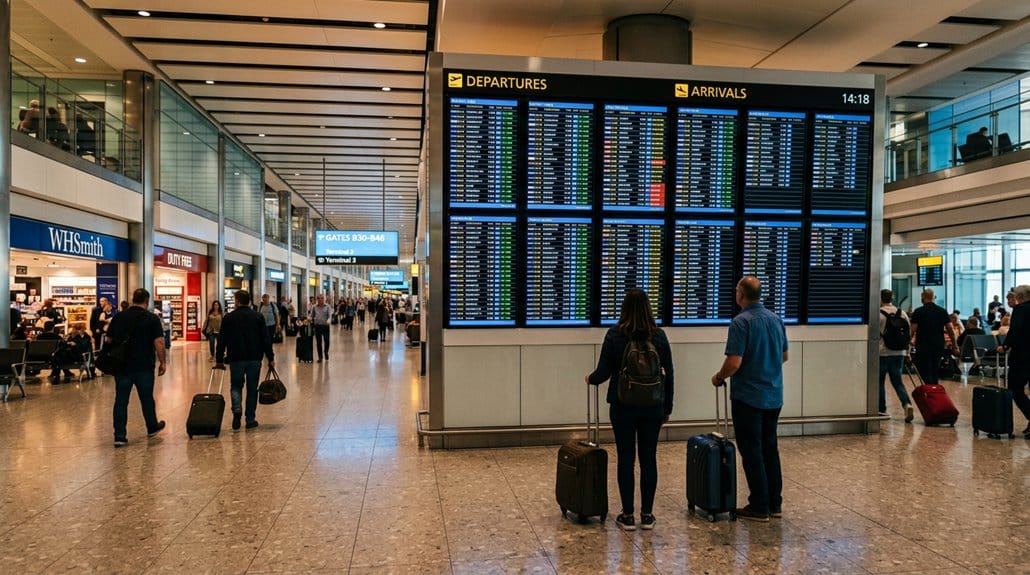
You’ll find digital signage in airports transforms your travel experience by offering real-time flight updates via centralized management. Instantly know about gate changes, delays, and essential alerts. These digital displays minimize confusion and bring vital information directly to you. With capabilities for instant updates, they reduce human error, ensuring you get accurate, timely details. Experience how digital signage keeps you informed and prepared throughout your journey, and discover how innovative technologies are reshaping today’s travel hubs.
Key Takeaways
- Digital signage provides real-time flight information in high-traffic airport areas, ensuring passengers receive critical updates promptly.
- Centralized management of digital signage systems optimizes the visibility and accuracy of flight data across the airport.
- Interactive kiosks and displays offer passengers instant access to flight updates, terminal maps, and gate information for improved navigation.
- Digital signage reduces passenger confusion by instantly communicating gate changes, delays, and critical updates.
- Airports use cloud-based digital signage for rapid deployment of flight updates, minimizing the need for physical resources and improving operational efficiency.
The Role of Digital Signage in Today’s Airports
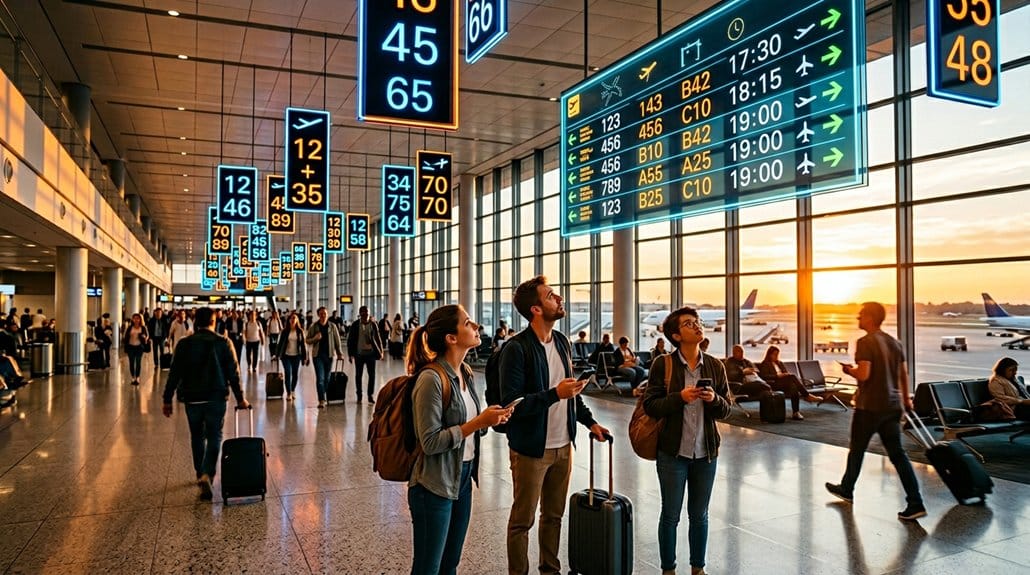
In today’s fast-paced airport environments, digital signage plays a pivotal role in guaranteeing a seamless travel experience. As part of the passenger journey, these systems enable digital transformation by offering interactive displays that enhance navigation and wayfinding. You can easily access touch-screen features to find gates, services, and amenities, integrating your physical journey with real-time digital information. This transformation spans beyond convenience; it includes strategically placed high-definition screens that improve communication and elevate customer satisfaction. Airports tap into digital signage not just for practical info but as an advertising platform, seamlessly merging with mobile apps and airport systems for consistent updates. This integration guarantees a modern travel experience, aligning your journey with technological advancements in the aviation sector.
Real-Time Flight Updates: How Digital Displays Deliver
When it comes to keeping travelers informed, digital signage excels in delivering real-time flight updates that enhance passenger awareness and reduce potential confusion. Airports rely on high-definition screens for effective flight data visualization, ensuring that information such as gate numbers, boarding times, and delays are immediate and accessible. With display layout optimization, these updates are shown in high-traffic areas, maximizing visibility.
| Aspect | Benefit | Technology Used |
|---|---|---|
| Real-Time Updates | Immediate flight info access | Centralized management |
| Visibility | High-definition displays | Strategic placement |
| Operational Efficiency | Minimizes confusion | Instant updates |
Enhancing Travel With Interactive Displays
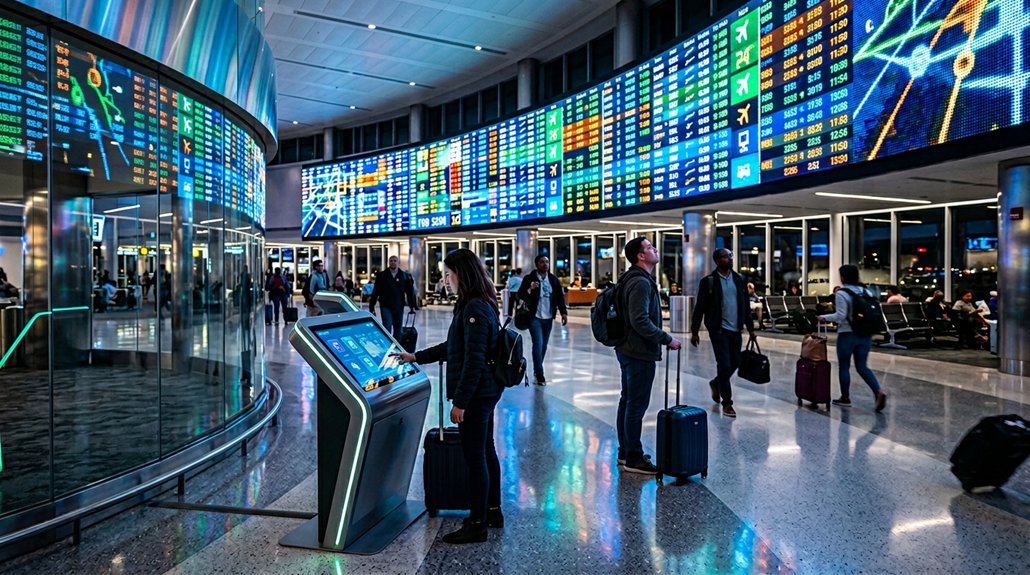
You’ll find that interactive digital displays transform travel by providing real-time flight information directly at your fingertips, enhancing communication and reducing uncertainty. With touchscreen technology, these displays offer an immersive experience, allowing you to effortlessly access essential data like terminal maps and gate updates. By integrating with mobile apps, they push timely notifications, ensuring you’re always informed and engaged throughout your journey.
Real-Time Flight Information
Imagine the efficiency of your travel experience when terminals are equipped with advanced digital signage offering real-time flight information. These displays provide live flight tracking, guaranteeing data accuracy by constantly updating on arrivals, departures, gate changes, and delays. With this system in place, you’re always informed, thereby enhancing your travel efficiency.
Interactive displays further enrich this experience by giving you access to terminal maps, amenities, and directions, optimizing your navigation within the airport. The high visibility of LED screens catches your attention with vivid, clear graphics that confirm you won’t miss critical updates. Coupled with mobile app integration, these systems deliver personalized updates directly to your smartphone, seamlessly connecting your digital signage experience to your personal device, boosting satisfaction and reliability.
Passenger Engagement Solutions
Following the success of offering real-time flight information, digital signage takes passenger engagement to a new level by utilizing interactive displays that enhance your travel experience. These cutting-edge displays go beyond basic updates, providing interactive navigation and wayfinding assistance, so you can easily locate gates, baggage claims, and amenities. They’re not just about directions; they provide dynamic content updates on gate changes or delays, guaranteeing you’re always in the loop.
The touch screens and kiosks allow you to explore dining options or shop promotions, enriching your journey. In addition, the integration of passenger feedback systems guarantees that your opinions shape future experiences. This holistic approach in digital signage technology elevates customer service, impacting your satisfaction and perception of the airport brand.
Emergency Alerts: Fast, Effective Communication
You’ll find that airports rely heavily on digital signage to guarantee real-time crisis updates reach passengers and staff without delay. These systems are designed to rapidly disseminate essential information, such as evacuation routes and immediate responses to security threats or natural disasters, enhancing overall safety. With integrated redundancy measures, you can trust that even in power outages or system failures, critical emergency alerts will stay accessible and operational.
Real-Time Crisis Updates
During an airport emergency, digital signage plays an essential role in disseminating real-time crisis updates, enabling fast and effective communication with passengers. Crisis communication aims to guarantee passenger safety by swiftly conveying vital information such as security threats, weather disruptions, or critical incidents. Digital signage technology allows emergency alerts to appear instantly on screens in multiple languages, addressing the diverse needs of travelers. This guarantees everyone remains informed and can act accordingly. Quick updates reduce confusion and anxiety, empowering passengers to make informed decisions during crises. Real-time digital signage not only streamlines information flow but also enhances public safety and operational efficiency. Studies confirm that keeping travelers connected through digital means considerably boosts their overall experience in unexpected situations.
Rapid Information Dissemination
Digital signage systems are essential in airport environments for the swift dissemination of emergency alerts, enabling passengers to receive vital information like flight statuses, gate changes, or unexpected delays in real time. Leveraging these systems notably enhances the passenger experience by ensuring information accessibility, particularly during emergencies like security threats or severe weather. Automation plays an important role, with airports integrating digital signage into systems that trigger consistent emergency notifications across multiple channels. This integration bolsters situational awareness and minimizes confusion by delivering instant, visible instructions without needing staff interaction. Research underscores the effectiveness of well-placed digital signs, as they boost passenger compliance with safety protocols, ensuring clear communication in high-stress situations and creating a more efficient and safer travel environment.
Immediate Benefits of Digital Signage for Airport Management
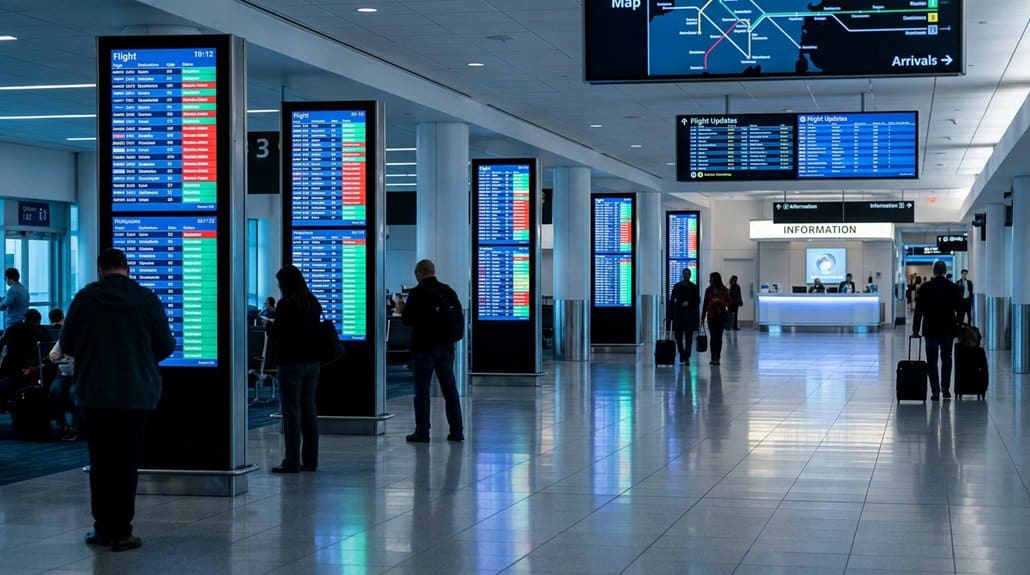
Airports see considerable advantages from the adoption of digital signage, with real-time communication of flight updates offering immediate benefits for airport management. By enhancing operational efficiency, digital signage reduces labor costs and minimizes human error. You can swiftly update flight details across multiple platforms, ensuring accuracy in passenger information, which boosts satisfaction and streamlines operations. The elimination of manual signage also contributes to cost reduction by lessening the need for physical resources.
Here’s a quick comparison between traditional and digital methods:
| Aspect | Traditional Signage | Digital Signage |
|---|---|---|
| Update Speed | Slow | Instantaneous |
| Cost | High | Lower |
| Information Accuracy | Prone to errors | Highly accurate |
Utilizing digital signage also allows for the integration of weather updates, further aiding passenger decision-making.
What’s New in Digital Display Technology?
Recent advancements in digital display technology are revolutionizing the airport experience with a focus on clarity, interactivity, and efficiency. High-resolution LED screens now offer crisp, vibrant visuals that greatly improve readability for passengers maneuvering through bustling terminals. Integrating touch technology into interactive kiosks empowers passengers with real-time flight updates and wayfinding assistance, enhancing your airport visit. Cloud-based systems provide centralized management of digital displays, ensuring consistency and reducing costs. Additionally, adaptive content powered by AI and machine learning delivers relevant information quickly, responding to changing conditions seamlessly. Smart lighting enhances these displays by improving visibility and energy efficiency. Responsive design allows digital signage to adjust layout and size, tailoring the viewing experience in diverse terminal configurations for ideal passenger engagement.
Success Stories: Airports Leading in Digital Innovation
Amidst the fast-paced environment of global airports, implementing cutting-edge digital signage systems spearheads an enhanced passenger experience. You see success stories in digital innovation emerge from key airports. Hartsfield-Jackson Atlanta, with over 900 digital signs, guarantees real-time updates for 100 million passengers each year. San Francisco International’s dynamic system synchronizes with flight displays, offering precision and visual allure within terminals. Meanwhile, London Heathrow’s responsive displays employ analytics to manage passenger flow efficiently. Miami International combines its app with signage for personalized notifications, keeping you informed on gate changes in real-time. Denver International integrates signage with interactive kiosks, streamlining your access to services and flight data.
| Airport | Technology | Benefit |
|---|---|---|
| Hartsfield-Jackson Atlanta | 900+ digital signs | Real-time flight updates for millions |
| San Francisco International | Dynamic system integration | Enhanced terminal aesthetics |
| London Heathrow | Responsive displays with analytics | Improved navigation |
| Miami International | Signage-app synergy | Personalized notifications |
Future Innovations in Digital Signage for Travel Hubs
As technology continues to revolutionize the travel industry, digital signage at airports is set to undergo significant advancements that promise to elevate passenger experiences. Imagine interactive screens offering real-time flight updates paired with interactive navigation, guiding you smoothly through busy terminals. With high-resolution LED panels, flight data remains clear and visible, regardless of lighting changes. AI-driven analytics analyze passenger behavior to deliver personalized experiences, ensuring communication is tailored to your preferences. Mobile connectivity enables you to sync flight information directly to your smartphone, offering seamless updates. Additionally, augmented reality (AR) could transform navigation, providing real-time, immersive guidance through complex airport layouts, optimizing your journey from check-in to boarding gate. These innovations redefine how you interact with travel hubs.
Frequently Asked Questions
Why Do Flight Attendants Sit on Their Hands When Taking off and Landing?
You’ll notice flight attendants seated during takeoff and landing to prioritize passenger safety and adhere to crew protocols. Their position, with hands in laps, guarantees they’re ready to respond quickly to emergencies while maintaining cabin order.
What Is the Airport 45 Minute Rule?
The 45-minute rule guarantees you’re checking in early for domestic flights. This airport communication strategy, supported by signage effectiveness, is essential for on-time departures, avoiding denied boarding, and smoothly guiding check-in, security screening, and boarding procedures.
Who Pays for TSA at Airports?
You’re contributing to TSA funding through ticket security fees, maxing at $5.60 per flight. Meanwhile, airport budgeting covers infrastructure expenses for checkpoints. Airlines and cargo companies also chip in, ensuring extensive support for TSA operations.
Can a Pilot Sleep While Flying?
Yes, pilots can sleep on long flights. During multi-pilot operations, pilot rest periods are permitted, allowing one pilot to nap while another manages in-flight duties. Regulations guarantee these rest breaks enhance alertness and safety.
Conclusion
In the ever-evolving world of airports, digital signage is your silent, reliable companion. Like the conductor of a symphony, it seamlessly orchestrates real-time flight updates, interactive maps, and emergency alerts with precision. This digital evolution not only manages chaos but transforms it into an efficient, user-friendly experience. With cutting-edge technology paving the runway, you’re witnessing a revolution in travel communication, where the future of seamless journeys is just a glance away. Embrace this innovation; it’s here to stay.