
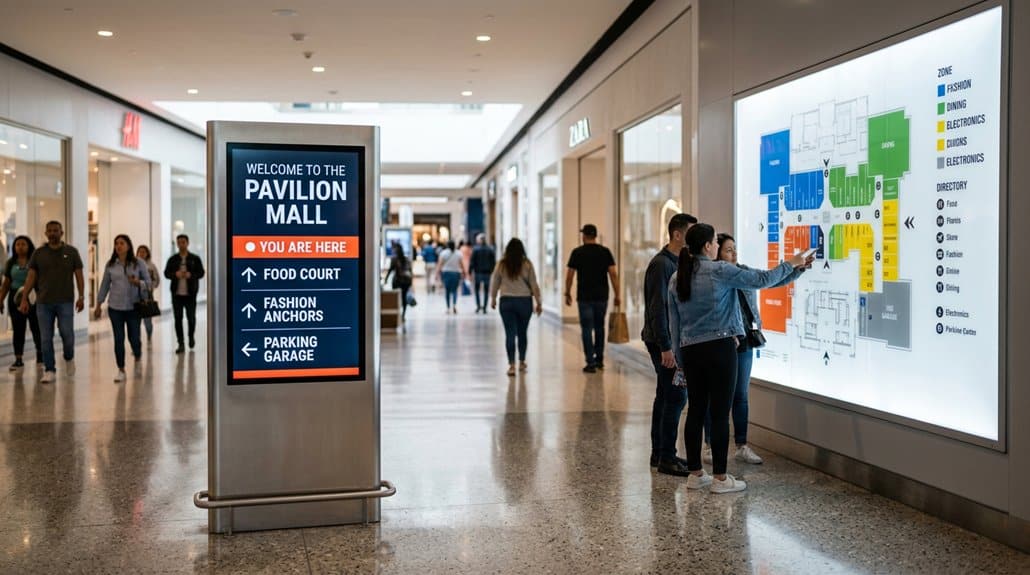
You’ll find that retail stores use digital signage to transform navigation by integrating real-time updates and interactive maps. Smart signage offers real-time data on layouts and personalized product suggestions, increasing satisfaction. Key elements include high-contrast displays and strategic placement. With dynamic content, you’ll enjoy a tailored shopping journey while promotional content enhances engagement. As more stores adopt AI and AR technologies, you’ll notice revolutionary changes in how you shop. Discover what’s next in store navigation.
Key Takeaways
- Retail stores use digital signage to provide real-time updates on product locations and promotions, enhancing the shopping experience.
- Interactive maps and touchscreen interfaces offer step-by-step guidance, improving customer satisfaction and engagement.
- QR codes deliver personalized directions based on individual preferences, making navigation efficient and user-friendly.
- Strategically placed, high-contrast digital displays ensure customers can easily locate products and navigate store layouts.
- AI-powered and augmented reality technologies offer personalized in-store navigation and pathways, boosting customer convenience and discovery.
Why Retailers Need Digital Signage for Navigation
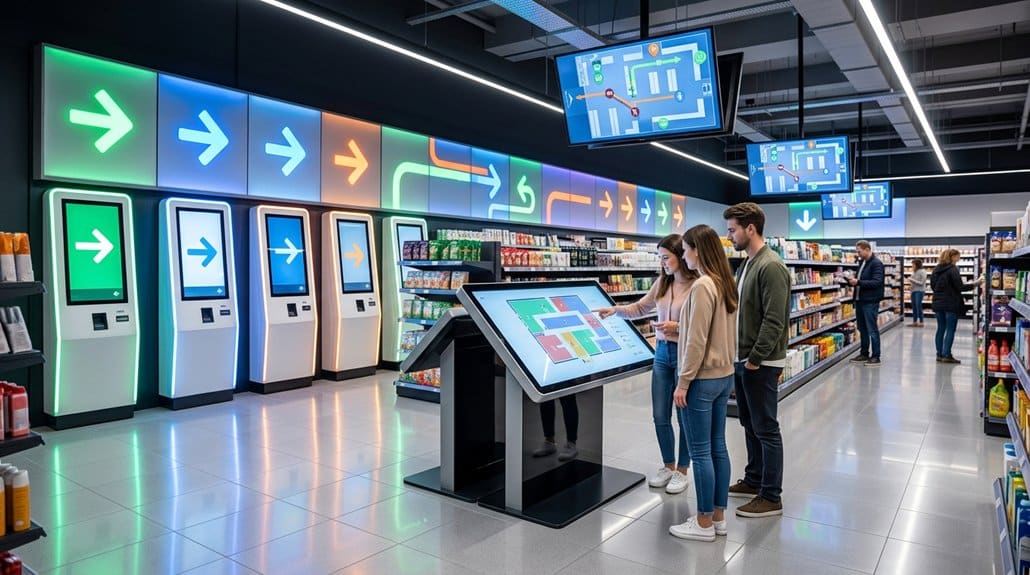
As retailers endeavor to enhance the in-store experience, integrating digital signage for navigation becomes essential. Understanding customer behavior is important; effective navigation strategies can transform shopping into a streamlined venture. You’ve got the challenge of guiding customers effortlessly, and digital signage offers the innovative solutions you need. By providing real-time updates on product locations and promotions, you can keep shoppers informed and engaged, reducing frustration and increasing satisfaction.
Digital wayfinding doesn’t just elevate the customer experience; it bolsters operational efficiency. With digital signage, your staff can focus on significant tasks rather than directing traffic. This not only enhances customer loyalty by ensuring a stress-free environment but also maximizes dwell time, leading to higher sales—a key component since a vast majority of sales still occur in physical stores.
Designing Smart Signage With Interactive Maps
Interactive maps are revolutionizing the way customers navigate retail spaces, offering a blend of technological sophistication and user-centric design. By integrating intuitive touchscreen interfaces, you can enhance user experience design in several impactful ways:
- Dynamic Information: Provide real-time data about store layouts and product locations, greatly reducing the time spent searching for items.
- Personalization: Tailor product suggestions and promotions based on customer preferences and shopping behavior for a more engaging experience.
- Step-by-Step Guidance: Offer precise directions to desired destinations, improving overall satisfaction and reducing confusion in larger stores.
- Increased Engagement: With effective digital signage, you’ll not only streamline navigation but also boost foot traffic and sales by encouraging customers to explore more thoroughly.
This innovative approach guarantees a seamless, rewarding shopping journey.
Key Elements for Effective Wayfinding Signage
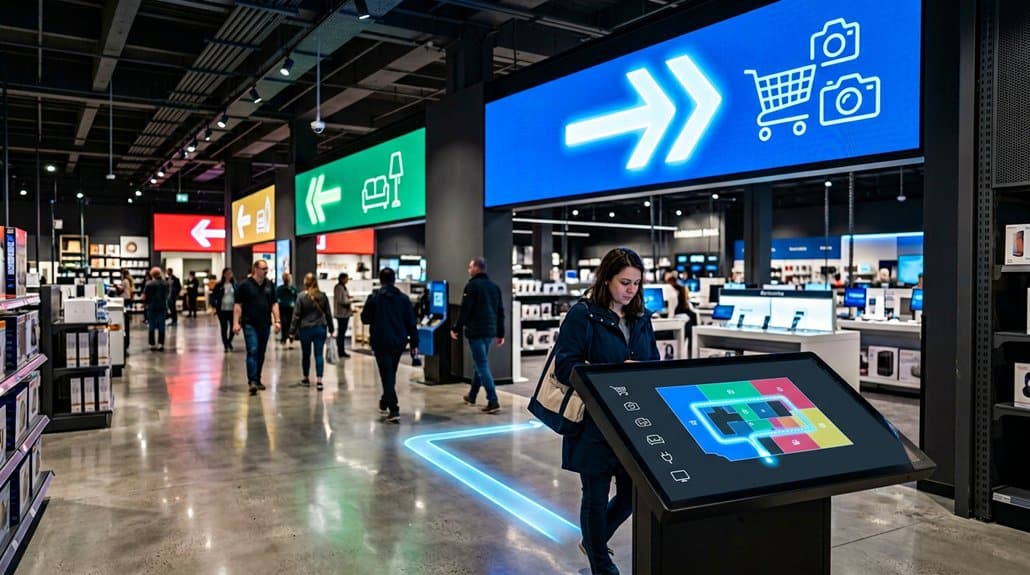
When designing effective wayfinding signage in retail spaces, a few key elements guarantee your system delivers maximum impact and utility for customers. Strategic placement in high-traffic zones guarantees signage accessibility, minimizing confusion and optimizing flow. Opt for high-contrast, easy-to-read formats to boost customer comprehension at a glance. This approach maximizes visibility and clarity, crucial for quick decision-making during busy shopping sessions.
Integrating interactive maps or directories empowers customers to efficiently locate desired products, streamlining their experience. Consistent branding across signage maintains a cohesive environment, fostering brand recognition and trust. Dynamic digital displays can refresh content with updates on store layouts or promotions, engaging your audience and highlighting critical areas. By aligning these strategies, you enhance usability and increase customer satisfaction.
Enhancing Customer Journeys With Real-Time Info
Harnessing the power of digital signage transforms the customer journey by delivering real-time information that streamlines navigation through large retail environments. You’re not only simplifying shopping but also enhancing customer engagement by making every visit more efficient and enjoyable. Digital navigation signs provide immediate access to essential information, which means:
- Interactive Maps and Wayfinding: Customers quickly locate products and departments, reducing frustration.
- Real-Time Product Info: Availability and promotions are at their fingertips, enhancing decision-making.
- Dynamic Content: Engaging visuals captivate and encourage exploration throughout the store.
- Strategically Placed Signs: Positioned in high-traffic areas, they guide traffic effectively, boosting footfall in key sections.
Utilizing these innovative solutions, digital signage transforms retail spaces into navigable and engaging environments, ultimately improving customer satisfaction and shopping efficiency.
Integrating Promotions Into Signage Design
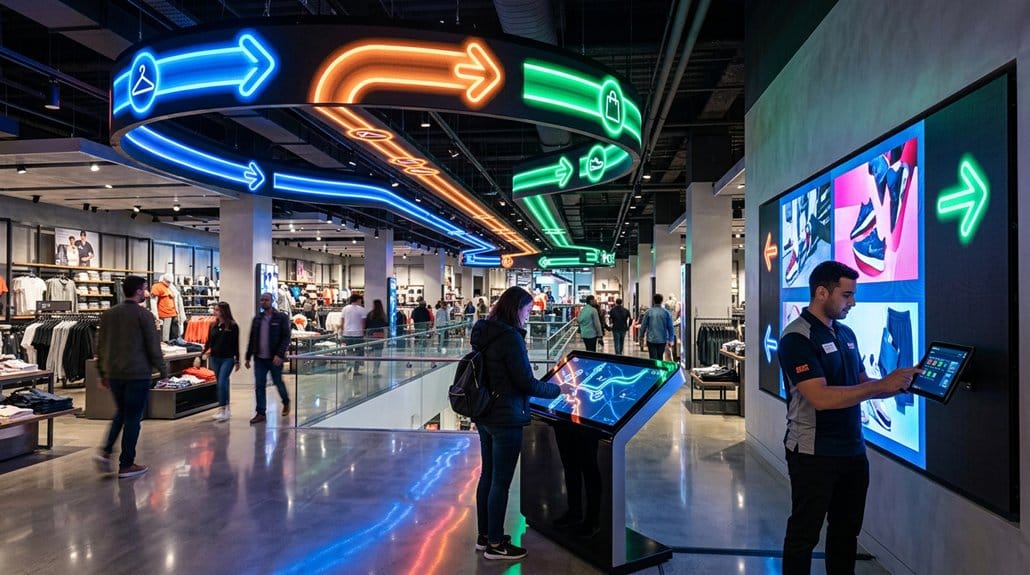
Building on the seamless customer journey informed by real-time data, a strategic integration of promotions into digital signage design takes store navigation to a new level. By focusing on promotional placements at key junctions, you can transform digital screens into dynamic wayfinding solutions that not only guide your customers but showcase exciting offers. Through effective messaging, digital signage guarantees timely delivery of discounts and special promotions, enhancing shopper awareness as they navigate your store.
Interactive touchscreens enhance engagement, allowing shoppers to receive navigation assistance paired with enticing promotional content. This approach encourages impulse purchases and directs foot traffic to targeted areas, increasing exposure by up to 17%. Context-aware digital signage further refines this strategy by adapting messages based on customer movements, optimizing item visibility and enhancing the shopping experience.
Leveraging Data for Optimal Signage Placement
By utilizing heat mapping insights, you can strategically place digital signage at eye-level in high-traffic areas, maximizing visibility and customer interaction. Traffic flow analysis provides the data necessary to position signs where they’re most likely to guide shoppers efficiently. With these insights, you can optimize signage placement to not only enhance the shopping experience but also increase engagement during vital decision-making moments.
Heat Mapping Insights
Imagine transforming your store’s signage strategy with cutting-edge heat mapping technology that tracks and analyzes customer movement patterns. By leveraging data visualization, you can gain detailed insights into customer behavior, optimizing signage placement for maximum impact. Here’s what heat mapping delivers:
- Traffic Flow Analysis: Identify high-engagement zones with heavy foot traffic, ensuring digital signage captures the most attention.
- Tailored Messaging: Adapt signage content based on observed customer preferences in popular areas, driving targeted engagement.
- Strategic Experimentation: Test different signage locations to assess shifts in customer behavior, empowering informed, data-driven decisions.
- Layout Refinement: Focus on underperforming zones, repositioning signage to boost visibility and drive sales effectively.
Harness the power of heat mapping to revolutionize your retail space and enhance customer navigation.
Eye-Level Screen Strategy
Having analyzed customer movement through heat mapping, you’re now equipped to enhance store navigation using an eye-level screen strategy. Placing digital signage at eye level capitalizes on eye level advantages, making it more likely for shoppers to notice and react to displays. When screens are within a customer’s direct line of sight, customer perception is enhanced, leading to higher engagement rates. Strategic screen placement in entrance areas and high-traffic pathways guarantees your content catches attention at pivotal moments, like decision-making points. Data analytics confirm that eye-level positioning not only maximizes visibility but also boosts customer dwell time. Strategically sharing real-time updates on promotions and availability encourages shoppers to make informed decisions, ultimately improving their overall shopping experience.
Traffic Flow Analysis
Traffic flow is the backbone of an effective retail environment, guiding store layout and design decisions. To optimize signage effectiveness, you need to understand customer behavior by leveraging traffic flow analysis. Here’s how you can use data to enhance store navigation:
- Heatmaps and Tracking: Utilize heatmaps and location tracking to identify high-traffic zones where digital signage will attract the most attention.
- Strategic Placement: Implement signage at entrances and checkout areas to engage customers at key decision points, boosting potential sales.
- Dynamic Content: Adapt signage content based on live traffic data for relevant and timely messages, enhancing customer experience.
- Continuous Refinement: Use performance data to refine signage locations, improving customer interaction and navigation efficiency continuously.
Case Study: Revamping Store Navigation With Digital Tools
In revamping store navigation, you can harness the power of interactive map displays that transform in-store navigation by markedly improving customer engagement and satisfaction. By implementing real-time location updates, shoppers can effortlessly find products and receive instant directions, enhancing the overall shopping experience. This tech-driven approach not only boosts customer satisfaction by 25% but also increases foot traffic and sales conversions, proving its impact on retail performance.
Enhancing In-Store Navigation
Maneuvering a retail environment can be an intimidating task; however, utilizing digital tools can simplify the shopping experience for everyone involved. By revamping store navigation, retailers can considerably enhance the in-store journey through technology adoption and integrating customer feedback. Consider these innovative solutions:
- Interactive digital maps: Provide clear directories to guide shoppers efficiently.
- Strategic placement of navigation screens: Place them at entrances and high-traffic zones for ideal access.
- Incorporate QR codes: Allow customers to scan for personalized directions, catering to unique preferences.
- Real-time inventory updates: Display availability via digital signage, reducing frustration and aiding decision-making.
These solutions not only facilitate a seamless shopping experience but also improve customer satisfaction, adding value to the retail landscape.
Interactive Map Displays
Retail navigation solutions have evolved considerably, transforming how customers engage with physical stores. Interactive map benefits include enhancing the shopping experience by providing real-time navigation, allowing customers to efficiently locate products and departments. These digital tools use user-friendly interfaces and touch technology, reducing the need for staff assistance and boosting customer engagement. With interactive maps, retailers tackle customer frustration and cutting down on the time spent searching. Additionally, mapping systems can merge with promotional content, highlighting deals or sales items near a customer’s position. By analyzing data from map interactions, retailers can optimize store layouts and refine merchandising strategies. This innovative approach not only streamlines navigation but also fosters a more engaged, satisfied customer base while driving sales.
Real-Time Location Updates
Although steering through physical stores has traditionally been a challenge, digital tools have greatly streamlined this process through real-time location updates. By integrating digital signage, you can now navigate retail spaces seamlessly, aligning with your unique navigation preferences. This technological shift addresses customer behavior in several impactful ways:
- Interactive Maps: Digital screens provide real-time navigation assistance, minimizing confusion and enhancing your shopping experience.
- Instant Updates: Immediate communication on product availability keeps you well-informed, ensuring ideal decision-making.
- Time Efficiency: Wayfinding solutions reduce time spent searching for items, facilitating smoother store flow and boosting operational efficiency.
- Data-Driven Decisions: Tracking customer movement through analytics helps retailers make strategic layout changes, ultimately enhancing sales and satisfaction.
Adapting these innovations meets evolving customer demands with precision.
Addressing Implementation Challenges in Digital Signage
Successfully implementing digital signage for store navigation hinges on overcoming several key challenges. You’ll need to focus on staff training, guaranteeing everyone understands the hardware requirements essential for maintaining peak screen performance. Deciding between new screens or repurposing existing smart TVs affects your integration strategy, particularly concerning HDMI compatibility. Proper screen positioning is critical; it guarantees visibility and interaction, directly impacting customer engagement. Investing in a robust content management system (CMS) simplifies updating navigation content in real-time, accommodating quick changes in store layout or inventory. Reliable internet connectivity is a must for seamless operation. Regular assessment of customer interactions through metrics like dwell time aids in refining your strategies, continually enhancing the browsing experience for better navigation outcomes.
Anticipating Future Innovations in Retail Navigation
You can expect the future of retail navigation to transform with innovations like AI-powered navigation technologies, offering personalized in-store guidance tailored to individual shopping habits. By integrating augmented reality pathways, customers will seamlessly visualize their paths to desired products using their smartphones, revolutionizing the shopping experience. Emerging geolocation tools and interactive kiosks promise a sophisticated layer of convenience and personalization, fostering an efficient and satisfying retail journey.
Emerging AI Navigation Technologies
As retailers continuously endeavor to enhance customer experience, emerging AI navigation technologies are poised to transform in-store journeys with unprecedented personalization and efficiency. Leveraging AI driven personalization, these systems harness machine learning analytics to analyze customer behavior, offering real time adaptation. You’ll find that:
- Dynamic wayfinding solutions are crafted based on customer movement patterns, ensuring optimized foot traffic.
- Augmented reality integration invites you to use AR tools for a visualized path to products, revolutionizing on-the-spot direction finding.
- Contextual data utilization allows signage to deliver navigation prompts tailored to you, reflecting current promotions and time-sensitive offers.
- Smart sensors application communicates with your mobile device, providing automated navigation guidance for seamless interactive customer experiences.
This technology epitomizes the future of retail navigation.
Personalized In-Store Guidance
Building on the advancements of AI navigation technologies, the focus shifts to the intriguing field of personalized in-store guidance, a key component in the foreseeable evolution of retail navigation. By leveraging customer preferences and historical data, digital signage can provide tailored navigation experiences that transform how you shop. Imagine being seamlessly directed to products that align with your tastes, guided by real-time updates on product availability and location. This personalized approach enhances convenience, minimizing frustration and elevating satisfaction.
Advanced algorithms analyze your shopping behavior and movement patterns, enabling adaptive digital signage that adjusts prompts and advertisements in real-time. Coupled with interactive touchscreens, you can engage with product information and promotions, receiving personalized recommendations on-the-go. Such innovations revolutionize traditional in-store navigation, ensuring a smarter shopping journey.
Augmented Reality Pathways
Here’s how it works:
- Enhanced Navigation: AR pathways help you locate items efficiently, minimizing the time spent wandering.
- Increased Engagement: By combining these pathways with digital signage, retailers deliver a more engaging shopping experience.
- Customer Preference: About 77% of shoppers enjoy using AR tech for intuitive product discovery.
- Streamlined Traffic Flow: Reducing congestion, AR guides you smoothly through promotional zones and featured products.
The evolution of AR pathways is set to bolster customer engagement and satisfaction markedly in the near future.
How Dynamic Content Keeps Shoppers Engaged
Amidst the ever-evolving retail environment, dynamic content in digital signage plays a pivotal role in keeping shoppers engaged by seamlessly integrating real-time updates that mirror current promotions, product availability, and precise pricing. This dynamic engagement is propelled by visual storytelling through high-resolution images, animations, and interactive elements. These engaging visuals capture attention and guide you to specific areas within the store, often increasing impulse purchases. Additionally, context-aware messaging tailors content to factors like weather or time, ensuring relevance to your needs. Quick, concise messages provide essential information at a glance, aiding your decision-making process. Personalized recommendations and targeted promotions align with your preferences, amplifying engagement and driving sales by offering products that matter most to you.
Frequently Asked Questions
How Does Digital Signage Impact Traditional Signage in Retail Stores?
Digital signage revolutionizes traditional signage by enhancing branding strategies and boosting customer engagement. You’re providing real-time updates and interactive experiences, increasing foot traffic. This innovative solution’s dynamic nature guarantees you stay ahead in the competitive retail market.
What Cost Considerations Are There for Implementing Digital Signage?
When considering digital signage, you’ll face hardware costs for displays and mounting equipment and software expenses for content management systems. Evaluate long-term savings on printing traditional signage versus initial investments for maximum returns and impactful industry innovation.
How Can Smaller Stores Benefit From Digital Signage for Navigation?
You’ll find that even smaller stores can leverage digital signage to greatly enhance customer experience and engagement. With innovative, cost-effective solutions, you’ll guide visitors efficiently, ensuring navigational clarity and a seamless shopping experience.
What Energy Efficiency Features Do Digital Signage Systems Offer?
Oh sure, when you’re feeling generous with your energy bills, who needs energy saving, right? But digital signage wizards use high-quality display technology to reduce power consumption while delivering dynamic brilliance. It’s innovation saving your wallet!
Are There Specific Maintenance Requirements for Digital Signage Technology?
Yes, digital signage systems require regular screen upkeep and software updates to guarantee peak performance. Timely maintenance of hardware components and proactive software improvements prevent glitches, assuring your system’s reliability and enhanced customer engagement through innovative solutions.
Conclusion
In a rapidly evolving retail landscape, digital signage emerges as a game changer, merging cutting-edge technology with customer-centric solutions. As they say, “necessity is the mother of invention,” and these smart systems guide customers with precision, integrate engaging promotions, and keep content fresh and dynamic. By anticipating emerging trends and steering through implementation hurdles, you can transform store navigation into an immersive experience, setting the stage for seamless shopping journeys and enhanced customer satisfaction.