
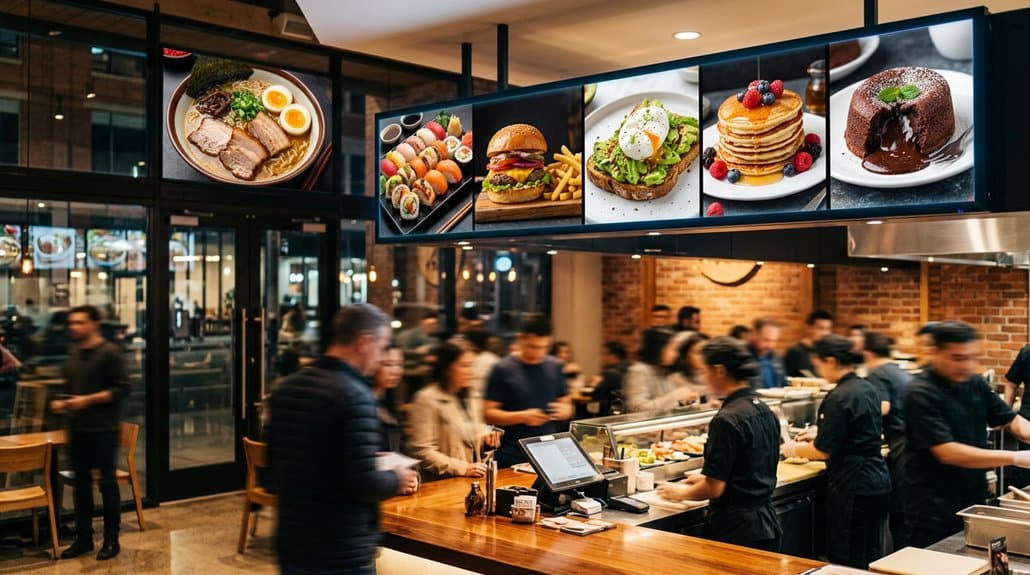
You’re in a buzzing restaurant scene where digital signage transforms menus into mesmerizing visual experiences. With 70% of eateries seeing enhanced customer satisfaction and a 38% sales boost for highlighted items, dynamic displays drive engagement and upsell potential. By utilizing high-quality screens and remote management, restaurants streamline operations and reduce costs. Curious about how this innovation is reshaping dining and promising an impressive ROI? You’ll find the answers intriguing and potentially game-changing.
Key Takeaways
- Restaurants use digital signage to feature dynamic visuals that enhance menu appeal and drive customer engagement.
- Interactive digital boards effectively promote limited-time offers and upsell specials during critical purchasing moments.
- Remote management systems allow restaurants to schedule and update content effortlessly on digital menu boards.
- Integrating multimedia elements in digital menus reduces perceived wait times and improves the overall dining experience.
- Digital signage allows real-time menu updates, saving costs on paper menus and offering better ROI.
Why Digital Menu Boards Are Essential for Modern Restaurants
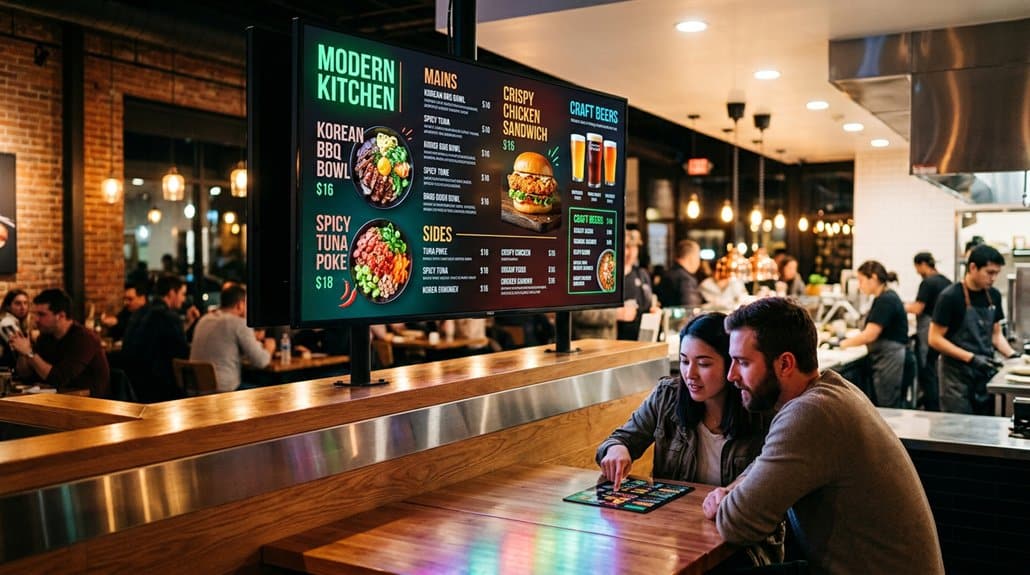
Although many advancements have transformed the dining industry, digital menu boards have become essential for modern restaurants. They cater to customer preferences by seamlessly integrating technology into the dining experience. With the ability to update content in real-time, you can efficiently adapt to inventory fluctuations and highlight daily specials without the hassles of traditional menus. Approximately 70% of restaurants attest to improved customer experiences, and 30% of customers are swayed in their buying decisions by these dynamic displays. Further, digital boards can boost sales of featured items by up to 38% by enhancing visibility and attractiveness. You’ll also benefit from enhanced strategic upselling, visually promoting high-margin items to increase the average order value and align with your brand’s goals.
How Digital Signage Enhances Sales and Customer Engagement
You’re missing out if your restaurant hasn’t yet adopted digital signage to boost sales. Data shows digital boards can enhance menu item sales by up to 38% by making them more visible and enticing. Plus, the engaging visual content not only captures attention but also influences about 30% of customers to make purchasing decisions, giving your restaurant a competitive edge.
Boosting Sales Visibility
With 30% of customers influenced by visually appealing boards, your guests are more likely to engage with dynamic content and make informed purchasing choices. You can swiftly update content in real-time, adapting to peak hours and enticing patrons. Plus, reducing perceived wait times by up to 35% enhances the customer experience, encouraging them to linger and spend more. Digital signage is more than a menu; it’s a sales catalyst.
Engaging Visual Content
Dynamic visuals are revolutionizing the dining experience, driving both sales and engagement in restaurants. With digital menu boards, you’re not just presenting a list of dishes—you’re crafting a narrative through visual storytelling. High-quality visuals can boost customer engagement by up to 30%, making choices irresistible. Interactive displays allow you to promote limited-time offers and seasonal specials effectively, capturing your audience’s attention at key moments.
- Impulse Buys: Visually upsell desserts or beverages to increase average order value.
- Real-Time Updates: Seamlessly modify displays to highlight special deals.
- Social Integration: Engage customers by embedding live social media feeds, enhancing community interaction.
Boosting Customer Experience With Digital Menu Boards
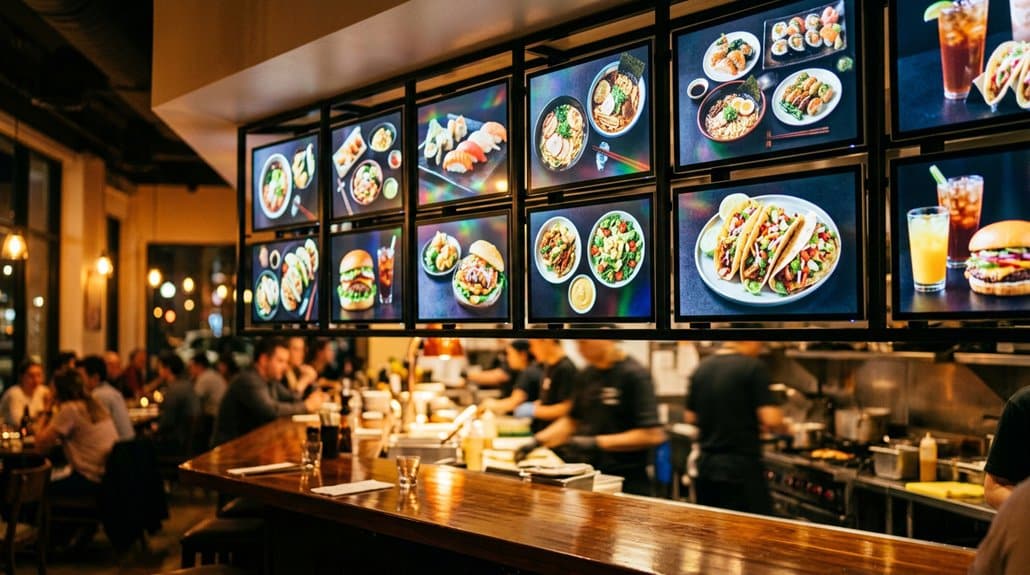
While waiting for your order, digital menu boards can transform the dining experience by slashing perceived wait times by up to 35%, boosting both customer satisfaction and engagement. By integrating multimedia elements, these boards captivate attention and enhance customer engagement. A digital menu’s dynamic nature allows you to see high-quality visuals and updated content like daily specials and limited-time offers in real-time, considerably impacting your purchasing decisions.
Interactive features like QR codes offer seamless access to menus from your smartphone, enabling faster order placements and personalized preferences. With about 30% of customers swayed by digitally curated content, it’s clear that effective digital menu boards are brand-focused tools that not only guide consumer behavior but also elevate the overall dining experience, driving up average order values.
How to Set Up Effective Digital Menu Boards
Setting up effective digital menu boards starts with selecting high-quality displays, typically costing between $300 to $800 each, to guarantee visibility and engagement. You’ll want to design eye-catching menus with clear text and high-resolution images, as they enhance customer decision-making and integrate well with current promotions. Optimize content scheduling with remote management systems to effortlessly shift your menu between meal times, so customers always find the latest offerings tailored to their needs.
Choosing Display Hardware
Selecting the right display hardware is essential for creating effective digital menu boards in restaurants. Focus on robust display technology and clear hardware specifications for vibrant visuals and reliability. Commercial-grade monitors or smart TVs are recommended, especially in varied restaurant environments. Consider screen sizes from 32 to 55 inches to match your restaurant’s layout and viewing distances. Guarantee HDMI compatibility and a minimum brightness of 300 cd/m² for clear visibility, even outdoors.
- Choose commercial-grade displays: Guarantee durability and longevity with products designed for continuous use.
- Optimize screen size and resolution: Tailor display choices to your restaurant style, guaranteeing visibility and clarity.
- Invest in digital signage players: Use devices like Screenly Player for seamless content management and updates.
Tailor your choices to your specific restaurant’s format, from fast-food to fine dining.
Designing Eye-Catching Menus
Crafting distinctive digital menu boards is essential for capturing your guests’ attention and enhancing their dining experience. By leveraging color psychology, you can influence purchasing decisions and evoke the desired mood—warm colors like red and orange stimulate appetite, while green conveys freshness. Pair these with strategic typography choices; opt for clear, legible fonts to guarantee readability from various distances.
High-quality images enhance visual appeal and guide attention toward highlighted items such as high-margin dishes and daily specials, strategically placed in the upper right-hand side of the screen, where viewers naturally gravitate. Use customizable templates and online drag-and-drop tools to keep your menus fresh with real-time updates, ensuring quick adaptation to inventory changes and seasonal promotions. This approach not only boosts engagement but also streamlines operations.
Optimizing Content Scheduling
With your menus designed to captivate and inform, the next step is ensuring that this striking content meets your guests at the right time. Mastering content timing is vital. Align your menu shifts with customer habits using advanced playlist features, displaying breakfast, lunch, and dinner selections strategically. For further engagement, schedule social media content and limited-time offers alongside digital displays. This approach not only adapts to real-time business needs but can boost sales by up to 38% during peak hours. Enhance your brand’s credibility by integrating content management systems with your point-of-sale for accurate, disappointment-free experiences.
- Utilize specific content timing to match dining periods
- Align promotions with customer habits for higher engagement
- Customize displays per location for relevant offers
Remote Management Tools for Efficient Content Updates
Imagine effortlessly updating your restaurant chain’s menu and promotions with just a few clicks. Utilizing remote updates and centralized control through digital signage, you can manage content across multiple locations from anywhere with internet access. This powerful setup minimizes manual errors and guarantees real-time accuracy, especially vital for franchises. Scheduling capabilities allow you to customize content for different times of the day, like breakfast, lunch, and dinner, all without lifting a finger. Seamless integration with point-of-sale systems keeps your digital menu boards synced with real-time inventory, reducing customer frustration over unavailable items. User-friendly interfaces make it easy to monitor your displays’ status, ensuring security and quality through rapid responses to technical glitches, enriching the overall customer experience.
Beyond Menus: Creative Uses of Digital Signage
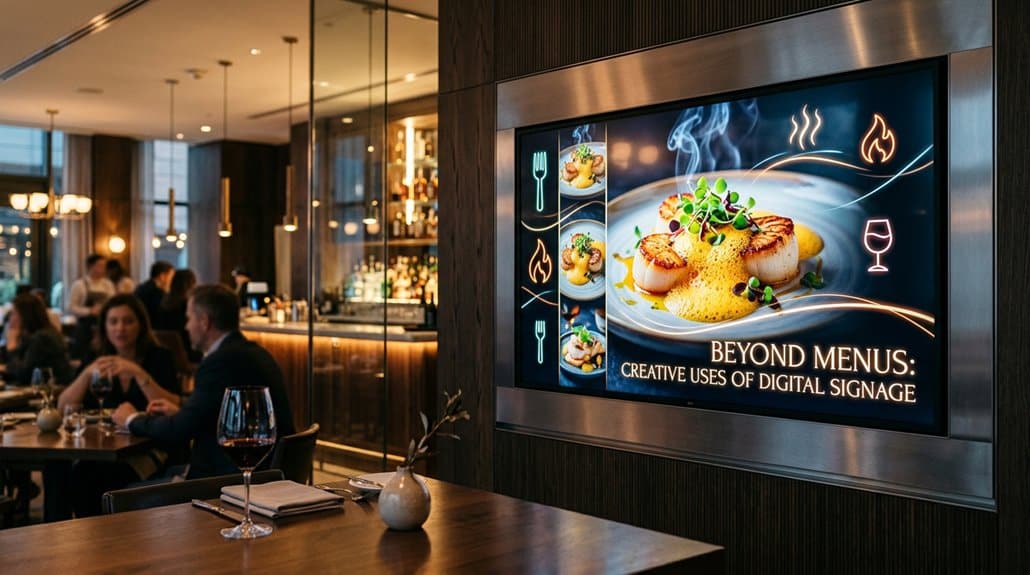
While digital signage is often synonymous with displaying menus, its potential reaches far beyond culinary listings. Imagine reducing perceived wait times by up to 35% through waiting time boards. It’s about enhancing the overall customer experience, especially in those busy periods. With digital signage, restaurants can foster social interaction by showcasing real-time social media feeds, engaging the community right from their tables.
Moreover, the capability to dynamically adjust content aligns with smart inventory management. Update promotions to match stock levels instantaneously, avoiding waste and boosting sales of high-margin items.
- Upsell desserts or daily specials, influencing choices at pivotal moments.
- Integrate news or entertainment, keeping customers engaged.
- Highlight real-time offers with quick content adaptability.
Embrace this technology for broader engagement and efficient operations.
Evaluating Digital Signage Costs and ROI
As you consider investing in digital signage for your restaurant, it’s vital to weigh the costs against the potential return on investment (ROI). Conducting a robust cost analysis reveals hardware expenses between $300 to $800 per screen and monthly software fees averaging $20. This scalability makes it a strategic investment strategy for long-term gains. By replacing traditional menu boards, you tap into considerable printing cost savings and reduce waste. The impact on sales is significant, with potential increases up to 38% for digitally displayed items. Dynamic content fosters higher customer engagement, encouraging repeated visits and boosting average order values. Instant updates streamline operations, further enhancing ROI. Calculating these factors guarantees you make an informed investment strategy aligned with your brand goals.
What’s Next in Restaurant Digital Signage?
In the rapidly evolving landscape of restaurant digital signage, embracing cutting-edge technology like AI-driven analytics positions your brand for future success. With AI Integration, you can tailor your content dynamically based on customer behavior. Advancements in Cloud Technology enable real-time menu updates and centralized management, streamlining operations across locations. Interactive Signage, like touchscreens, lets diners customize experiences, enhancing overall engagement.
- AI Integration: Customize content based on customer preferences and analytics.
- Cloud Technology: Facilitate seamless, real-time menu updates across all locations.
- Interactive Signage: Increase engagement with touchscreens and QR codes.
Don’t forget about Environmental Sustainability’s importance—digital signage slashes paper waste and elevates your eco-friendly image. Meanwhile, 5G Advancements promise faster, more dynamic displays that can adapt to real-time customer traffic patterns.
Frequently Asked Questions
What Are the Hardware Requirements for Setting up Digital Menu Boards?
You’ll need a high-resolution display, a media player ensuring hardware compatibility, and reliable internet connectivity. Opt for screens with 1080p or higher resolution for crisp visuals. Verify all devices support your digital sign software for seamless operation.
Can Digital Menu Boards Integrate With Existing POS Systems?
Absolutely, digital menu boards can turn into tech wizards by seamlessly integrating with POS systems! This not only enhances the user experience but also skyrockets customer engagement by delivering a synchronized and streamlined brand experience.
How Does Digital Menu Board Software Handle Pricing Changes?
You’ll find that digital menu board software handles pricing changes with ease, offering real-time updates through user-friendly interfaces. This guarantees your brand stays consistent and competitive while simplifying operational adjustments, keeping your customers informed instantly.
Are Digital Menu Boards Energy Efficient?
Yes, they’re energy-efficient. By utilizing advanced display technology and optimizing energy consumption, you’ll reduce electricity costs, shrink your carbon footprint, and enhance brand sustainability. Efficient technology, consistent savings, compelling branding—it’s all achievable with digital menu boards.
What Are the Common Challenges in Maintaining Digital Menu Boards?
You’ll face challenges like ensuring content updates are timely and relevant. Design consistency is key for maintaining branding, while technical glitches can disrupt engaging content delivery. Staying data-driven helps identify and resolve issues effectively for enhanced performance.
Conclusion
You might think digital menu boards are a costly investment, but data proves otherwise. Restaurants that adopt digital signage see up to a 20% increase in sales and enhanced customer engagement. By optimizing content in real-time and showcasing dynamic visuals, you’re not just improving the patron experience—you’re transforming your brand’s image. The future of restaurant signage is here, and embracing it guarantees your establishment stays competitive and memorable. Don’t miss out on this digital revolution!