
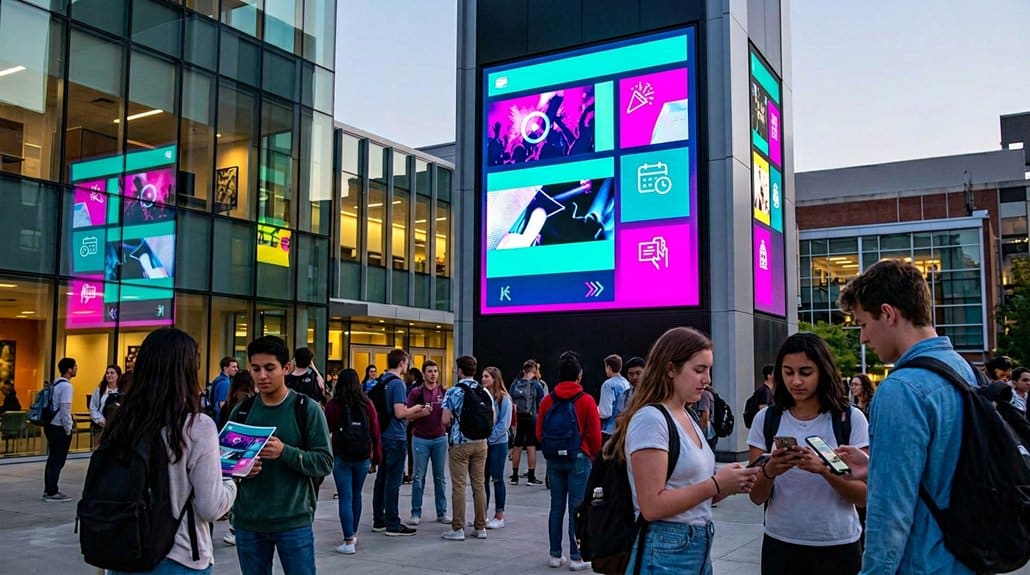
You’ll find that campuses are leveraging digital signage to effectively promote student events. By strategically placing displays in high-traffic areas like student unions and libraries, you can boost event attendance by up to 50%. Eye-catching content and interactive features like QR codes enhance engagement and offer real-time updates. Utilizing this technology not only cuts costs but also supports sustainability efforts. Discover how these modern techniques are transforming campuses into vibrant, interactive communities.
Key Takeaways
- Digital signage in high-traffic campus areas improves event visibility and attendance.
- Real-time updates and interactive features significantly boost student engagement and awareness.
- Tailored and dynamic content enhances personalization and fosters an informed campus community.
- Collaboration with student groups enhances event promotion and reduces deployment costs.
- Analyzing data from digital signage helps optimize message impact and targeted outreach.
The Importance of Digital Signage on Modern Campuses
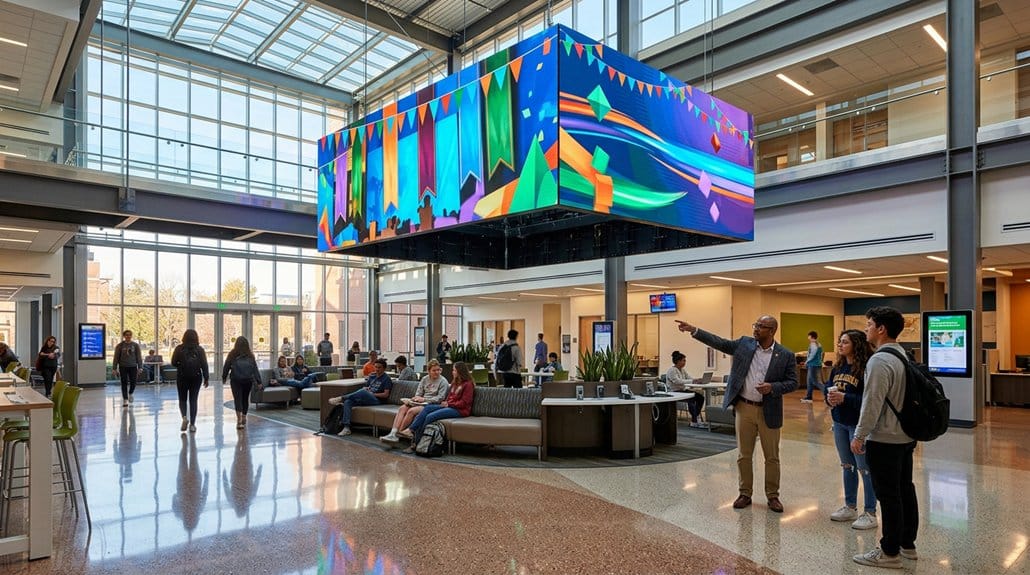
There’s no denying that digital signage has become an indispensable communication tool on modern campuses. With its ability to deliver real-time updates on events, schedules, and announcements, you can enhance the user experience greatly. A robust content strategy is essential to leveraging this tool effectively. Studies reveal that when you employ digital signage, event attendance can soar by up to 50%. This powerful communication method doesn’t just inform—you’ve got the adaptability to tailor and customize content swiftly in response to evolving needs. Embrace interactive elements to create engaging and immersive experiences, promoting a sense of community. Additionally, switching to digital signage greatly reduces reliance on printed materials, cutting costs and contributing to campus sustainability while keeping communication effective.
Optimal Locations for Maximum Impact
To make student event promotion truly effective, it’s essential to focus on strategic locations that boost engagement. High-traffic areas like student unions and cafeteria entrances capture the attention of passing students at the busiest times, while placing signage in popular gathering spots encourages spontaneous participation. By thoughtfully choosing these high-impact locations, you guarantee your message is seen by more students, maximizing your outreach efforts.
High-Traffic Campus Areas
Student unions, dining halls, and library entrances pulse with activity, making them prime spots for digital signage aimed at promoting student events. These high-traffic areas guarantee your messages aren’t just seen, but remembered. Research indicates targeted messaging in these locations can boost event attendance by up to 50%. You’ll capture the attention of a diverse audience, blending seamless visual storytelling with strategic placement.
Strategic Entry Points
While determining the strategic entry points for digital signage, consider locations that naturally gather attention, such as campus entrances and dining halls, which can boost event attendance by up to 30%. Effective entry point strategies focus on maximizing visibility and nurturing student engagement. By implementing these insights, you can guarantee ideal reach and impact:
- Campus Entrances & Dining Halls: Capture the daily flow of students where they naturally converge, elevating awareness and participation.
- Lecture Hall Corridors: Place screens near classrooms to reach students just before they plunge into lessons, leveraging their attention to spur spontaneous participation.
- Digital Social Integration: Amplify your reach by syncing signage with social feeds, offering real-time updates that facilitate interactive experiences and broaden student engagement.
Each location enhances your promotional power, creating a resonant connection with your campus community.
Student Gathering Spots
When seeking to make a significant impact with digital signage for event promotions, consider high-traffic student gathering spots as prime locations. Placing displays in student lounges, cafeterias, and hallways guarantees you’re tapping into spaces buzzing with informal meetings and student collaborations. The visibility at entrances and exits boosts exposure further. By reaching students where they naturally congregate, like libraries and study zones, you engage them during their downtime, sparking interest and interaction.
| Location Type | Student Activity |
|---|---|
| Student Lounges | Informal meetings |
| Cafeterias | Collaborative dining |
| Hallways | On-the-go interactions |
| Libraries | Quiet study sessions |
| Multicultural Centers | Community engagement |
Maximize engagement by using interactive displays, inviting students to RSVP, or learn more on the spot, thereby promoting broader campus involvement.
Creating Compelling Content for Student Engagement
Harness the power of digital signage by crafting content that truly captivates your student audience. To grab their attention with the perfect blend of content types and visual strategies, consider these data-driven methods:
- Eye-catching Visuals: Use bold graphics and concise text, focusing on the fact that students engage with content only briefly. Feeling creative? Videos and animations can increase engagement by up to 60%.
- Interactive Elements: Elevate participation by embedding QR codes that students can scan for immediate access to event details or registration forms directly from their smartphones.
- Tailored Messaging: Target content to specific student demographics or interests, enhancing event attendance through personalization. With targeted messaging, you can notably boost engagement rates.
Make your digital signage dynamic to foster an ever-evolving, informed campus community!
Integrating Real-Time Updates Seamlessly
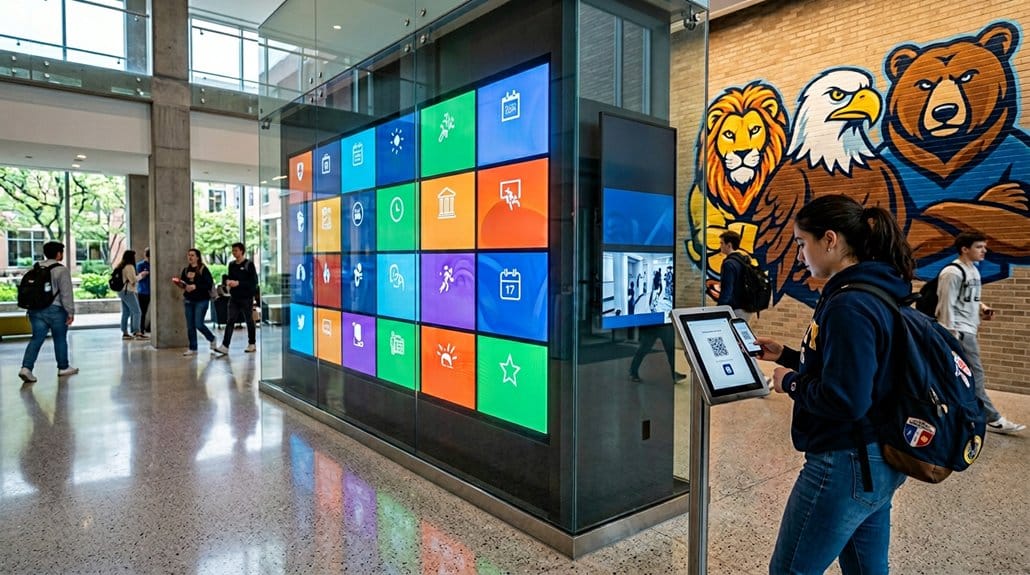
You know how important it is to keep your campus community informed and engaged, and digital signage is your secret weapon for doing just that. By integrating real-time updates and social media feeds, you’re not only streamlining event notifications but also creating an interactive experience that nearly 70% of students say boosts their likelihood of attending events. Plus, with data analytics at your fingertips, you can tailor content to match student interests, making your communication systems more effective and your events more successful.
Enhancing Campus Communication Systems
Although traditional bulletin boards once sufficed for campus communications, digital signage has transformed how information is shared, especially by seamlessly integrating real-time updates. By focusing on content personalization and signage aesthetics, campuses create a visually engaging and functional communication system that can boost event awareness and attendance. Here’s how:
- Dynamic Updates: Real-time changes mean students always have the latest information, keeping them connected and informed.
- Increased Engagement: Visual displays strategically placed in high-traffic areas, like libraries, can increase engagement by up to 70%, as students naturally gravitate towards visually appealing content.
- Targeted Messaging: Digital signage can be tailored to specific locations and times, ensuring the message is relevant to the audience, enhancing both its reach and impact.
Integrating these elements optimizes campus communication effortlessly.
Streamlining Event Notification Processes
With the advent of digital signage, the process of notifying students about campus events can be remarkably streamlined, making real-time updates an integral part of event promotion. By integrating these signs with campus event management systems, you’re minimizing communication barriers, ensuring students receive up-to-the-minute information wherever they are. This means you won’t miss essential updates due to scheduling changes, enhancing event accessibility for everyone.
Real-time content catches attention in high-traffic areas, considerably boosting awareness and potentially increasing event attendance by up to 30%. Instead of sifting through paper flyers, students get dynamic, customized content. Plus, sustainability gets a boost as you shift from paper to digital platforms, providing instant, eco-friendly information access and ensuring no one is left in the dark about your events.
Boosting Student Engagement Efforts
Having streamlined event notifications, the next goal is to amplify student engagement by seamlessly integrating real-time updates. Imagine an experience where every update feels personal and interactive. Digital signage transforms this vision into reality, and here’s how:
- Student Feedback: Use interactive displays to gather real-time feedback through polls and contests, deepening connections around events.
- Event Partnerships: Collaborate with different student groups and organizations, showcasing joint ventures via digital platforms to maximize visibility.
- Targeted Content Delivery: Tailor messages to specific demographics, ensuring that each event reaches its most enthusiastic audience, driving participation.
Studies show that engaging content boosts attendance by up to 20%, with students sharing events on social media. Utilize digital signage’s dynamic potential to bolster community interaction and learning experiences.
Interactive Features That Enhance Engagement
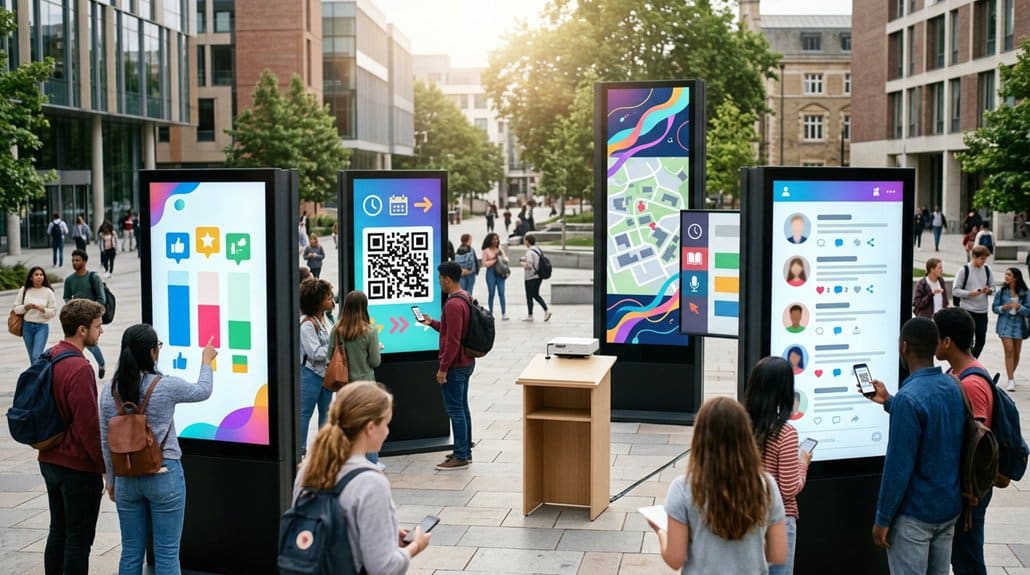
Incorporating interactive features into digital signage not only captivates student interest but also markedly boosts engagement. By leveraging touchscreen integration, you enable students to effortlessly access details, RSVP, and interact with content tailored to their interests. QR code utilization on campus displays lets students quickly scan for instant event information, schedules, and registration links. This tech-savvy approach guarantees students are always informed and ready to participate. Additionally, enhancing digital signage with social media feeds fosters real-time engagement, where students can join discussions and share experiences online. Adding gamification elements like polls and contests pumps excitement by incentivizing participation with rewards. According to surveys, these interactive features can uptick student awareness by 70%, greatly amplifying event attendance and engagement.
Building Community Engagement With Digital Signage on Campus
Though often overlooked, digital signage plays a pivotal role in building community engagement on campuses by providing real-time information about events and fostering a sense of belonging among students and staff. With the power of digital storytelling, this technology creates a vibrant campus life. Here’s how:
- Boosts Participation: Interactive displays encourage community interaction, allowing students to RSVP or share experiences on social media directly. This can drive event attendance up by 50%.
- Targeted Messaging: Tailored content guarantees that promotions resonate with diverse student groups, speaking directly to each segment’s interests and needs.
- Dynamic Content: Eye-catching visuals and engagement-driven media make campus life come alive, promoting a lively atmosphere that enhances community interaction.
Harnessing these elements builds a strong, interactive campus environment.
Budget-Friendly Strategies for Deployment
Embracing digital signage as a tool for boosting campus engagement is more than just a beneficial venture—it’s a strategic opportunity for resource-conscious campuses. By leveraging social media platforms, you can promote events through digital signage effectively, reaching broader audiences without hefty financial outlays. Implementing template solutions in your software can streamline promotion, minimizing the need for costly design services. A key tactic is using existing screens in common areas, which keeps infrastructure costs low while enhancing message visibility. Cost sharing initiatives with student organizations not only cut individual expenses but also encourage community participation. Finally, scheduling displays during peak traffic hours guarantees maximum impact. These strategies align your digital signage deployment with smart budgeting and effective outreach.
Utilizing Analytics to Measure Signage Success
- Engagement Tracking: Digital signage can track impressions and interaction rates, guaranteeing you know which messages hit the mark. This helps in evaluating the resonance of your content across campus.
- Data-Driven Optimization: Use real-time data to tweak event messaging and placement, optimizing visibility based on student foot traffic. This approach ensures your signs are always where students are most likely to see them.
- Targeted Campaigns: Analyze demographic data and adjust your content to reach specific student groups, potentially boosting attendance by up to 30%. Tailored promotions are more engaging and effective.
Real-World Success Stories From Campus Implementations
In many ways, small changes can spark significant improvements, especially when it comes to leveraging digital signage for student engagement. At the University of Wisconsin-Madison, digital displays boosted event attendance by 20%, proving that strategic use of campus technology can elevate student motivation. The University of California, Berkeley saw a 35% increase in participation for student-led events, driven by visible digital screens capturing attention. Duke University’s holistic approach increased cultural event awareness by 25%, enriching student diversity. At the University of Maryland, interactive kiosks fueled a 40% rise in inquiries, energizing campus culture. Meanwhile, Florida State University’s signage campaigns saw a 30% increase in academic workshop registrations, underscoring how effective technology use sparks increased student involvement.
Frequently Asked Questions
What Is the #1 Least Educated State?
Mississippi ranks as the #1 least educated state based on its education statistics. You’re likely concerned about state rankings, and these numbers highlight significant challenges in Mississippi’s educational system that impact overall community growth and opportunity.
What Are the 7 Principles of Education?
Imagine nurturing a garden. The 7 principles of education—active learning, formative assessment, collaboration, real-world relevance, inclusivity, diverse learning styles, and educational equity—cultivate rich learning environments, ensuring every student has opportunities to grow and thrive.
What Are 5 Causes of Slow Learning?
You’re dealing with slow learning due to cognitive overload, emotional factors, or ineffective teaching methods. Environmental distractions can disrupt focus, and an inadequate match to a student’s learning pace hampers their ability to grasp new concepts.
What Is the Biggest Problem in Education Today?
The biggest problem in education today is inequitable access to resources, affecting digital engagement and student retention. You’re seeing achievement gaps widen due to underfunded schools and outdated systems, hindering students’ ability to gain essential skills for future job markets.
Conclusion
Imagine your campus as a bustling city, where digital signage acts as the vibrant streetlights guiding students to discovery and connection. Just as a lighthouse leads ships safely to harbor, innovative content and strategic placement guarantee students find their way to enriching experiences. By embracing real-time updates and interactive elements, you’re not only lighting the path but illuminating the entire journey. This isn’t just about signs; it’s about crafting a thriving community where students feel empowered and engaged.