

You’ll find that integrating AQI displays into digital signage markedly improves public health management by promoting awareness and transparent communication. Real-time, color-coded data reduces health risks by enabling informed decisions, which are essential for sensitive individuals. These displays align with corporate social responsibility, foster workplace safety, and enhance compliance, boosting your organization’s reputation. Strategically placed screens increase public engagement and responsible behaviors. Stick around to uncover the thorough benefits that await your community and business.
Key Takeaways
- Real-time AQI displays on digital signage enhance public health awareness and encourage responsible behavior during pollution events.
- Color-coded AQI readings simplify air quality understanding and promote informed decision-making in communities.
- Strategic placement of AQI displays boosts corporate transparency, aligning with environmental regulations and building public trust.
- Displays facilitate proactive safety measures, reducing health risks and workplace incidents by warning of poor air quality.
- Visible AQI information fosters eco-conscious practices, improving corporate reputations and stakeholder relationships.
Why Real-Time AQI Displays Are Transformative
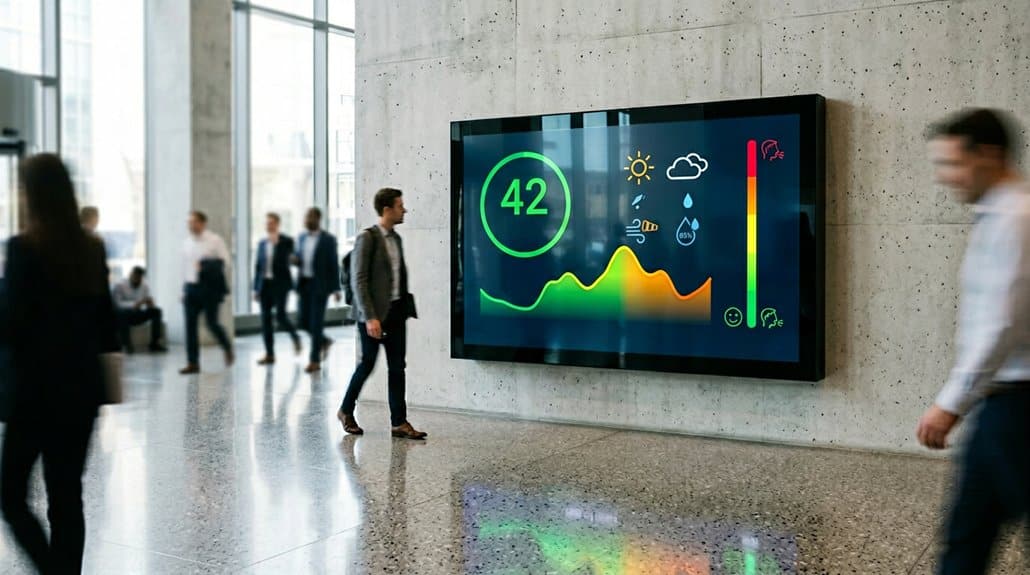
When looking to understand the impact of real-time Air Quality Index (AQI) displays, it’s essential to recognize their transformative power in public health management. Seamlessly integrating AQI data into digital signage exemplifies digital innovation, providing communities with immediate insights into air quality conditions. By displaying color-coded readings, these digital platforms enhance community engagement, facilitating informed decision-making about outdoor activities. This proactive approach not only promotes public health awareness but also encourages responsible behavior during high pollution events. Evidence shows that real-time displays align corporate social responsibility initiatives with environmental health, thereby improving businesses’ reputations. Ultimately, these measures build public trust, leveraging transparency to underscore organizational commitment to safety and regulatory compliance, revolutionizing how communities interact with their environmental surroundings.
How AQI Displays Enhance Workplace Safety
With AQI displays providing real-time safety alerts, you’re well-positioned to reduce the risk of health complications by up to 20% through informed decision-making. Integrating these displays into your workplace amplifies risk awareness, equipping employees with immediate guidance during high pollution events. This approach not only supports proactive safety measures but also fosters a culture of heightened awareness regarding air quality and health.
Real-Time Safety Alerts
As industries increasingly prioritize the health and safety of their workforce, integrating real-time Air Quality Index (AQI) displays into digital signage systems proves to be an essential development. By delivering immediate real time alerts and safety notifications, these systems enable workers to make informed decisions, such as adjusting outdoor activities when pollution levels rise. Evidence underscores their role in reducing health risks, as AQI displays warn when air quality falls below safe thresholds, prompting precautionary measures like protective gear usage. Automatically informing staff about hazardous conditions fosters a culture of safety, aligning with compliance regulations. Consequently, employees not only become more aware of air quality issues but also benefit from a reduction in workplace incidents caused by poor air conditions.
Risk Awareness Amplification
Incorporating Air Quality Index (AQI) displays into the workplace greatly enhances safety by providing employees with real-time data on pollution levels, thereby empowering informed decision-making. Studies indicate that visible AQI displays amplify your risk perception by serving as immediate risk communication tools. With their color-coded scales clearly indicating unhealthy air quality, you’re prompted to take prompt action, greatly reducing health risks. Increased pollution education leads to a 10% reduction in outdoor activities during high-risk conditions, highlighting heightened awareness. By reinforcing a safety-first culture, employers can improve employee well-being, potentially decreasing respiratory ailments by up to 20%. Moreover, a demonstrable commitment to safety can boost retention rates and job satisfaction by as much as 15%, fostering a more engaged workforce.
Enable Smart Decisions With Air Quality Data

Although often overlooked, integrating Air Quality Index (AQI) displays into digital signage systems serves as a powerful tool for enabling smart decisions through real-time data. These displays provide real-time updates, fostering data-driven decisions by informing you when to minimize outdoor exposure. As pollution awareness grows, the AQI’s color-coded scale makes it straightforward for you to interpret conditions, thereby encouraging responsible actions like avoiding outdoor activities during high-risk periods or opting for public transit. Businesses that implement these displays empower their workforce to modify personal and work plans based on current air quality, reducing health risks and absenteeism. Additionally, placing AQI in high-traffic areas reinforces a culture focused on safety, aligning individual well-being with improved health and productivity outcomes.
Boosting Corporate Reputation Through Compliance
Building on the empowerment of individuals through air quality awareness, businesses can further elevate their corporate reputation by visibly tying this commitment to compliance with environmental standards. Displaying air quality index (AQI) data on digital signage strengthens brand transparency, showing stakeholders your dedication to Environmental, Social, and Governance (ESG) objectives. This approach not only aligns your company’s strategy with regulatory compliance but also greatly heightens stakeholder trust.
When companies openly share real-time AQI data, they signal a proactive stance in sustainability and corporate social responsibility. By upholding local pollution standards, your company reduces liability and increases credibility. Eco-conscious consumers see you as a leader, enhancing competitive advantage. Consequently, your brand gains improved public perception and stronger stakeholder relationships.
Crafting a Greener Workplace With AQI Data
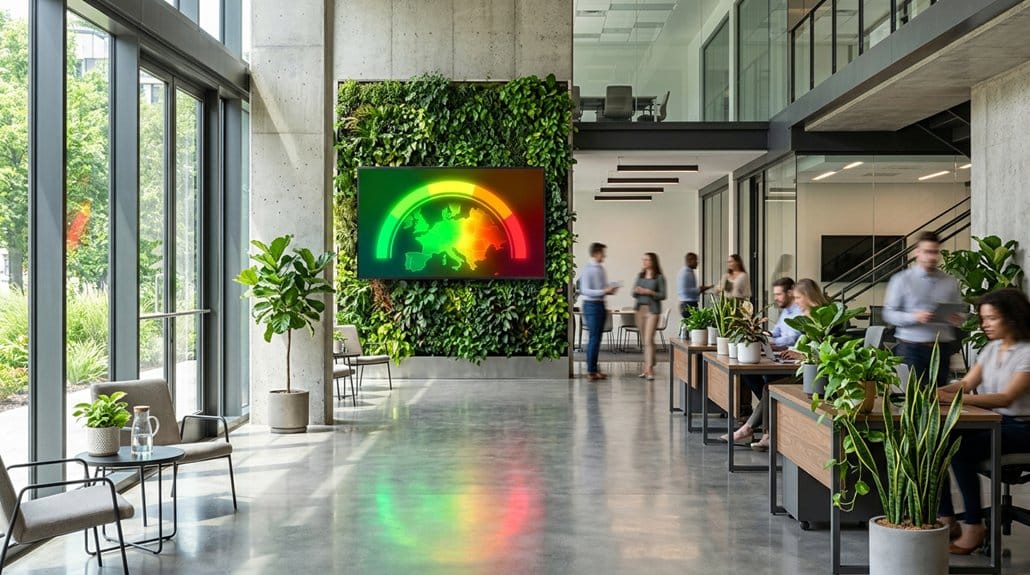
Leveraging Air Quality Index (AQI) displays in digital signage markedly enhances workplace sustainability efforts. Integrating this real-time data fosters green initiatives by encouraging informed decisions such as carpooling during high pollution days. Engaging employees in eco-friendly practices is essential, as evidenced by the potential reduction in health-related absences—costing the UK £92 billion in 2019—through improved air quality. AQI data serves not only as a practical tool but as a demonstration of corporate social responsibility. It bolsters your organization’s reputation by aligning with environmental stewardship and compliance with regulations. Employees become more engaged when they see their workplace prioritizing their well-being, creating a healthier, more sustainable environment that aligns with modern expectations for corporate accountability.
Implementing AQI Displays for Maximum Impact
To implement AQI displays for maximum impact, focus on enhancing public health awareness by strategically placing screens where they reach the most individuals, backed by studies showing a 30% increase in informed decision-making when displays are visibly accessible. This approach not only supports compliance with environmental regulations by transparently communicating pollution levels but also utilizes real-time data to encourage prompt behavioral changes, critical for reducing health risks. By effectively leveraging digital signage, you’re fostering a culture of trust and transparency, ultimately contributing to safer and more informed communities.
Enhancing Public Health Awareness
When air quality information is prominently displayed on digital signage, communities become more aware of the immediate health impacts of pollution, greatly empowering individuals to make safer lifestyle choices. These displays utilize a color-coded AQI system, offering real-time updates that enhance community engagement with environmental issues and drive successful health campaigns. Research indicates that such visibility reduces outdoor exposure during high pollution, aligning with healthier lifestyle choices and lowering healthcare costs linked to pollution-related illnesses. With accessible AQI data, you’re likely to see greater participation in health initiatives, promoting public health. Studies demonstrate a clear connection between digital AQI displays and improved public awareness, fostering eco-friendly behaviors for sustained environmental benefits and heightened collective action against pollution.
Supporting Environmental Compliance Efforts
Although integrating Air Quality Index (AQI) displays into digital signage systems might seem straightforward, the impact on supporting environmental compliance is profound. By incorporating real-time air quality monitoring, you’re not only enhancing transparency but also facilitating adherence to EPA standards. It guarantees local emissions remain within permissible limits, reducing the risk of penalties. This proactive approach aligns with your sustainability initiatives, promoting accountability across business operations.
Deploying AQI displays improves public consciousness about air quality, motivating communities and industries to adopt eco-friendly practices. It reinforces your organization’s commitment to corporate social responsibility, bolstering Environmental, Social, and Governance (ESG) objectives. Ultimately, such integration plays an essential role in fostering a safer environment for employees and the public, driving long-term sustainable development.
Leveraging Real-Time Data Effectively
Incorporating Air Quality Index (AQI) displays into digital signage systems considerably enhances transparency while supporting compliance efforts, but leveraging the power of real-time data goes further. Effectively utilizing data visualization guarantees immediate public awareness of pollution levels, empowering individuals to make informed decisions about outdoor activities. The use of a color-coded scale simplifies interpretation, promoting swift understanding of air quality conditions and related health risks.
Real-time updates reduce exposure during peak pollution, essential for sensitive groups like children and those with respiratory issues. Additionally, environmental engagement is heightened as urban settings and workplaces adopt these displays, fostering accountability and eco-friendly behaviors. This increased visibility boosts public participation and aligns with corporate social responsibility goals, reinforcing sustainable practices across communities.
Frequently Asked Questions
What Are the Benefits of the Air Quality Index?
You’ll gain improved health awareness by monitoring AQI, helping you make informed decisions to avoid pollution-related risks. It bolsters environmental education by illustrating pollution levels and sources, enhancing understanding and promoting proactive, sustainable practices for healthier living.
What Is the #1 Most Polluted Country in the World?
As of 2023, you should know that Bangladesh is ranked the #1 most polluted country globally. Major pollution sources include industrial emissions, vehicle exhaust, and construction dust, resulting in an average annual PM2.5 level of 87.7 µg/m³.
What Are the Disadvantages of Air Quality Monitoring System?
Maintenance challenges and data discrepancies deter deployment. You’ll face frequent fixes and funding frustrations. Inconsistent calibration can corrupt essential computations, compromising accuracy. Complex configurations cause confusion, and continual tech reliance risks cyber threats, system failures, and unreliable reporting.
What Are the Benefits of Air Quality Sensors?
You’ll appreciate air quality sensors as they provide accurate pollutant data, enhancing health awareness. These devices detect harmful substances promptly, empowering users to mitigate exposure and make informed decisions for maintaining a healthy environment, continuously improving life quality.
Conclusion
By embracing real-time AQI displays, you leverage data-driven insights to foster a healthier work environment. These displays empower employees to make informed decisions, directly linking air quality to productivity and well-being. Evidence shows that businesses that prioritize air quality see improved employee retention and satisfaction. Additionally, showcasing commitment to sustainability enhances corporate reputation. Ultimately, implementing AQI displays isn’t just about compliance; it’s about crafting a smarter, greener workplace that prioritizes collective health and environmental responsibility.