
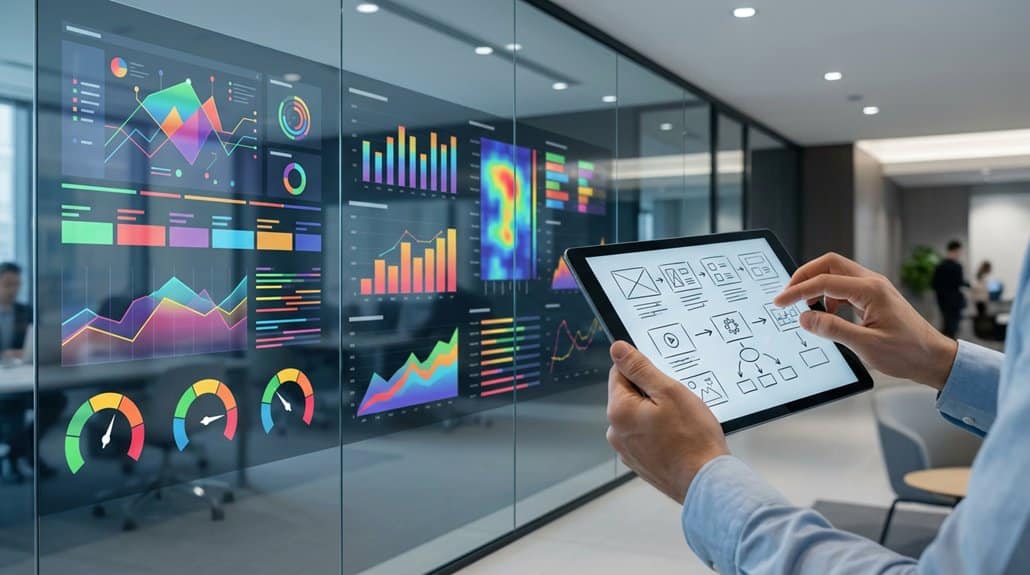
Elevate your team’s performance with data-driven content ideas by incorporating sales dashboards on digital signage screens. You can use real-time updates to bolster communication and motivate your team by showcasing leaderboards and celebratory achievements. Spotlight essential metrics like revenue and conversion rates for strategic insights, and guarantee your display is visually engaging with dynamic, uncluttered designs. This approach empowers swift decision-making and keeps your team focused and proactive. Discover how these techniques can transform your success next.
Key Takeaways
- Showcase real-time sales performance metrics to drive immediate team engagement and action.
- Use visual hierarchy to display high-priority KPIs relevant to current strategic goals.
- Implement interactive leaderboards to foster healthy competition and recognize top achievers.
- Highlight underperforming areas with color-coded alerts for quick strategic adjustments.
- Feature celebrated successes and closed deals to boost morale and reinforce team achievements.
How Sales Dashboards Transform Team Communication

In today’s dynamic sales environment, something as effective as a well-implemented sales dashboard can revolutionize team communication. You might not realize it yet, but these tools offer real-time updates, giving everyone an accurate snapshot of where they stand. By centralizing data, dashboards eliminate confusion from scattered sources, encouraging consistent communication and collaborative feedback among your team. You can keep an eye on your achievements and compare them with your peers, which fosters healthy competition and motivation.
Moreover, the integration of live data empowers your team with performance insights, helping you make timely and strategic decisions. Spotting trends allows you to adjust your strategies quickly, ensuring you’re always in tune with market changes. Celebrating individual contributions displayed clearly bolsters morale and drives a culture of recognition.
Essential Metrics for Engaging Sales Dashboards
While crafting engaging sales dashboards might seem straightforward, the magic lies in selecting the right metrics that resonate with your team’s objectives. Essential metrics like total revenue, sales volume, and average deal size offer a clear snapshot of your sales trends. Don’t forget conversion rates for leads; they reveal effective strategies and highlight improvement areas. Visual representations of key performance indicators (KPIs) such as customer acquisition cost and customer lifetime value enhance decision-making, uniting team efforts toward common goals. Incorporating real-time tracking of sales growth against historical data uncovers trends and supports forecasting. Finally, metrics that show sales cycle length can reveal bottlenecks, driving efficiency in closing deals. Prioritizing these metrics guarantees your dashboard’s success.
Design Tips for Captivating Dashboard Displays
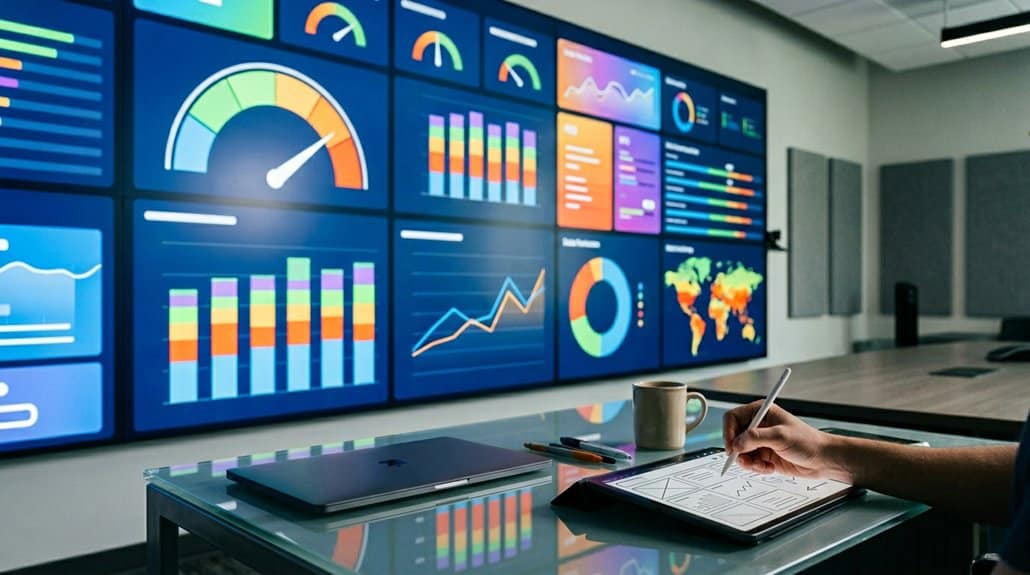
Creating alluring dashboard displays is as important as selecting the right sales metrics. To guarantee your dashboards not only look good but also communicate effectively, you’ll want to focus on design elements that enhance functionality and engagement. Here are some tips:
Design elements can enhance dashboard functionality, ensuring that they are both visually appealing and communicative.
- Visual Hierarchy: Prioritize high-impact information by strategically placing key performance indicators and alerts. This guides attention to what matters most.
- Uncluttered Layout: Keep it clean so crucial data is easily readable from a distance, allowing viewers to grasp information quickly.
- Color and Visuals: Use color coding and intuitive visuals like graphs and charts to convey data trends at a glance.
- Interactive Features: Incorporate dynamic elements such as animations to attract and maintain attention, enhancing the effectiveness of your displays.
Use Real-Time Data for Quick Decision-Making
Harnessing the power of real-time data can transform the way your team makes decisions. With real-time sales dashboards, you get up-to-the-minute performance insights and data agility to streamline your strategies. By accessing live data from CRM systems, you can quickly spot underperforming areas and adjust tactics immediately.
| Metric | Benefit |
|---|---|
| Inventory Levels | Optimize stock management |
| Sales Figures | Enhance sales strategy |
| Customer Engagement | Improve marketing tactics |
| Pipeline Health | Accelerate deal closures |
Imagine visualizing key performance indicators (KPIs) on digital signage. You’re empowered to respond swiftly to market demands, ensuring your sales strategies align with current trends and behavior patterns. Quick access to detailed statistics allows your sales team to hone in on opportunities, boosting their data-driven agility.
Boost Team Motivation With Data Visualization

Imagine walking into the office and seeing your team’s performance progress illuminating the digital signage in real-time. This dynamic visualization fosters team recognition and a competitive spirit, boosting motivation across the board. Here’s how:
- Real-Time Metrics: Keep staff engaged by allowing them to see their individual and team performance metrics at a glance. This transparency cultivates a proactive mindset.
- Closed Deals & Pipeline: Shine a light on successes and upcoming opportunities, spurring a competitive spirit that translates into higher productivity.
- Leaderboards: Create a gamified environment with top performer displays, encouraging colleagues to endeavor for recognition and improved results.
- Celebratory Messaging: Reinforce team achievements with congratulatory notes, making employees feel valued and driven to maintain streaks of success.
Frequently Asked Questions
How Can Digital Signage Improve Remote Team Engagement With Sales Dashboards?
Digital signage boosts remote team engagement by enhancing motivation and fostering data transparency. You’re always informed of sales performance, which drives motivation, while transparent metrics cultivate a trusting environment, making everyone’s contributions visible and recognized.
What Security Measures Are Needed for Displaying Sales Data on Digital Signage?
Did you know 43% of data breaches involve small businesses? You’ll need data encryption, access control, and user authentication. Confirm privacy compliance using secure connections and data masking to keep your sales information safe on digital signage.
How Do You Measure the ROI of Sales Dashboards on Digital Signage Screens?
You’ll measure ROI of sales dashboards by evaluating dashboard effectiveness, monitoring audience engagement, and analyzing content relevance. Evaluate performance metrics and use data visualization to guarantee your approach aligns with your strategic goals, enhancing overall ROI analysis.
What Are the Best Practices for Integrating CRM Systems With Digital Signage Dashboards?
Streamline your integration by ensuring seamless CRM customization, consistent data flow, and dashboard aesthetics. Prioritize user-friendly interfaces, dynamic visuals, and real-time updates to engage your audience effectively and maximize the value of your digital displays.
How Often Should the Sales Dashboard Data Be Updated on Digital Signage Displays?
You should update the sales dashboard data frequently to maintain data currency and keep it engaging. Aim for real-time updates if possible, but daily updates are a reliable choice to guarantee accuracy and relevance for your audience.
Conclusion
Imagine your sales dashboard as a lighthouse guiding a ship through stormy seas. Just as a steady beam cuts through the chaos, your data can illuminate the path to success. When team members see metrics like a 20% spike in conversion rates flash on your digital signage, they’re inspired to adjust plans and seize opportunities. With dynamic displays, you’re not just sharing numbers; you’re crafting a narrative that propels your team toward their goals.