
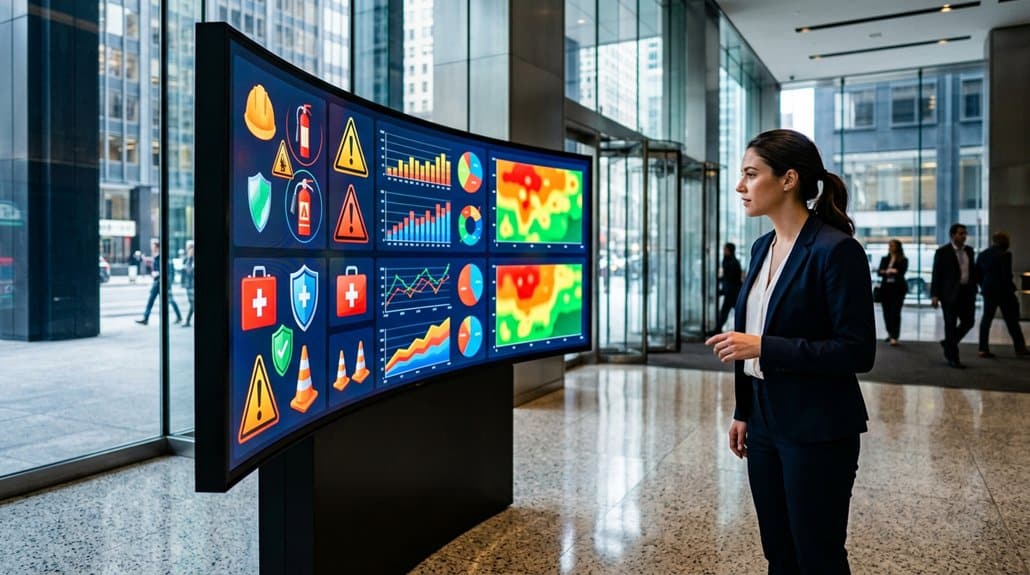
Unleash the power of data-driven content on digital signage screens to enhance safety communication in your workplace. By displaying real-time metrics like incident rates and compliance statistics, you’ll foster awareness and quick decision-making. Show injury trends through engaging visuals and short video clips, and incorporate interactive elements like quizzes for effective learning. With consistent updating and strategic storytelling, you’ll build a safety-first culture and reduce risks. Explore further to revolutionize your communication strategy.
Key Takeaways
- Display real-time safety dashboards with incident rates and near-miss occurrences for increased workplace awareness.
- Use interactive quizzes on safety protocols, providing instant feedback to reinforce learning and employee engagement.
- Integrate video clips showcasing injury reduction trends to visually convey the effectiveness of safety initiatives.
- Highlight compliance statistics with OSHA or ISO standards to emphasize adherence and motivate improvements.
- Employ location-specific data visualizations to present relevant air quality metrics and equipment status updates.
Key Metrics to Display for Enhanced Safety Communication
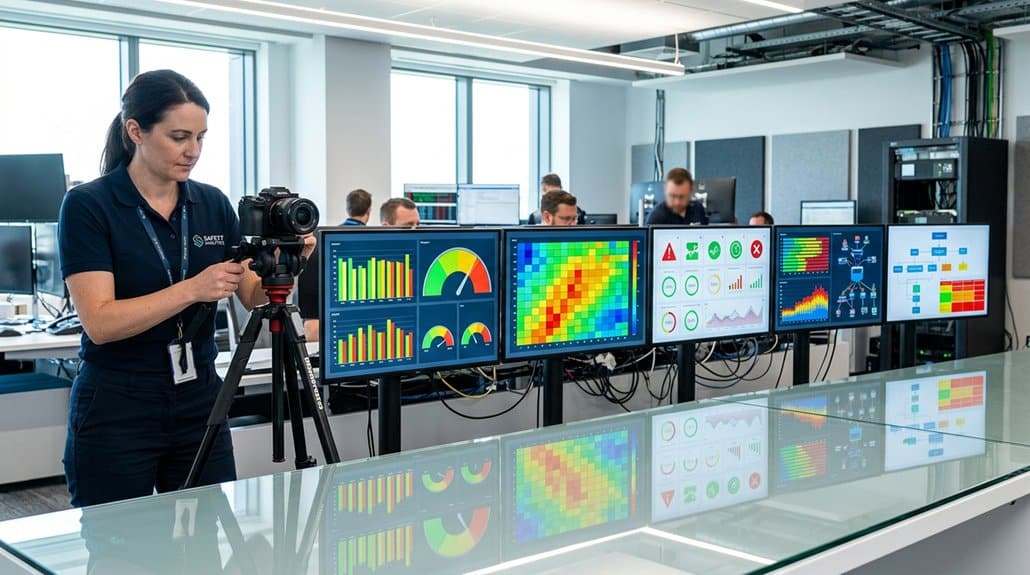
When working to enhance safety communication within your organization, focusing on key metrics displayed through digital signage can be transformative. By showcasing incident rates and near-miss occurrences, you create a powerful tool for safety engagement that encourages proactive behaviors among employees. Metrics analysis of injury reduction trends not only fosters accountability but also highlights the effectiveness of current safety initiatives. Displaying real-time data on air quality or equipment statuses empowers employees to make informed decisions, ensuring a safer environment. Showcasing compliance statistics with OSHA or ISO standards underscores the importance of regulatory adherence, reflecting your commitment to workplace safety. Finally, updates on safety training completion rates can boost motivation, engaging your workforce in continuous safety education and practice improvement.
Understanding Data-Driven Digital Signage in Safety Communication
When you embrace data-driven digital signage for safety communication, you’re prioritizing real-time data to elevate workplace safety. Imagine utilizing visual storytelling techniques that transform complex metrics into engaging displays, guiding your team’s understanding of crucial safety protocols. This approach not only enhances safety awareness but also guarantees quick responsiveness during emergencies, aligning everyone on a path to a safer work environment.
Leveraging Real-Time Data
Though safety is paramount, managing it efficiently requires leveraging real-time data through digital signage to make a significant impact. Integrate real-time alerts on your displays to provide up-to-date safety metrics. This allows employees to visualize workplace conditions and follow safety protocols. Safety dashboards showing immediate alerts and key performance indicators (KPIs) let organizations respond promptly to hazards, reducing response times and fostering a safety-conscious environment. Live dashboards can also showcase metrics like near-miss incidents and equipment statuses, encouraging proactive measures. Interact with data visualizations to engage staff, illustrating safety trends and informing them of the latest regulations and training completion rates. By doing so, you’re promoting awareness and ensuring employees understand their compliance responsibilities.
Enhancing Workplace Safety
Harnessing real-time data for safety doesn’t stop at providing alerts; it extends to transforming how workplace safety is communicated effectively. By displaying real-time safety metrics, digital signage engages employees and fosters a proactive safety culture, which considerably enhances employee engagement. Imagine leveraging live data to visually present compliance stats, training completions, or celebrating milestones like incident-free days.
Here’s how data-driven content can be structured:
| Metric | Goal | Result |
|---|---|---|
| Injury Rates | Reduction by 10% | 8% reduction achieved |
| Near-miss Trends | Capture and minimize | 12 identified, actions underway |
| Safety Milestones | Recognize weekly | 4 weeks incident-free |
Integrating such engaging dashboards not only improves awareness but also motivates everyone to contribute to a safer workspace.
Visual Storytelling Techniques
As you explore visual storytelling techniques for data-driven digital signage, it’s intriguing to see how these methods can transform safety communication in the workplace. By employing narrative techniques, you turn ordinary safety data into compelling stories, making it easier for employees to grasp and act upon. Data visualization becomes a powerful tool when used creatively, displaying incident rates and compliance statistics as engaging graphics or live data dashboards. These visual cues capture attention and reinforce the collective commitment to zero lost time injuries. Short video clips showcasing real-time safety metrics can highlight trends, making the importance of safety protocols palpable. Tailoring content to show location-specific data enhances relevance, addressing unique safety challenges in different facility areas effectively.
Using Visual Storytelling for Clear Safety Data
You’re tasked with the challenge of making safety data clear and compelling, and visual storytelling through digital signage is your tool. By transforming complex statistics into vibrant infographics or dynamic dashboards, you simplify information and hold employees’ attention in high-stakes environments. Let animated charts and quick video snippets do the heavy lifting, making safety metrics not just understood but remembered and acted upon.
Simplifying Safety Data Visually
When complex safety data turns into visually engaging narratives, it empowers your team to quickly grasp essential information without feeling overwhelmed. By utilizing data visualization and infographic design, you can transform injury rates and compliance statistics into clear, engaging graphics. This approach not only makes data more accessible but also drives home the importance of workplace safety. Consider the following elements you might use in your displays:
| Element | Purpose | Example |
|---|---|---|
| Infographics | Simplifies complex data into easy-to-understand visuals | Injury trends |
| Color-Coded Metrics | Enhances quick data interpretation | Risk levels |
| Progress Bars | Tracks success toward safety goals | Zero injury progress |
These tools help everyone visualize safety goals, encouraging a proactive approach to reducing incidents.
Engaging Storytelling With Visuals
Effective visual storytelling can revolutionize how safety data is comprehended across your organization, making it both engaging and insightful. By utilizing impactful visuals like infographics and animated charts, you help employees quickly grasp key metrics and trends with minimal effort. Real-time data visualizations on digital signage screens provide instant understanding of your safety tracker’s performance, highlighting areas for improvement through storytelling techniques.
Enhance memorability by narrating near-miss incidents or safety successes with short video clips, grounding statistics in relatable experiences. Mix eye-catching imagery with concise text to effectively convey safety protocols along with data dashboards. Celebrate safety achievements using progress bars or milestone markers to sustain a culture of safety. These elements together maximize visual impact, fostering awareness and continuous improvement.
Interactive Content Ideas for Enhanced Safety Communication
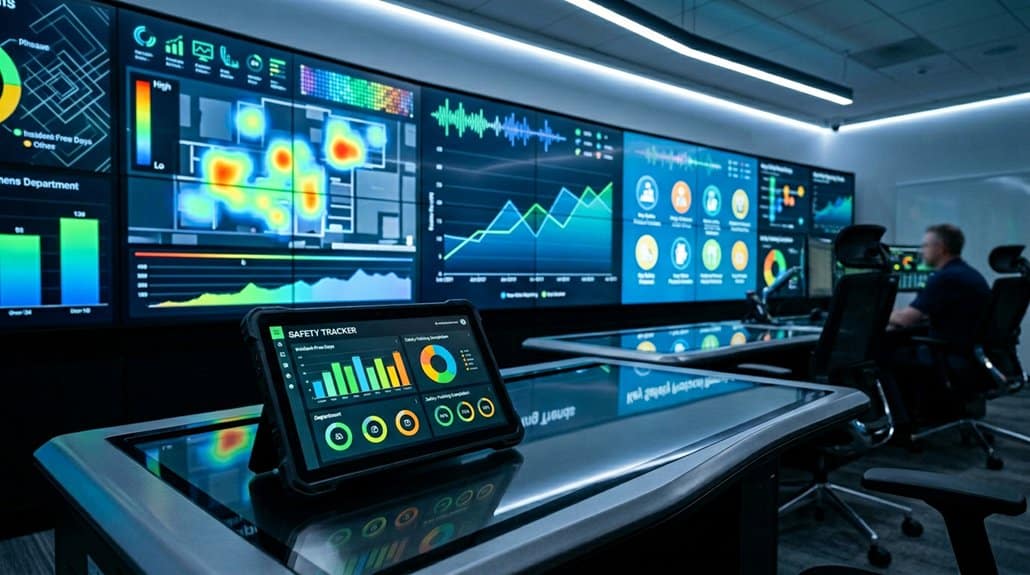
Interactive digital signage offers a dynamic way to enhance safety communication in the workplace. By using quiz engagement and content interactivity, you can create an engaging learning environment. Imagine employees testing their knowledge of safety protocols through quizzes right on screen, with instant feedback reinforcing their learning. This doesn’t just promote engagement; it solidifies understanding, making safety protocols second nature.
Pair this with real-time injury trend visualizations and interactive dashboards, and you’ve got a digital toolkit that fosters collective responsibility. Employees can track near-miss incidents and safety metrics, inspiring a transparent and proactive safety culture. Incorporate user-generated safety tips to encourage community involvement. When everyone shares insights, it builds a community where safety isn’t just a policy—it’s a shared commitment.
How to Send Immediate Safety Alerts With Digital Signage
Imagine being able to send immediate safety alerts that keep everyone informed and safe—this is where digital signage shines. With strategic alert configurations, real-time warnings redirect employees from hazardous zones, fostering a proactive safety culture. By seamlessly integrating with IoT devices, digital signage offers instantaneous notifications about maintenance issues, minimizing equipment downtime by up to 35%.
During emergencies, these displays can automatically interrupt regular programming to broadcast critical information concerning evacuation routes and emergency contacts. Seamlessly visible updates enhance knowledge and compliance with safety protocols.
- Real-Time Integration: IoT devices collaborate with digital signage to manage risks effectively.
- Emergency Protocol Override: Displays can adapt and provide urgent details instantly.
- Proactive Safety Culture: Ongoing awareness leads to a more informed workforce.
Updating and Assessing Content for Effective Digital Safety Communication
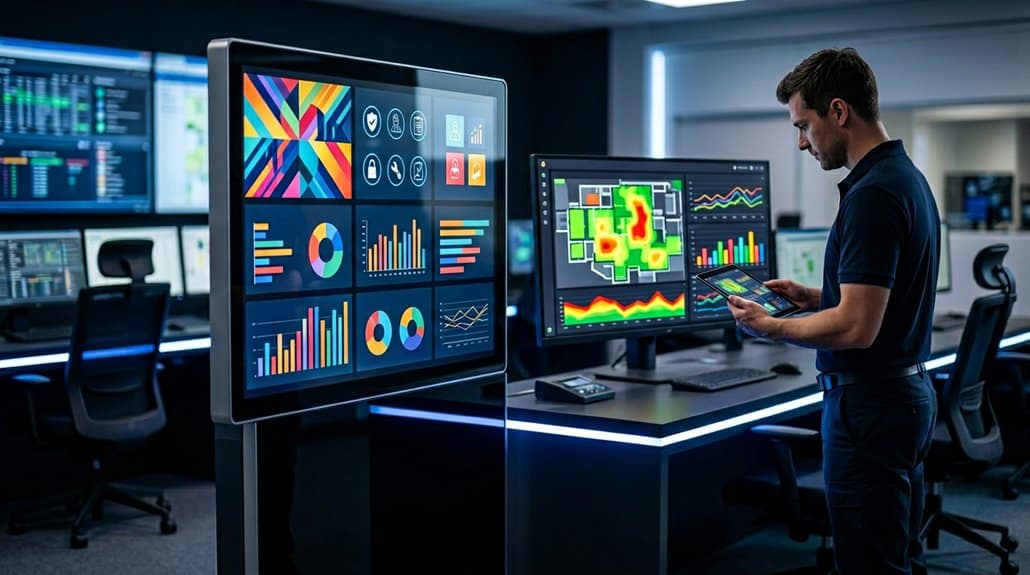
As you continually update and assess content for digital safety communication, it’s essential to harness the power of real-time data to guarantee your messages remain relevant and impactful. Regular content refresh facilitates message consistency, capturing attention and reducing incident rates by up to 20%. Leverage safety trackers for data visualizations to make dashboards both engaging and accessible. By frequently rotating messages and integrating employee feedback, you’re directly contributing to progressive safety culture. Here’s a quick breakdown:
| Core Aspect | Benefit | Strategy |
|---|---|---|
| Real-Time Data | Keeps messages relevant | Use safety trackers |
| Content Refresh | Enhances engagement | Rotate messages regularly |
| Feedback Mechanism | Continuous improvement | Collect employee insights |
| Visual Dashboards | Simplifies complex information | Implement visual data aids |
| Message Consistency | Builds a safety-first mindset | Ensure aligned updates |
Frequently Asked Questions
How Can Safety Tracker Data Be Anonymized to Protect Employee Privacy?
You’d anonymize safety tracker data by implementing data encryption, ensuring employee details are protected. Adhering to privacy regulations guarantees that personal information isn’t exposed, fostering trust and maintaining compliance while creatively analyzing anonymized patterns for safety improvements.
What Are the Costs Associated With Implementing Digital Signage for Safety Communication?
Imagine building a bridge—it’s the initial investment that seems challenging, but the long-term savings are like smooth traffic flow. With digital signage, upfront costs include hardware and software, while durable savings stem from efficient communication.
Can Digital Signage Be Integrated With Existing Workplace Safety Systems?
Yes, you can integrate digital signage with existing workplace safety systems. It enhances workplace communication by enabling real-time alerts, ensuring everyone stays informed and safe. This integration provides a creative, efficient method for safety notifications.
How Often Should Safety Tracker Data Be Updated on Digital Screens?
Keep safety tracker data fresh as a morning breeze by updating it daily. Your update strategy should prioritize data frequency like a heartbeat—constant and reliable—to guarantee real-time information keeps everyone safe and in the loop.
What Technical Support Is Needed for Maintaining Digital Safety Signage?
You’ll need reliable network connectivity and regular software updates to keep digital safety signage functional. Guarantee technical support teams monitor system uptime and address any network reliability issues promptly to maintain efficient communication and enhance safety awareness.
Conclusion
You’ve journeyed through the wonders of data-driven safety communication on digital signage screens—because who doesn’t love analyzing spreadsheets during a safety drill? Visualize your metrics, craft thrilling safety tales, and interact with the excitement of emergency alerts. It’s practically binge-worthy! Just remember, updating content is key; outdated safety data is almost as thrilling as watching paint dry. Now, go forth and communicate safety with flair, because pixel-powered safety is the new black.