

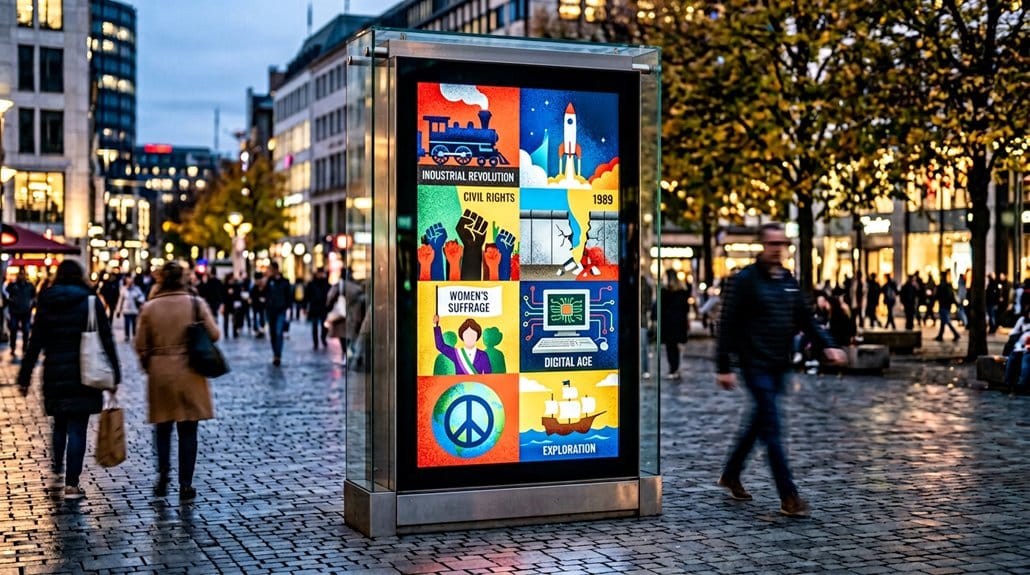
Incorporating “This Day in History” into digital signage keeps content fresh and informative by offering timely, narrative-driven displays that capture attention. You’re engaging viewers with emotional connections to significant events, boosting engagement and retention. Automation guarantees daily updates, making each interaction memorable and educational. Using real-time social media integration bolsters community interaction and keeps the content dynamic. Curious about increasing engagement by up to 70%? Discover the strategies behind these impactful displays.
Key Takeaways
- “This Day in History” updates maintain content freshness by delivering timely and relevant historical narratives daily.
- Automated content updates ensure displays remain engaging and informative with minimal manual input, increasing viewer retention.
- Historical event narratives trigger curiosity, fostering deeper engagement and connection with the audience.
- Integration of social media interactions around historical content enhances viewer participation and interest.
- Real-time analytics of historical displays offer insights into viewer preferences and optimize content for maximum impact.
How Does Historical Content Elevate Digital Signage?
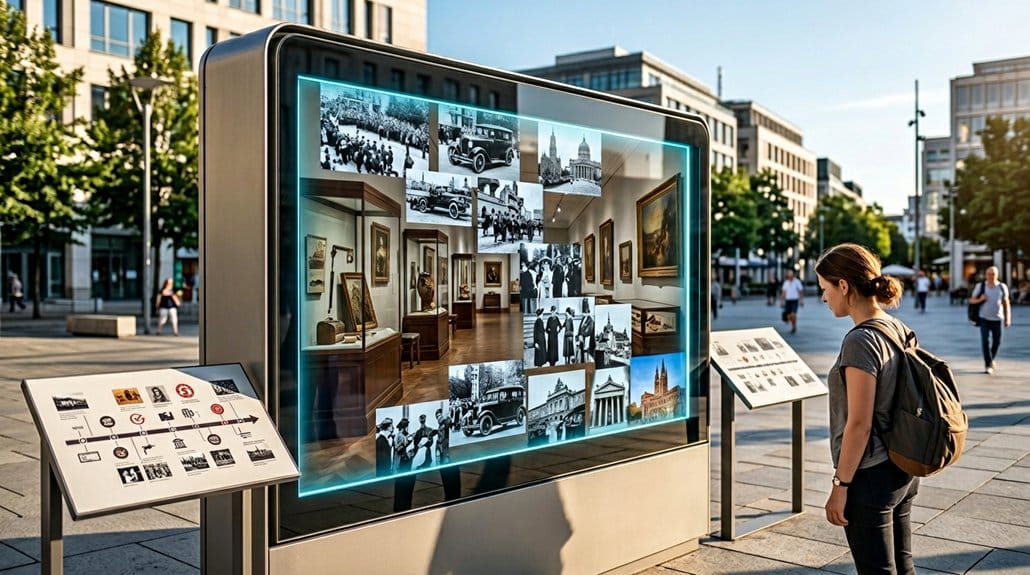
Incorporating historical content into digital signage doesn’t just catch the eye; it transforms the experience into an engaging narrative that resonates on a deeper level. With historical storytelling, you’re not just displaying information—you’re creating a bridge that connects audiences to the past in relatable ways. Imagine the impact of showcasing “This Day in History” facts: suddenly, viewers don’t just see signage; they interact with a story that enriches their understanding. This method enhances the educational value, making content more memorable and fostering higher retention rates. By weaving in historical timelines, you appeal to a wide demographic, sparking interest across diverse age groups and promoting social media engagement. Ultimately, it’s about transforming your digital signage into a dynamic storytelling platform.
Why Do Historical Events Capture Audience Attention?
Why are audiences so captivated by historical events on digital signage? It’s because these events have a unique way of triggering curiosity and engagement. They highlight significant milestones that shaped society and culture, providing a sense of historical impact that resonates today. Viewers feel a deeper audience connection when content leverages emotional responses, drawing them into narratives tied to human experiences and shared memories.
Research suggests you’re more likely to engage with content offering context and significance. Historical events do just that, enhancing your interest and retention on digital display. By integrating educational value, such content fosters a learning environment, making you feel connected. Plus, technology like interactive displays keeps your experience personalized, fresh, and dynamic.
How Can Significant Anniversaries Be Integrated Into Daily Displays?
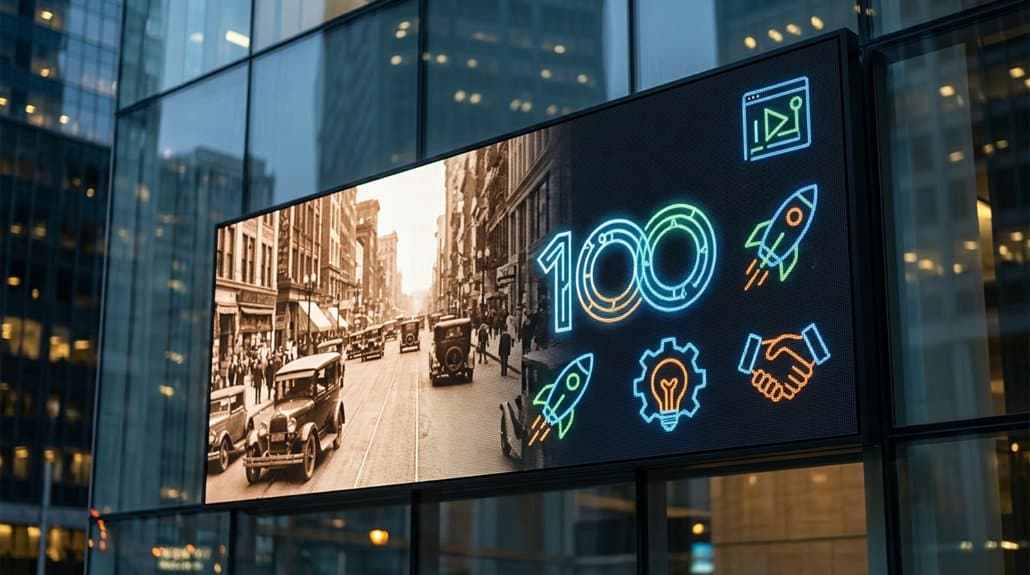
You can seamlessly commemorate historical moments by enriching your digital signage with anniversary-related content, capturing viewers’ attention with ease. According to data, automatic updates using content management systems keep your displays both fresh and educational, allowing you to engage your audience through daily historical trivia, like the installation of the first neon sign in 1923. By aligning promotional events with these commemorative dates and incorporating real-time social media interactions, you’re set to transform passive viewers into active participants, enriching both their experience and your brand’s impact.
Commemorate Historical Moments
Harnessing the power of historical anniversaries in your digital signage can transform everyday displays into engaging storytelling vehicles. By showcasing moments of historical significance, you evoke audience nostalgia while capturing attention. Consider the impact of integrating these powerful events:
- The Neon Era (1910): Celebrate the dawn of vibrant visuals, connecting your brand’s luminous journey with the first neon sign’s historical roots.
- Tech Evolution (1984): Highlight milestones like the first commercial digital signage display, immersing viewers in the ongoing evolution of technology.
- Innovation Drivers (2007): Link the launch of iconic products like the iPhone to show how past innovations shaped today’s experiences.
Utilizing analytics, tailor your content to find which anniversaries resonate most, turning moments in history into marketing magic that captivates your audience.
Engage Through Relevant Content
Celebrating historical moments lends a fresh perspective to your digital signage displays, and seamlessly integrating significant anniversaries can elevate audience engagement. Incorporating milestones such as the first commercial neon sign installation in 1912 instantly adds historical relevance to current promotions, capturing viewer attention through an enriched context. Highlighting events like the Video Cassette Recorder (VCR) launch in 1972 evokes nostalgia, fostering a deeper audience connection through relatable storytelling.
Additionally, by spotlighting advancements such as the introduction of the iPhone in 2007, you establish a bridge between technological innovation and your product offerings. This not only emphasizes innovation but also enhances the customer experience. As a dynamic tool, digital signage can also educate on technological milestones, such as the early 2000s LCD displays, reinforcing your brand’s modern commitment.
Leveraging Milestones: Engaging Your Viewers
Although digital signage is a dynamic medium in itself, incorporating historical milestones adds an intriguing layer that instantly boosts viewer engagement. By embracing milestone storytelling, you weave a rich tapestry of past and present, engrossing audiences and fostering nostalgia.
- Connection to History: By featuring events like the 1910 revelation of the first neon sign, you prompt viewers to marvel at technological evolution, deepening their connection to history.
- Time-Relevant Content: Highlighting today’s events alongside historical anniversaries keeps content fresh, attracting viewers’ attention with a mix of nostalgia and curiosity.
- Industry Reflection: Showcasing historical milestones can prompt contemplation on how industries, especially those impacted by digital signage, have changed over time.
Using tools like EasyTV, you can easily schedule content that honors these milestones, keeping displays informative and interactive.
Creating Shared Experiences Through Cultural Context
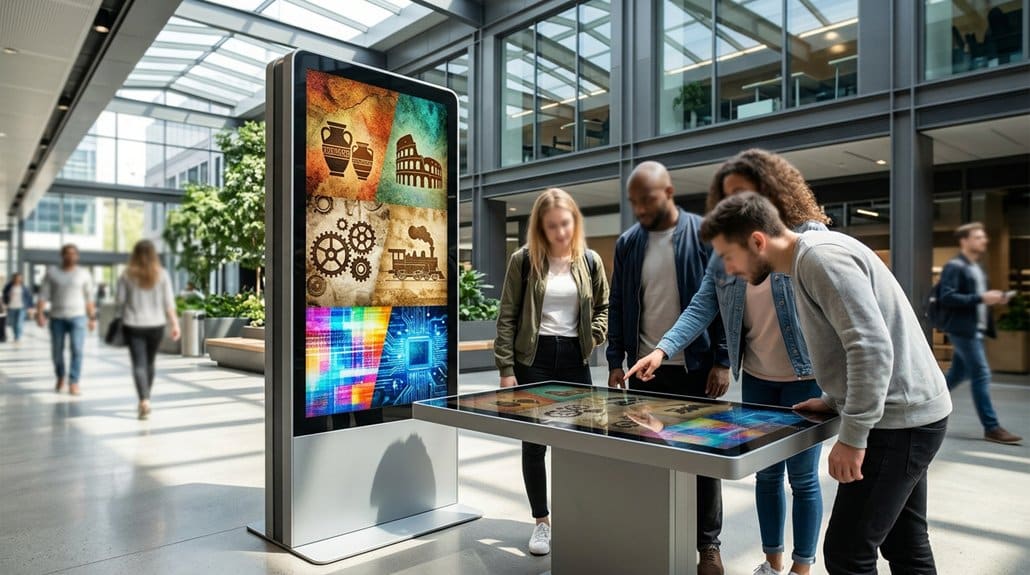
While it’s easy to overlook, integrating cultural context into digital signage creates shared experiences that resonate deeply with your audience. By leveraging “This Day in History” content, you bring cultural relevance to the forefront, transforming routine displays into enthralling storytelling mediums. Highlighting significant anniversaries or milestones sparks viewer participation, uniting individuals around shared narratives.
Real-time updates of historical facts not only enrich your content’s narrative but also make it dynamic and engaging. Analytics can track how different demographic groups interact with these shared experiences, helping you refine your messaging strategies. This data-driven approach guarantees that your displays resonate universally, fostering a communal atmosphere in public spaces. Ultimately, these shared experiences lead to more impactful and memorable customer engagements.
Top Platforms for Incorporating Historical Content
When you’re looking to incorporate historical content into your digital signage, consider leveraging platforms that combine extensive historical archives with user-generated insights. EasyTV and social media APIs like Twitter and Facebook can dynamically display “This Day in History” events, while using a CMS guarantees fresh updates. By utilizing real-time analytics, you’ll track viewer engagement, optimizing content based on data-driven audience preferences.
Leveraging Historical Archives
Ever wondered how leveraging historical archives could boost your digital signage content? By tapping into platforms like EasyTV, you’ll imbue your displays with historical relevance, engaging viewers with anniversaries and pivotal events. Incorporating these archives involves insightful content curation, guaranteeing your signage remains intriguing and timely. Here’s how this approach can elevate your displays:
- Educate – Share thought-provoking historical insights that enrich the viewer’s understanding of a subject.
- Engage – Utilize platforms like Digital Signage Expo to pair stories with significant dates, boosting audience participation.
- Drive Connection – Transform your signage into a meaningful experience, drawing visitors by reflecting impactful events in local or global history.
Efficient content management systems guarantee these elements coincide perfectly with key dates, enhancing cultural resonance.
User-Generated Historical Insights
Building on the power of historical archives, today’s digital signage strategy gets a fresh boost from user-generated historical insights. Platforms like Instagram and Twitter are game-changers for incorporating user-generated storytelling. You can encourage your audience to share historical experiences tied to your brand using hashtags. Their stories spark audience nostalgia and form a community-driven narrative that breathes life into your displays. Tools like Canva and Adobe Spark simplify turning user content into visually striking graphics, keeping your digital signage vibrant and informative. With real-time social media feeds, users’ anecdotes or photos transform your content into an ever-evolving visual feast. Engaging your audience through polls or contests not only enriches content but also strengthens community bonds.
Real-Time Historical Analytics
- Enhance Engagement: Captivate your audience with unique content experiences, improving retention by up to 70%.
- Automate Content: Utilize APIs to automate the display of significant events, birthdays, and anniversaries from databases like Wikipedia, keeping content fresh and relevant.
- Guarantee Freshness: Platforms that support real-time updates guarantee dynamic content refreshes, prompting social media buzz and foot traffic.
Using these platforms gives you the power to evoke nostalgia and enrich your audience’s experience daily.
How Do You Measure Historical Content’s Impact on Engagement?
How do you effectively measure the impact of historical content on engagement through digital signage? Start by focusing on engagement metrics. Track viewer dwell time, repeat viewing rates, and social media shares. These metrics reveal content effectiveness and show how audiences are interacting with your messages.
Consider this table summarizing key insights:
| Metric | Insight | Impact on Engagement |
|---|---|---|
| Viewer Dwell Time | Longer viewing times indicate interest | Higher retention rates |
| Repeat Viewing Rates | High rates suggest compelling content | Increased repeat visits |
| Social Media Shares | Sharing boosts visibility and engagement | Greater brand awareness |
Customizing content to local events or milestones can enhance relatability and boost engagement by up to 30%. Use real-time analytics to adapt quickly, ensuring historical content remains fresh and effective.
Actionable Strategies to Maintain Engaging Digital Signage
Here’s how to make an impact:
- Automate updates with anniversaries.
- Use quizzes for active engagement.
- Integrate real-time social media content.
Frequently Asked Questions
What Is the History of Signage?
You’ve seen signage evolve from ancient stone carvings to modern digital displays. Its cultural significance can’t be overstated, as it’s shaped communication methods. Digital signage now offers real-time updates and interactivity, keeping audiences informed and engaged.
Why Is Digital Signage Important?
Digital signage is like a magnet for audience engagement, pulling them in with dynamic displays. It enhances your content strategy by providing real-time updates that captivate viewers and drive consumer behavior, increasing both retention and sales effortlessly.
When Were Digital Signs Invented?
Digital signs emerged in the 1980s when networked electronic signs allowed remote updates. As display technology and digital innovation advanced, these systems evolved from basic electronic displays to dynamic content solutions, revolutionizing how information is shared and consumed.
What Are the 7 Key Elements of Digital Signage?
Imagine boosting customer interaction by employing digital signage with seven key elements: content, hardware, software, network, management, analytics, and interactivity. Crafting a dynamic content strategy enhances audience engagement, finely tuning how you captivate viewers.
Conclusion
Congratulations, you’ve discovered the secret to digital signage nirvana: historical content. Who knew a fun fact about Ancient Rome could rival Netflix for attention? Honestly, viewers can’t get enough of time-travel with a side of wit. As you toss in anniversaries like confetti, watch your engagement stats soar. Cheers to a future where every screen becomes a riveting history lesson. Because who doesn’t crave more trivia while waiting for their coffee? You’re practically a digital Da Vinci.