

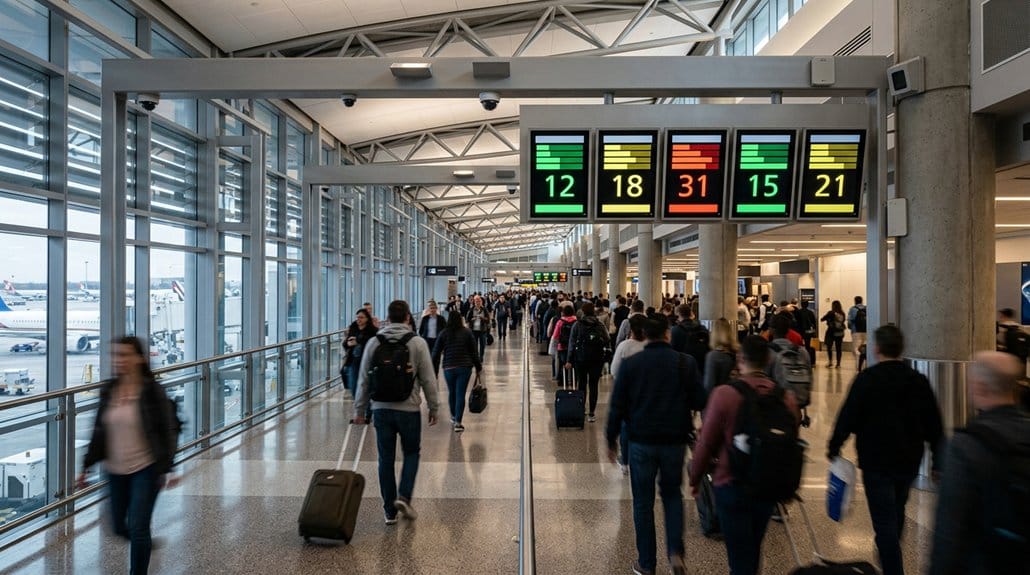
Airports enhance your travel experience by using digital signage to optimize security wait times. Real-time data and predictive analytics on LED screens and kiosks reduce perceived wait times by up to 25%, improving passenger flow and operational efficiency. Digital displays provide critical information like security updates, allowing you to navigate the airport more smoothly. Major airports have implemented these technologies successfully, increasing passenger satisfaction and reducing anxiety. Discover how they transform your travel journey further.
Key Takeaways
- Digital signage provides real-time security wait time updates, enhancing passenger experience and operational efficiency at airports.
- LED screens and kiosks display critical information to direct traveler movement and minimize congestion effectively.
- Airports utilize predictive analytics to offer accurate wait time forecasts and strategic resource allocation.
- Real-time notifications on digital platforms reduce perceived wait times, boosting passenger satisfaction.
- Interactive displays modernize airport services, facilitating a smoother, more organized flow of passenger traffic.
An Introduction to Digital Signage in Airports
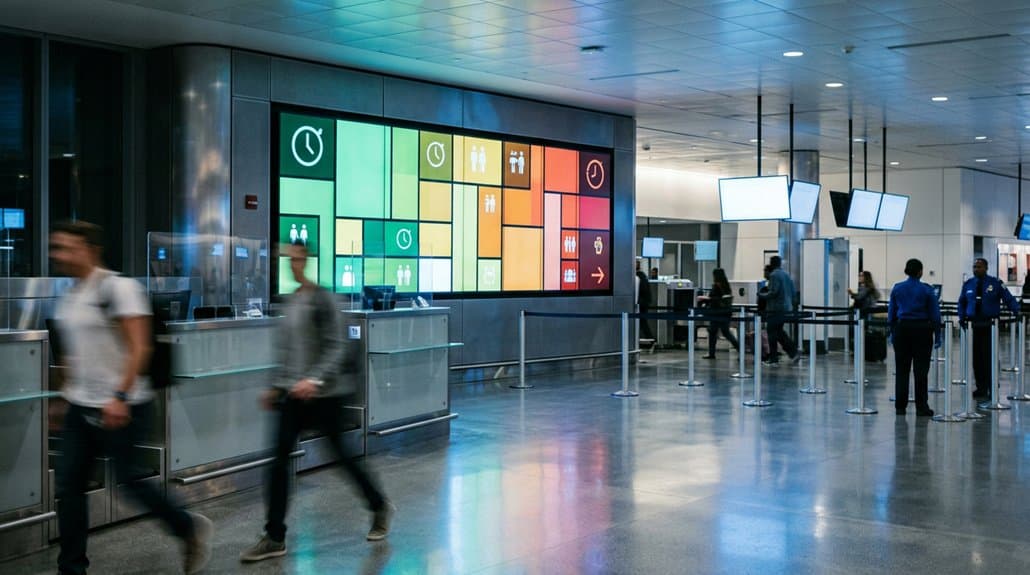
In the bustling environment of modern airports, digital signage emerges as an essential tool for enhancing passenger experience and operational efficiency. By aligning with digital trends, airports capitalize on cutting-edge technologies like LED screens and interactive kiosks to display vital real-time data, such as security wait times. This approach not only elevates passenger engagement but also strategically directs traveler movement to minimize congestion and improve flow. With accurate data from security screenings, digital signage updates wait times, allowing passengers to make informed decisions about checkpoint arrival. Furthermore, as airports push towards modernization, digital signage plays a pivotal role in optimizing the aviation experience, ensuring both improved safety and customer service. Embracing this technology aligns with the continuous push for operational excellence.
How Real-Time Updates Revolutionize Security Procedures
With digital signage providing real-time traveler notifications, you can strategically plan your journey through airport security, reducing wait time uncertainty and anxiety. Data analytics empower airports to enhance security efficiency by predicting peak periods and updating display information dynamically, ensuring smoother passenger flow. This system’s integration with mobile applications allows for seamless access to security conditions, optimizing your overall travel experience and streamlining airport operations.
Real-Time Traveler Notifications
These digital notifications alert you to unexpected delays, allowing you to make strategic decisions and possibly avoid missing flights. By communicating updated security protocols and procedures, notifications help you remain compliant and informed. Ultimately, real-time updates enhance the overall passenger flow, contributing substantially to improved Airport Service Quality (ASQ) metrics, increasing customer satisfaction and the likelihood of repeat travel.
Enhanced Security Efficiency
Building on the advantages of real-time traveler notifications, enhancing security efficiency through digital signage transforms how airports manage security procedures. Implementing this security technology allows airports to provide passengers with real-time wait times, enabling you to plan your journey through security more effectively. By decreasing congestion during peak hours, airports dynamically manage passenger flow, improving both security processing efficiency and passenger satisfaction.
| Feature | Benefit | Result |
|---|---|---|
| Real-Time Wait Updates | Informed Passenger Decisions | Reduced Congestion |
| Digital Signage | Dynamic Passenger Flow Management | Enhanced Security Efficiency |
| Mobile Integration | Alerts En Route to Airport | Streamlined Security Process |
| Resource Management | Effective Staff Allocation | Optimized Operations |
| Passenger Experience | Decreased Perceived Wait Times | Improved Satisfaction |
As studies show, airports leveraging these tools report enhanced resource management, effectively deploying personnel and optimizing operations.
How Digital Signs Smooth Your Security Journey
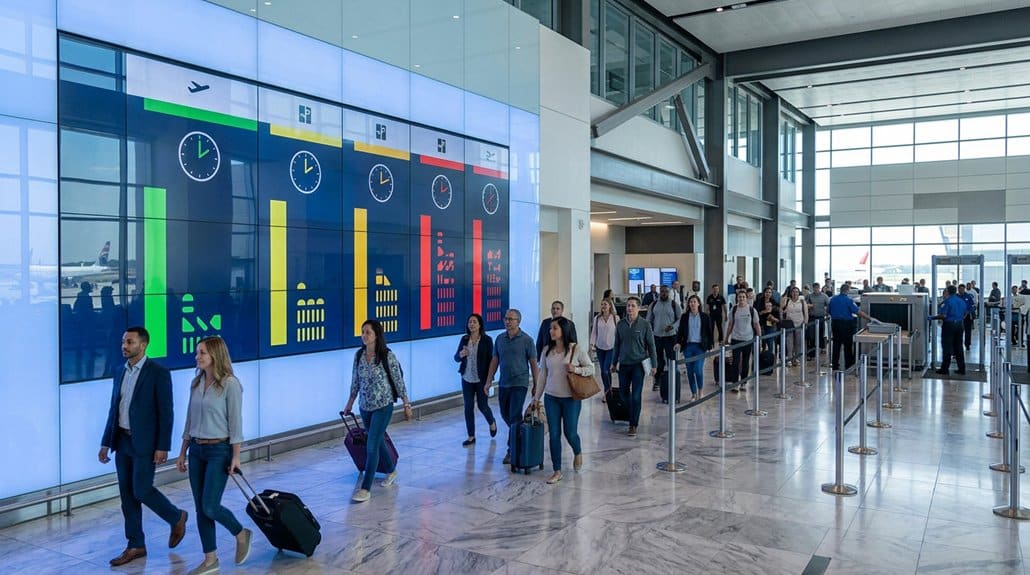
Although traversing airport security can often be an intimidating experience, digital signs play an essential role in facilitating a smoother journey. With strategic passenger engagement through informational displays, airports deliver real-time updates on security wait times. By utilizing live data analytics and camera feeds, these signs dynamically adjust wait time estimates, providing you with clearer expectations and reducing congestion. The result is an enhanced flow of passengers and increased airport efficiency. Critical informations, like security protocol reminders and location guidance, further prepare you before reaching checkpoints. Additionally, the integration of digital signage with mobile apps extends this real-time information beyond the terminal, ensuring you’re informed and prepared ahead of time. This strategic approach dramatically improves passenger satisfaction.
Enhancing Passenger Experience With Accurate Information
To enhance your experience, digital signage provides real-time flight updates and strategically manages queues by leveraging dynamic display technology. You benefit from real-time data, allowing you to anticipate delays and adjust your travel schedule efficiently. By analyzing traffic patterns, airports generate precise wait time forecasts, ensuring you’re equipped with the most accurate information for seamless passage through security checkpoints.
Real-Time Flight Updates
In today’s bustling airports, nearly 100 million passengers maneuver through complex terminals annually, making real-time flight updates essential for enhancing the passenger experience. Digital signage plays a critical role in flight tracking by providing essential information like arrival and departure times, gate changes, and delays. Strategically placed interactive screens offer personalized passenger notifications, ensuring you stay informed about your specific flight. This integration minimizes confusion, reduces anxiety, and improves overall operational efficiency.
Integration with mobile apps means you can easily track your flight status and receive timely updates on various devices throughout your journey. This strategic use of technology positively impacts your journey by enhancing access to relevant information and contributing to smoother passenger flows.
- Real-time flight updates
- Personalized notifications
- Improved passenger flow
Efficient Queue Management
When you’re maneuvering the crowded terminals of an airport, clear and timely information can be invaluable. Digital signage displaying real-time security wait times greatly aids in queue optimization. By informing you precisely how long the wait is, you can strategically plan when to approach security checkpoints, ultimately resulting in smoother passenger flow. Studies show that airports utilizing this technology can effectively reduce congestion, particularly during peak times. Accurate information doesn’t just ease anxiety; it enhances your overall airport experience. Additionally, these signs often provide essential updates on security protocols and alternative routes, helping you navigate efficiently. Integration with mobile devices via QR codes guarantees you receive instant updates, maintaining a seamless travel experience and maximizing operational efficiency.
Dynamic Display Technology
Although real-time information is essential in any travel setting, dynamic display technology revolutionizes the way airports convey security wait times, markedly enhancing the passenger experience. With display innovation, airports use digital signage to provide accurate, up-to-the-minute wait times. This reduces anxiety and allows you to better plan your trip. Visual engagement through interactive signage means you’re not just a passive viewer—you’re empowered with personalized updates that guide you efficiently.
Studies indicate a 25% decrease in perceived wait time when accurate information is available, boosting satisfaction. Additionally, integrating data from security checkpoints and predictive analytics guarantees reliable, dynamic updates.
- Instantly updated wait times reduce anxiety
- Displays integrating predictive analytics improve accuracy
- Interactive screens offer personalized information
Top Emerging Technologies in Airport Signage
As airports endeavor to enhance customer experience while managing operational efficiency, the integration of emerging technologies in digital signage plays a pivotal role. By leveraging AI algorithms and cloud integration, airports can offer a seamless experience, predicting peak security wait times with accuracy. Interactive kiosks provide a personalized touch to customer engagement, offering tailored information on security procedures. Predictive analytics, coupled with real-time data visualization, guarantees that passengers receive up-to-date insights, empowering better decision-making and enhancing the flow of airport traffic. These technologies not only facilitate smoother security processes but also enable strategic resource allocation and reduced congestion. With the addition of mobile notifications, passengers are continuously informed, enhancing both convenience and satisfaction as they navigate the airport environment.
Successful Digital Signage Implementation in Major Airports
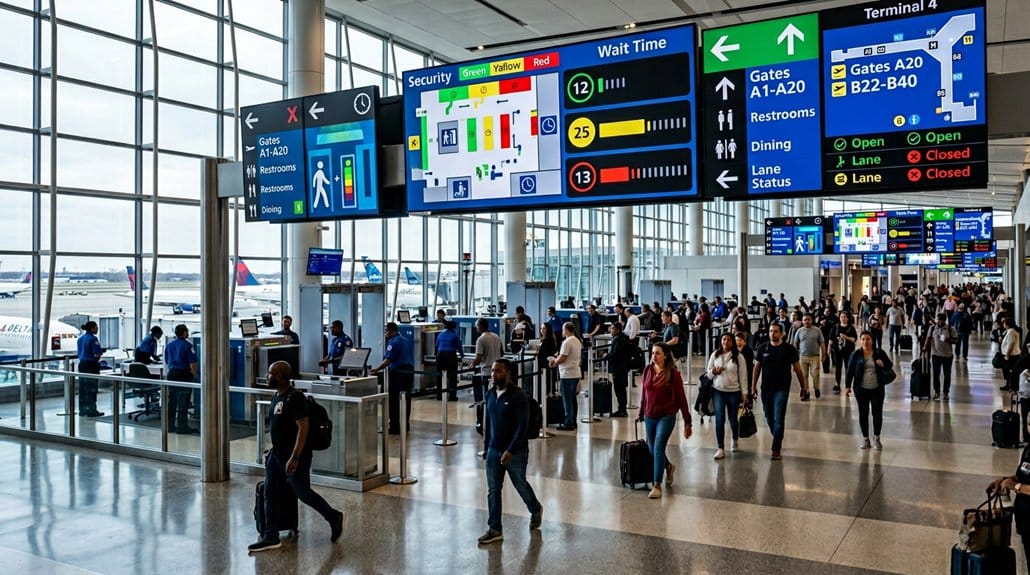
Major airports around the world are demonstrating the practical benefits of incorporating digital signage for security wait times. By integrating with airport management systems, these digital signs help optimize passenger flow and enhance the customer experience by displaying real-time updates. Airports like Hartsfield-Jackson Atlanta International and Los Angeles International effectively use digital signage, reducing passenger anxiety and enhancing communication.
Strategically, successful signage integration involves dynamic content updates based on real-time passenger volume and processing times. Here’s how it works:
- Real-time updates: Alerts passengers of fluctuating security line wait times.
- Optimized passenger flow: Guides passengers to less crowded areas, balancing checkpoint loads.
- Streamlined communication: Allows staff to focus on service, reducing manual interventions.
Strategically implementing this technology can revolutionize airport efficiency.
Frequently Asked Questions
What Is the Airport 45 Minute Rule?
The airport 45-minute rule suggests you arrive at your gate at least 45 minutes before departure, enhancing airport efficiency. This helps guarantee you’ve ample time for boarding, increasing passenger convenience and minimizing potential delays.
Who Pays for TSA at Airports?
You, as a passenger, primarily fund TSA at airports through a security fee, contributing to their security budget. This fee generates most TSA funding, complemented by government appropriations and airport operators ensuring thorough security coverage.
What Is the Safest Airport in the World?
You’d consider Tokyo International Airport (Haneda) the safest airport due to its rigorous safety protocols and advanced technology. Its impeccable record, extensive training, and strategic management make it a leader in aviation safety standards.
What Are the 5 Types of Airports?
Imagine stepping onto one of five airport classifications: small airstrips, bustling community spaces, strategic regional hubs, dynamic general aviation facilities, or ultra-busy commercial giants. Each plays a unique, data-driven role in the vast world of aviation.
Conclusion
Imagine yourself at the airport, the chaos of travel swirling around. Digital signs glow softly, guiding you with real-time updates on wait times, easing your angst. These screens, like lighthouses in the haze, use emerging technologies to guarantee you glide smoothly to your gate. The data-driven precision on display isn’t just strategic; it’s transformative, enhancing your journey. As airports embrace this, you’re not just a traveler, but a seamlessly informed traveler.