
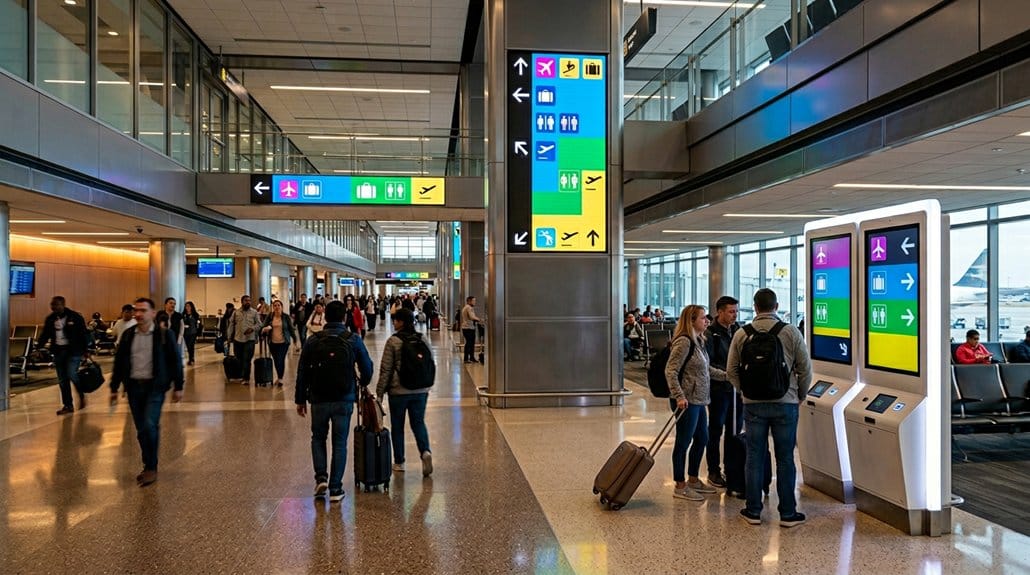
In airports, digital signage revolutionizes your journey by providing precise wayfinding displays mixed with real-time updates. You can effortlessly navigate from check-in to gate, reducing stress with multilingual support and accessibility for all travelers. These systems integrate with mobile devices for consistent guidance and real-time flight information. By directing you clearly and quickly, they not only enhance your travel experience but also boost airport efficiency. Discover more about this seamless blend of technology and travel.
Key Takeaways
- Digital signage provides real-time flight and transportation updates, enhancing user experience and reducing passenger confusion.
- Interactive displays offer precise pathfinding, guiding travelers to facilities like check-in counters, gates, and restrooms with ease.
- Multilingual content on signage ensures clear communication, catering to diverse travelers for efficient wayfinding.
- Bright LED and LCD displays improve visibility and engagement, alerting passengers with visual and audible signals in busy environments.
- Signage integration with mobile apps offers consistent navigation and personalized alerts both inside and outside terminals.
What Role Does Digital Signage Play in Airports?
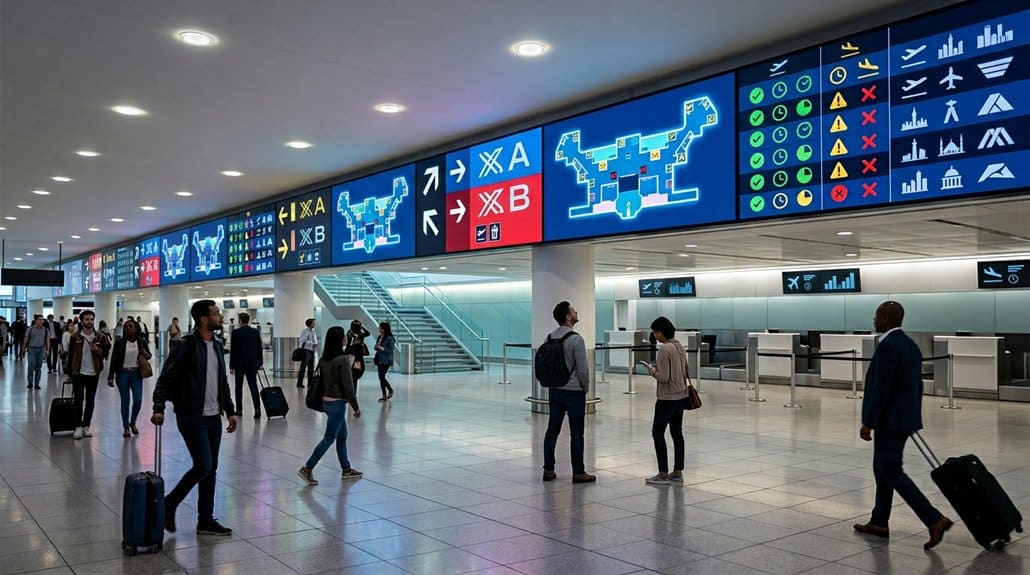
When traversing an airport, digital signage plays an essential role in enhancing your navigation experience. It provides real-time flight information, vital for keeping you updated on gate changes, delays, or cancellations. This immediate access to information guarantees you’re always informed, reducing stress and improving passenger engagement. Interactive displays allow you to efficiently locate key facilities, such as lounges or restrooms, optimizing your time within the terminal. Airports leverage dynamic content to communicate important messages and security alerts in multiple languages, catering to a diverse traveler audience.
How Do Digital Displays Enhance Passenger Navigation?
Incorporating digital displays in airports streamlines passenger movement by offering precise pathfinding capabilities tailored to your current location, helping you reach your destination more efficiently. These systems provide essential real-time updates on flight statuses and gate changes, ensuring you remain informed and can adjust your plans promptly. This combination of navigational support and instant information greatly reduces stress and enhances your overall travel experience.
Streamlining Passenger Movement Paths
Despite the complexity of airport environments, digital signage acts as an essential navigational tool, enhancing passenger movement paths by providing precise and up-to-date information. By ensuring smooth passenger flow, these displays minimize congestion and anxiety. Here’s how it works:
- Visual Guidance: Displays direct you clearly to check-in counters, boarding gates, and baggage claim areas, eliminating confusion.
- Congestion Management: Signage adapts in real-time to redistribute pedestrian traffic, keeping terminals efficient and stress-free.
- Decision Points: Strategic placement at critical junctures informs you instantly, accelerating movement from point to point.
- Mobile Integration: Digital signage offers seamless assistance by syncing with mobile apps, providing you with consistent guidance both inside and outside the terminal.
Harnessing these technologies enhances the overall airport experience.
Real-Time Information Updates
Many airports are now equipped with advanced digital displays that offer real-time information updates, essential for enhancing passenger navigation. By integrating technology, these displays provide up-to-the-minute flight statuses, gate changes, and boarding information, ensuring you’re always in the loop. This enhances passenger engagement, reducing confusion and elevating satisfaction ratings notably.
Interactive maps and directional prompts on digital signage streamline your navigation through complex airport layouts. Airports employing these systems report up to a 20% improvement in passenger experience. Additionally, when integrated with mobile apps, these displays allow travelers like you to receive personalized alerts and directions, smoothing your journey from check-in to boarding. With high-contrast graphics, these displays also assist non-English speakers, lowering cognitive load and ensuring seamless travel.
How Do Digital Signage Systems Provide Real-Time Updates?
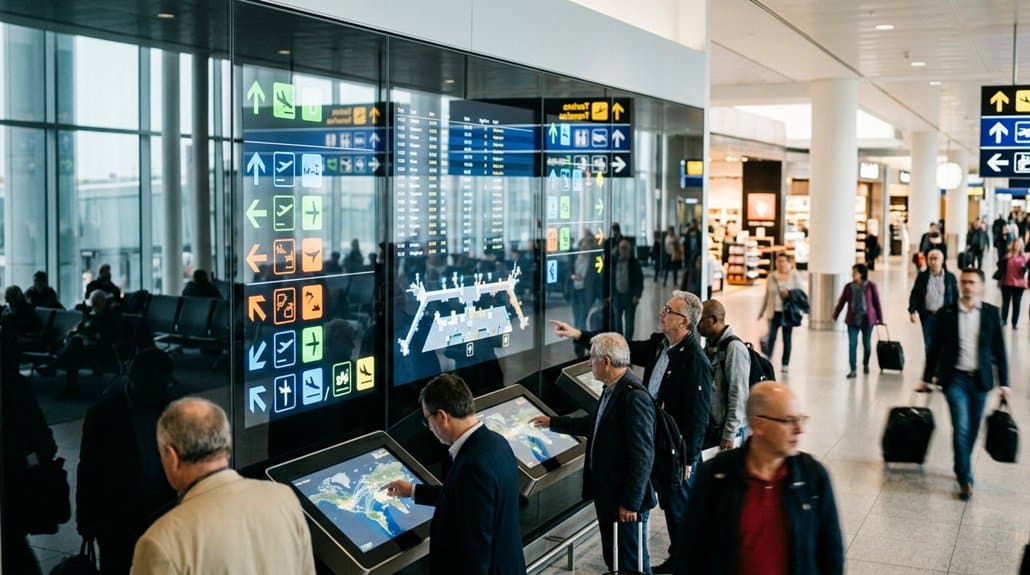
You’ll find that digital signage systems excel in providing real-time updates by seamlessly integrating with flight information management systems and airline databases. This guarantees passengers stay informed about flight status, gate changes, and delays, directly impacting navigation through the airport. By utilizing technologies like LED and LCD displays, these systems offer dynamic navigation assistance, improving visibility and enhancing the overall travel experience.
Real-Time Flight Information
When you’re traversing an airport, real-time flight information provided by digital signage systems is essential for a seamless experience. This technology enhances your passenger experience by guaranteeing flight awareness through efficient signage technology and integrated wayfinding solutions. How does it work?
- Display Integration: Signage connects with centralized databases for synchronized and accurate data delivery.
- Data Synchronization: Instant updates reflect changes in flight schedules, gate assignments, and delay notifications.
- Visual Communication: Bright LED displays guarantee visibility and accessibility from various distances.
- User Engagement: Visual and audible alerts capture your attention, reducing the need for staff intervention.
These systems guarantee you’re well-informed and can navigate independently, boosting user engagement and streamlining your journey.
Dynamic Navigation Assistance
Although airports are vast and bustling environments, digital signage systems revolutionize the way passengers navigate them by providing dynamic navigation assistance. By displaying real-time updates like flight delays and gate changes on LED and LCD screens, these systems enhance passenger engagement and decision-making. The integration of GPS technology offers impressive location accuracy, directing passengers seamlessly to check-in counters, lounges, and restrooms. This guarantees you’re always on the right path, even in the busiest terminals. Multilingual support further personalizes the experience, accommodating diverse travelers and enhancing accessibility. With quick content updates and intuitive layouts, you receive timely, clear guidance with ease. Achieving a high level of passenger satisfaction, digital signage proves indispensable in modern airport operations.
What Elements Make Airport Signage Systems Effective?
To make airport signage systems truly effective, clarity and visibility must take center stage. With signage clarity and visibility contrast, passengers can easily read signs from a distance in crowded terminals. Here’s what works:
- Font Size and Colors: Utilize large fonts with high-contrast colors for easy reading, essential in bustling environments.
- Strategic Positioning: Place wayfinding signage at key decision points like check-in areas, boarding gates, and restrooms to guide passengers effortlessly.
- Real-Time Updates: Integrate information such as flight statuses and security wait times on digital displays for informed passenger navigation.
- Cohesive Design: Maintain consistent branding and design across all signage to provide a seamless, recognizable visual experience, reinforcing both orientation and airport identity.
Consider these elements to elevate your airport signage effectiveness.
How Can Mobile Tech Enhance Airport Signage?
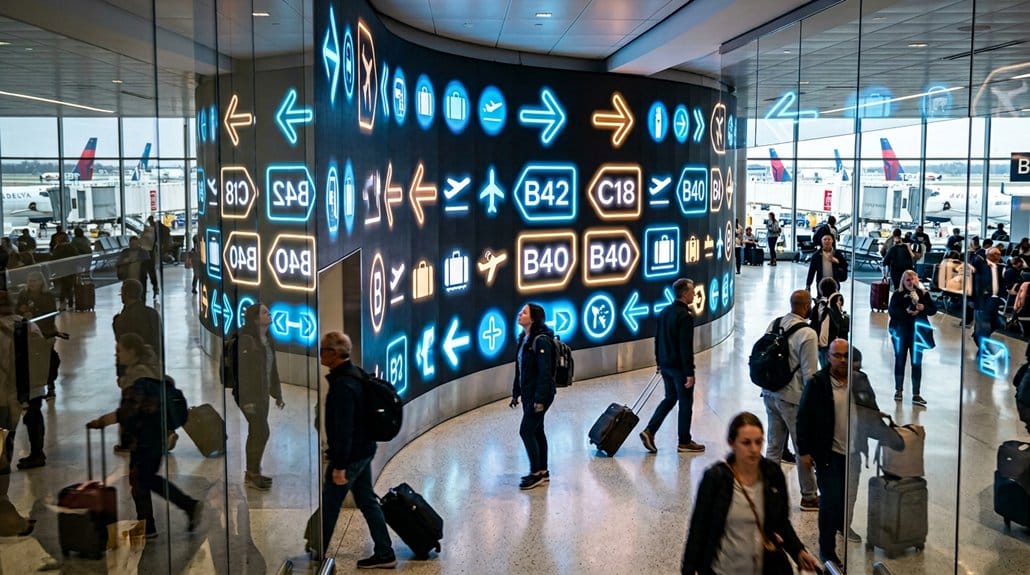
In addition to static signage, mobile technology provides innovative enhancements to airport wayfinding systems. With mobile notifications, you’re updated in real-time about flight statuses and gate changes, streamlining your travel experience. Scanning QR codes on signage offers detailed directions, quickly guiding you to essential locations like check-in counters and boarding gates. AR enhancements overlay digital directions onto your smartphone view, making navigation more intuitive by highlighting key points of interest. Geolocation services within mobile apps tailor wayfinding to your specific location, offering personalized guidance to your desired destination. By integrating mobile tech with digital signage, airports provide a seamless and efficient navigation experience, ensuring you stay informed and oriented throughout your journey without stress or confusion.
How Airports Boost Revenue Through Digital Displays
Utilizing digital displays in airports not only enhances passenger navigation but also considerably boosts revenue streams through strategic advertising and promotions. With targeted advertising strategies, airports can effectively increase non-aeronautical revenue. For example:
Digital displays in airports boost navigation and significantly enhance revenue through strategic advertising and promotions.
- High-Traffic Visibility: Placing displays in busy areas guarantees maximum exposure for advertisers, drawing travelers to shops and restaurants.
- Dynamic Content: Real-time updates allow you to tailor promotions to current audiences, optimizing engagement and conversion rates.
- Cost-Effective Investment: The low cost of digital signage tech compared to the high revenue potential from premium advertising rates offers a quick return on investment.
- Operational Efficiency: Enhancing flight info accuracy maintains smooth traveler flow, indirectly benefiting retail and service revenue models through higher customer satisfaction.
These techniques are crucial in maximizing airport earnings.
What Makes Signage Accessible for Diverse Travelers?
To make signage accessible for diverse travelers, you should prioritize multilingual display capabilities, ensuring that important information reaches non-native speakers effectively. A user-friendly navigation interface, with clear directional arrows and simple graphics, allows everyone, including those with cognitive disabilities, to easily find their way. By incorporating inclusive design elements like tactile features and adaptive digital displays, you enhance the navigation experience for all users, catering to a wide range of needs and preferences.
Multilingual Display Capabilities
How can diverse travelers effortlessly navigate bustling airports, even when language barriers loom large? Through the strategic use of multilingual digital signage, airports prioritize language accessibility and cultural sensitivity, enhancing passenger experiences. Here’s how:
- Multiple Languages: Signs cater to various linguistic backgrounds, offering several language options at busy interchanges, ensuring everyone’s informed.
- Real-Time Translation: Dynamic translation features deliver vital updates like gate changes instantly, bridging the communication gap.
- Universal Symbols: Coupling multilingual text with icons simplifies navigation for those with limited literacy or non-native speakers.
- Proven Impact: Studies reveal a 20% reduction in confusion among international travelers, boosting satisfaction in places like Heathrow and Singapore Changi.
Ultimately, adopting these features is essential for an inclusive international airport environment.
User-Friendly Navigation Interface
When maneuvering the complexities of international airports, a user-friendly navigation interface is vital for guaranteeing all travelers, regardless of their backgrounds, can find their way efficiently. This begins with interactive mapping on digital signage that empowers user engagement, allowing users to easily search for destinations or track their routes. Touchscreen kiosks and interactive wayfinding displays play an essential role by providing multilingual support through real-time translations, making navigation smoother for non-English speakers.
Strategically positioned throughout the airport, digital signage employs clear typography and high-contrast colors for maximum readability. Large LED displays provide travelers with dynamic updates on flight information, gate changes, and directional cues. This approach ensures that even children, elderly, and diverse travelers can confidently explore busy airports with efficiency and ease.
Inclusive Design Considerations
Given the increasing diversity of travelers in airports, incorporating inclusive design considerations into digital signage is more essential than ever. To guarantee accessibility, you should focus on the following elements:
- Cognitive Accessibility: Present information in multiple formats—such as text, inclusive symbols, and audio—to cater to travelers with diverse literacy levels and cognitive abilities.
- Visual Design: Utilize high color contrast and legible fonts (minimum 24 points) to enhance visibility, considering traveler demographics and those with visual impairments.
- Tactile Features: Include tactile elements and Braille to assist visually impaired travelers, allowing them to navigate independently.
- Font Considerations: Provide multilingual signage with clear font choices to accommodate non-native speakers, reflecting the most common languages of your passenger base.
How Signage Contributes to Emergency Protocols
Harnessing technology for proactive safety measures, digital signage transforms how emergencies are handled in critical environments. By ensuring signage effectiveness, these digital displays provide real-time emergency communication and instructions during incidents, keeping you informed and prepared. In chaotic situations like evacuations, digital screens guide you efficiently to the nearest exits and safe zones, enhancing navigation and response times.
Integrating with incident management software, signage systems dynamically adjust messages based on evolving circumstances. This allows timely alerts and clear safety information, ensuring you’re always aware of designated meeting points and medical assistance locations. By consistently updating, these displays enhance situational awareness, helping you and airport staff adhere to safety protocols effectively, thereby minimizing confusion and promoting organized, controlled evacuations.
What Are Future Trends in Airport Digital Signage?
Have you ever imagined traversing an airport with the help of augmented reality? This cutting-edge technology is set to revolutionize how you navigate bustling terminals by overlaying directional cues on your mobile device or AR glasses. As airports evolve, digital signage trends focus on innovation and sustainability. Let’s explore what’s in store:
Navigating airports with augmented reality: transforming travel with digital cues on your device, focusing on innovation and sustainability.
- Augmented Reality Navigation: Enhance your travel by visualizing routes and important points, reducing stress and time spent lost.
- Real-Time Adaptive Displays: Seamlessly keep up with dynamic info like flight changes and security wait times for smoother passenger flow.
- Artificial Intelligence for Personalization: Experience tailored messaging based on your location and preferences.
- Energy Efficiency: Future designs prioritize low-consumption LED displays, supporting eco-friendly operations.
These advancements promise a more efficient, personalized, and sustainable airport experience.
What Can We Learn From Successful Digital Signage Case Studies?
How do successful digital signage installations transform an airport’s efficiency and user experience? Studies reveal that interactive wayfinding reduces passenger confusion by 20%, boosting travel satisfaction and efficiency. Real-time digital solutions decrease navigation time by 15 minutes, considerably enhancing passenger satisfaction. In addition, integrating AR with signage has increased satisfaction rates by 50%, making the user experience informative and engaging.
| Metric | Improvement |
|---|---|
| Passenger Confusion | 20% reduction |
| Usage of Airport Services | 40% increase |
| Navigation Time Reduction | 15 minutes faster |
Airports benefit as maintenance costs get balanced by less staff intervention in wayfinding, thereby improving operational effectiveness. Embracing these advanced technologies elevates airport environments, highlighting the link between innovative solutions and passenger engagement. You’ll find that digital signage is not only functional but also an essential tool in enhancing overall airport user experience.
Frequently Asked Questions
What Is the Airport 45 Minute Rule?
You should adhere to the airport 45 Minute Rule by arriving early for domestic flights, enhancing travel efficiency. Airports use signage technology to keep you informed of recommended timeframes, ensuring a smoother experience and reducing the risk of delays.
Who Pays for TSA at Airports?
You pay for TSA funding through taxpayer dollars, as it’s government-funded. Additionally, airport security costs are partially covered by Passenger Security Fees added to tickets. Industry collaborations and FAA allocations also support TSA’s operational expenses and infrastructure developments.
What Is the Safest Airport in the World?
You’re looking for the world’s safest airport? Tokyo Haneda Airport often ranks at the top. Its stringent airport safety measures and impressive global safety rankings highlight its commitment to security and efficiency, ensuring passengers’ safety and satisfaction.
What Are the 4 Types of Airports?
Four airport types include: regional airports, nestled cozily in smaller cities; international airports, labyrinths of global chaos; hub airports, the overzealous traffic controllers; and private airports, exclusive sanctuaries for those avoiding commercial pandemonium. You’ll navigate them well with insight.
Conclusion
As you navigate bustling airports, imagine the contrast: a chaotic maze versus a seamless journey orchestrated by digital signage. These vibrant displays not only guide your steps with precision but also keep you informed with real-time updates. Integration with mobile tech personalizes your path, while accessibility guarantees every traveler feels at home. The future promises further innovation, and by learning from successful case studies, airports can continuously elevate your travel experience, balancing complexity with clarity.