
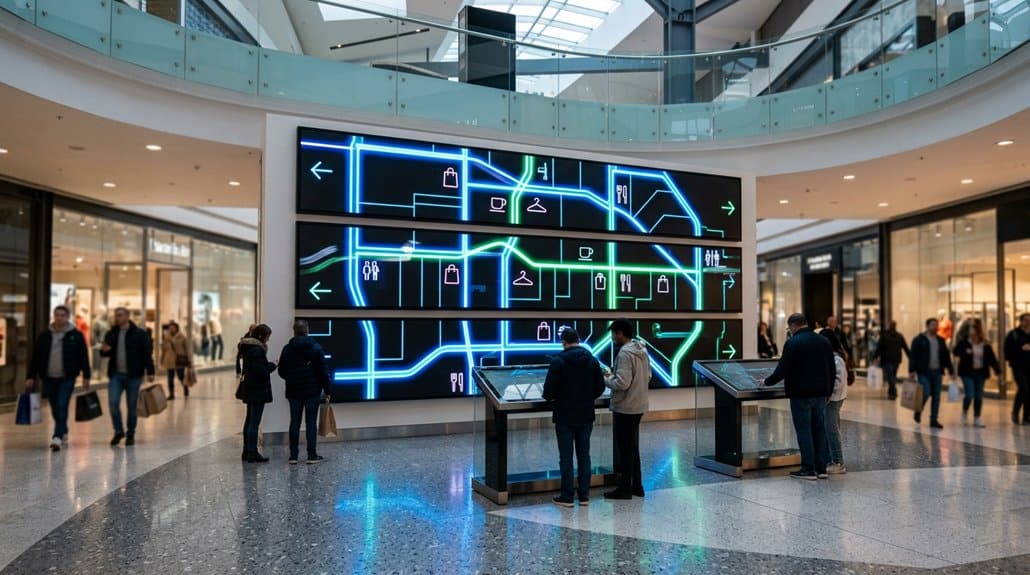
You’re maneuvering mall complexities effortlessly with digital wayfinding systems, which leverage interactive maps and touchscreen kiosks for intuitive navigation. These systems provide real-time updates and dynamic directories, ensuring you’re informed about stores, promotions, and events instantly. Strategically placed digital signage enhances visibility and engagement, offering seamless navigation experiences. Enhanced by AR innovations and data analytics, these digital tools also improve operational efficiency. Discover more insights into transforming shopping experiences through cutting-edge technology.
Key Takeaways
- Shopping malls use interactive maps and touchscreen kiosks for effortless navigation and real-time store information updates.
- Digital signage offers dynamic directories and QR codes for easy map downloads, enhancing user convenience.
- Strategically placed signage maximizes visibility, guiding shoppers through content-rich displays.
- Real-time data provides instant promotions and updates, boosting shopper engagement and satisfaction.
- Personalized navigation and AR solutions improve customer experience and encourage repeat visits.
The Basics of Digital Wayfinding in Malls
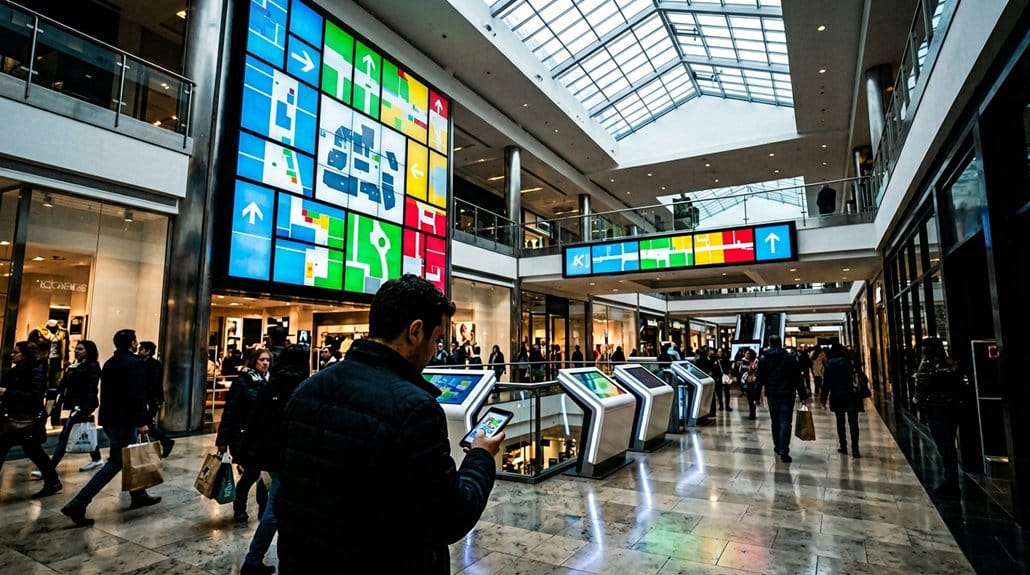
Digital wayfinding systems serve as an essential tool in today’s complex mall environments. Utilizing interactive maps and touchscreen kiosks, these systems help you traverse malls by providing real-time updates and searchable directories. They cater to user preferences, ensuring you can effortlessly locate stores, restaurants, and amenities. Incorporating your feedback, these systems continually improve, tailoring the experience to meet shopper needs.
Through interactive features, these systems not only streamline traversal but also boost mall engagement by presenting timely promotions and events. By enhancing your shopping experience, digital wayfinding minimizes frustration and elevates enjoyment in maneuvering vast retail spaces. Social media integration encourages community interaction, while increased foot traffic shows how these systems effectively direct visitors to desired destinations.
Essential Reasons for Digital Signage in Mall Wayfinding
Incorporating digital signage in mall wayfinding systems is essential for providing a seamless navigation experience, especially considering the intricate layouts of modern shopping complexes. With virtual interactivity, these systems offer interactive maps and directories, allowing visitors to effortlessly locate stores and amenities. This innovation reduces frustration by offering instant assistance, enhancing overall customer satisfaction. Additionally, real-time updates on promotions, store locations, and events keep you informed throughout your shopping experience, increasing shopper engagement.
Engaging digital signage doesn’t stop at guiding you; it creates a memorable atmosphere through compelling visuals and storytelling that resonate with your lifestyle preferences. Research shows that well-implemented digital wayfinding leads to increased foot traffic and time spent in malls, ultimately boosting sales and enriching the shopping experience.
Key Features of Wayfinding Displays
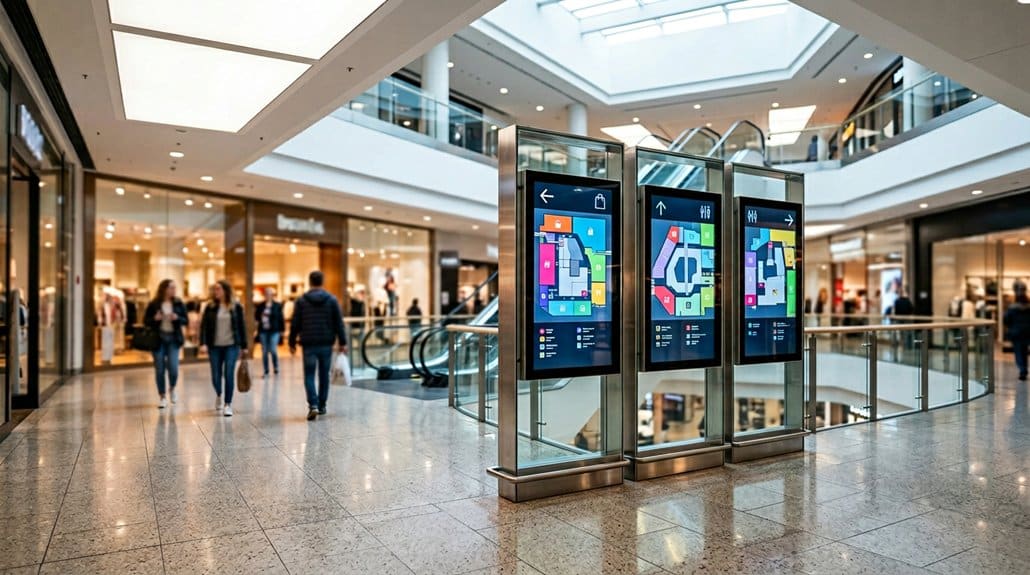
When exploring the key features of wayfinding displays, you’ll notice the importance of interactive map functionality, which assists in traversing complex spaces. Dynamic store directories offer real-time updates, ensuring that users have accurate information on store locations and ongoing promotions. Additionally, these systems support real-time navigation updates, greatly enhancing the user’s overall experience by providing streamlined and efficient route guidance.
Interactive Map Features
Although maneuvering large shopping malls can often be overwhelming, interactive map features in digital wayfinding displays make it considerably more manageable. These systems feature a user-friendly interface with intuitive navigation, assisting you in locating stores and amenities efficiently. Equipped with touch screen technology, you can effortlessly search for specific stores, events, or promotions, ensuring a seamless shopping experience. Maps offer real-time updates with dynamic content that adjusts automatically, reflecting any changes to the store layout or current promotions.
Here’s a quick look at their features:
| Feature | Benefit | Functionality |
|---|---|---|
| Touch Screen | Easy Interactivity | Search for stores easily |
| Real-Time Updates | Accurate Information | Stores and promotions |
| QR Code Integration | On-the-go Convenience | Download map to smartphone |
| Dynamic Content | Up-to-date | Automatic content changes |
| Increased Engagement | Satisfied Shoppers | Navigate with ease |
Interactive maps not only simplify navigation but also enhance your overall shopping satisfaction.
Dynamic Store Directories
These directories adapt to changes such as new store openings or layout modifications, ensuring you have the most current information. Engaging visuals and animations not only grab your attention but also elevate the mall’s aesthetics, contributing to a more enjoyable and efficient experience as you navigate through large shopping complexes.
Real-Time Navigation Updates
Leveraging real-time navigation updates in digital wayfinding displays revolutionizes how you navigate through complex mall environments. By instantly pinpointing stores and amenities, these systems greatly shorten your search time. With integration of navigation technology trends, such as interactive maps and touchscreen interfaces, you can enjoy a seamless, tailored experience while receiving immediate updates on store promotions and mall events.
Real-time data not only supports your immediate needs but also facilitates shopper behavior analysis, allowing malls to optimize layouts and promotional strategies based on visitor movements. Enhanced features like QR code scanning boost engagement and convenience, providing a cutting-edge solution to bridge the gap between traditional navigation and modern digital expectations. Ultimately, this streamlined approach increases overall shopper satisfaction and engagement.
How Digital Signage Transforms Navigation
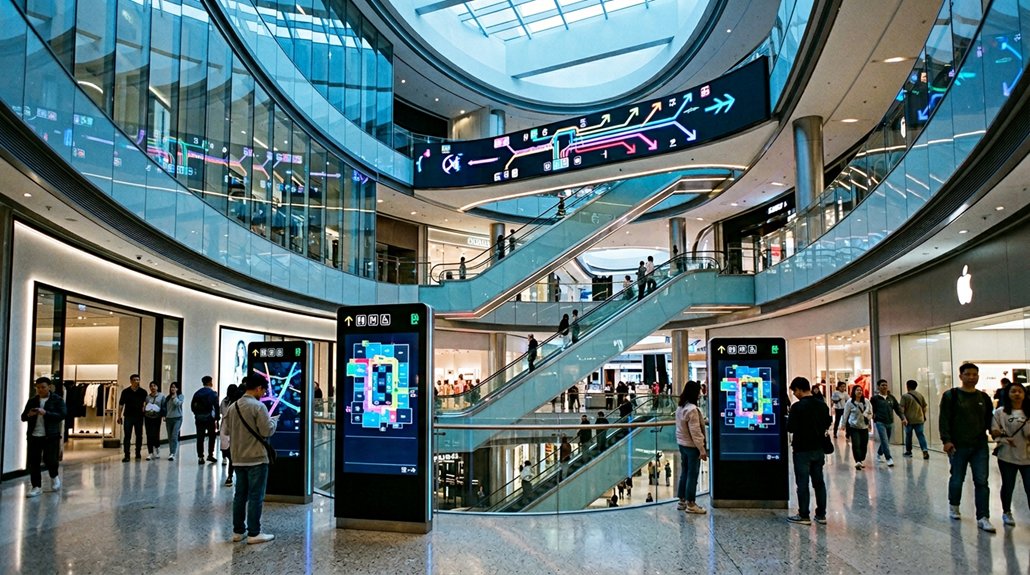
Digital signage revolutionizes navigation by transforming traditional wayfinding into an interactive experience. Its visual engagement and user interaction captivate shoppers, making navigation in malls not only efficient but enjoyable. Visitors benefit from interactive maps and searchable directories, enabling quick location of stores and amenities. Real-time updates guarantee you always have the latest promotions and event details, reducing confusion in complex mall layouts. Personalize your journey by inputting preferences or searching for specific locations at interactive kiosks, ensuring a tailor-fitted experience.
- Interactive Maps: Easily locate desired destinations.
- Searchable Directories: Find stores and amenities swiftly.
- Real-Time Updates: Receive accurate event and promotion information.
- Custom Navigation: Personalize your shopping path.
- Seamless Experience: Smooth navigation throughout the mall.
Digital signage ultimately enhances visitor satisfaction and prolongs stays.
Best Practices for Implementing Digital Signage
To effectively implement digital signage, you should focus on strategic placement planning, ensuring high-traffic areas are prioritized for maximum visibility and accessibility. Content design is essential; incorporate clear, engaging graphics and animations that not only capture attention but also support seamless navigation. Integrate the system with a robust CMS to streamline updates and deliver accurate, real-time information, enhancing the overall user experience.
Strategic Placement Planning
When implementing digital signage for wayfinding systems, strategic placement is essential for maximizing their effectiveness. You’ll want to focus on locating signage in central, high-traffic areas of the mall to guarantee visibility and ease of navigation. It’s fundamental that signage placement occurs at important decision-making points like intersections or entrances, where shoppers require guidance, thereby optimizing traffic flow. By integrating interactive touchscreen kiosks, you boost engagement, offering real-time information on stores and promotions. Regular assessments of sign content are imperative to maintain accuracy.
- Entrances: Initial contact with wayfinding starts here.
- Intersections: Key decision points for shopper navigation.
- Central Areas: Capture maximum foot traffic and visibility.
- Near Elevators: Helps facilitate movement between floors smoothly.
- Food Courts: Intersections of social and commercial activities.
Content Design Essentials
While strategic placement guarantees your digital signage reaches shoppers at critical points, the content displayed on these signs is equally important for effective wayfinding. Start by establishing a clear content hierarchy to guarantee crucial information like store locations, promotions, and events are immediately visible. High-resolution visuals are essential for clarity and must be integrated with an intuitive interface, facilitating seamless navigation. Maintain visual consistency across all signage by using uniform fonts, colors, and design elements. This coherence not only aids recognition but also improves user interaction with interactive maps and directories. Regular updates with real-time content keep shoppers informed and engaged, while touchscreen kiosks personalize navigation. By focusing on these essentials, your wayfinding system becomes an invaluable tool in guiding visitors efficiently.
Technology Integration Tips
- Leverage data analytics for insights into visitor interactions and content effectiveness.
- Incorporate accessibility features to cater to all shoppers, enhancing inclusivity.
- Stay updated on technology trends to maintain modern and efficient systems.
- Prioritize regular signage maintenance to guarantee longevity and reliability.
- Design locations at high-traffic zones for maximized visibility and user engagement.
Enhancing Shopper Experience With Interactive Maps
Interactive maps greatly enhance the shopper experience by simplifying navigation through vast mall environments. By offering personalized navigation, these systems allow you to efficiently locate stores and amenities, reducing the time spent searching. Engaging touchscreen features empower you to explore deeper into the mall’s offerings, boosting shopper engagement by making it easy to find specific services or retailers.
Furthermore, dynamic content integration means you can stay informed about ongoing promotions or nearby events, directly influencing your shopping choices and driving foot traffic to participating vendors. Interactive maps, with their vivid displays and intuitive interfaces, unravel the often overwhelming mall layout, transforming it into an inviting, user-friendly experience. This enhances satisfaction, encouraging prolonged visits and strengthening brand loyalty within the mall ecosystem.
Leveraging Real-Time Updates for Shopper Engagement
Real-time updates in digital wayfinding systems revolutionize how shoppers engage with complex mall layouts, offering a streamlined navigation experience that minimizes frustration. By catering to shoppers’ preferences, these systems guarantee you’re never lost, aligning with effective engagement strategies to keep you informed and intrigued.
Navigate malls with ease and precision; digital wayfinding systems ensure you never feel lost, only informed and engaged.
- Instant Promotions: Stay aware of real-time deals tailored to your interests.
- Updated Store Locations: Instantly locate newly opened or relocated stores.
- Event Notifications: Catch the buzziest events without delay.
- Fresh Content: Frequent content refresh keeps you coming back.
- Seamless QR Integration: Scan for extras—promos and interactive experiences.
These features are pivotal for enhancing shoppers’ interactions, making your mall visits more efficient and enjoyable while encouraging longer stays and repeat visits.
How Digital Wayfinding Boosts Operational Efficiency
When digital wayfinding systems are integrated into mall environments, they drastically enhance operational efficiency by streamlining the navigation experience. Shoppers find store locations faster, reducing time spent searching and increasing satisfaction. These systems provide real-time updates, guiding foot traffic effectively and boosting sales. Interactive maps minimize the need for staff intervention, allowing your team to focus on other critical tasks, potentially lowering staff training costs. Analytics from wayfinding systems offer valuable insights into visitor flow, aiding in data-driven layout decisions and promotional strategies. Additionally, shifting from traditional to digital signage reduces maintenance expenses, optimizing maintenance strategies and enhancing cost-effectiveness.
| Benefit | Description |
|---|---|
| Reduced Search Time | Quick navigation for shoppers |
| Foot Traffic Management | Real-time updates for store locations |
| Staff Task Allocation | Less intervention, better focus |
| Cost-Effectiveness | Lower maintenance costs than traditional signage |
Innovations Shaping the Future of Mall Digital Signage
In the rapidly evolving landscape of mall digital signage, innovations are paving the way for enhanced navigation and engagement. With AR Navigation, shoppers visualize their routes effortlessly, enriching User Experience. High-resolution displays and dynamic content not only enthrall but also guide visitors to explore more. Custom Solutions personalize these experiences, tailoring paths to match preferences and boosting overall satisfaction. Furthermore, tracking Engagement Metrics helps refine these features, aligning with Technology Trends for continuous improvement.
- AR Navigation: Visualize routes for intuitive guidance.
- Custom Solutions: Tailor experiences for personalized navigation.
- Engagement Metrics: Analyze data to enhance user interaction.
- High-resolution Displays: Deliver crisp, enthralling visuals.
- Dynamic Content: Keep information updated and engaging.
Frequently Asked Questions
How Do Digital Wayfinding Systems Impact Mall Accessibility for People With Disabilities?
Digital wayfinding systems enhance mall accessibility for people with disabilities by integrating inclusive technology. You’ll experience improved navigation, ensuring user experience is optimized. Touchscreens, audio guides, and clear visuals cater to diverse needs, promoting an inclusive environment.
What Security Measures Protect Data on Interactive Wayfinding Displays?
Data on interactive wayfinding displays is protected through data encryption protocols and measures prioritizing user privacy. You’ll find systems employing secure coding practices, regular software updates, and encryption to guarantee that personal information remains confidential and safe.
Can Digital Signage Work Effectively in Power Outage Situations?
When the lights go out, it’s funny how digital signage doesn’t shine. Implement robust power outage protocols and enhance signage resilience with backup solutions. Ironically, without electricity, your well-lit path might just remain obscured.
How Do Digital Wayfinding Systems Handle Multilingual Support for Diverse Visitors?
Digital wayfinding systems utilize multilingual interfaces to enhance user experience for diverse visitors. You can easily switch languages through intuitive menus, ensuring clear guidance. This feature’s essential for non-native speakers maneuvering complex environments efficiently and confidently.
What Maintenance Is Required to Keep Digital Signage Operational?
You need regular software updates to guarantee compatibility and security, plus hardware upgrades for ideal performance. Routine checks identify faults early, preventing downtime. Don’t skip these steps if you’re committed to keeping your digital signage functional.
Conclusion
You’ve seen how digital signage simplifies navigation, enhances shopper engagement, and boosts mall operations. You’ve explored interactive maps that transform the shopper’s journey and real-time updates that keep everyone informed. You’ve understood the importance of key features in wayfinding displays and the best practices for implementation. Innovations continue to reshape how malls use these digital tools. By embracing these technological advancements, malls not only elevate the shopping experience but also guarantee efficient and streamlined operations.