
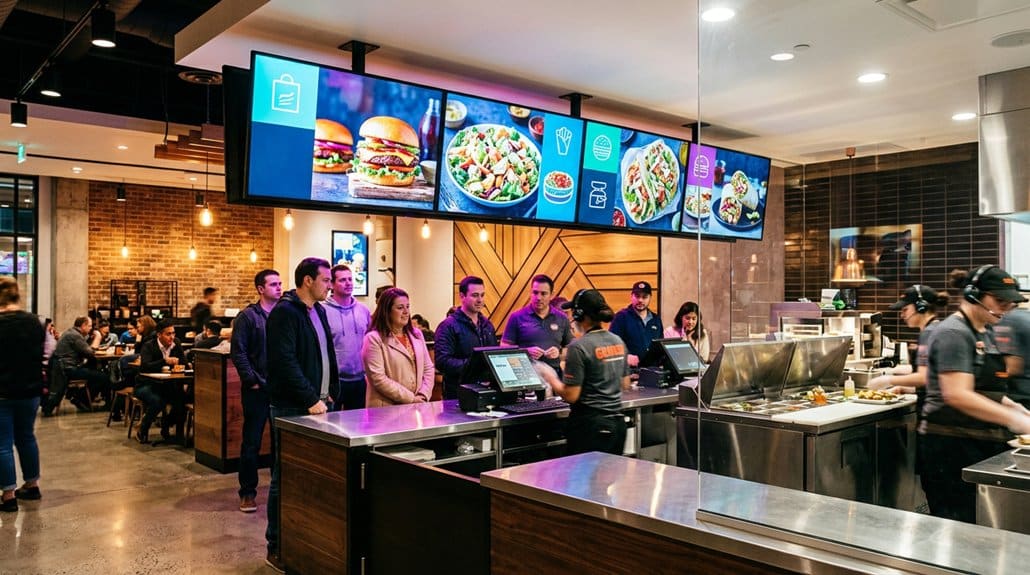
In QSRs, digital menu boards enhance your business by enabling real-time menu updates and boosting customer engagement. They increase order accuracy by 15% and drive sales up to 20% through dynamic content and upselling. With centralized content management and cloud integration, you streamline your operations and improve efficiency. Enhanced visuals and AI-driven personalization enrich customer experiences. Discover how staying ahead of trends can keep your QSR competitive and future-ready, revealing even greater potential.
Key Takeaways
- QSRs use digital signage to provide real-time menu updates, ensuring price and item availability reflect current offerings.
- Interactive digital menu boards enhance customer engagement and assist in efficient decision-making.
- Digital menu boards in QSRs facilitate upselling, increasing average customer spending by presenting dynamic promotions.
- High-resolution digital signage helps QSRs improve order accuracy and operational efficiency by clearly displaying menu items.
- Digital signage reduces perceived wait times by offering dynamic and entertaining content, enhancing the dining experience.
What Digital Menu Boards Can Do for Your QSR?
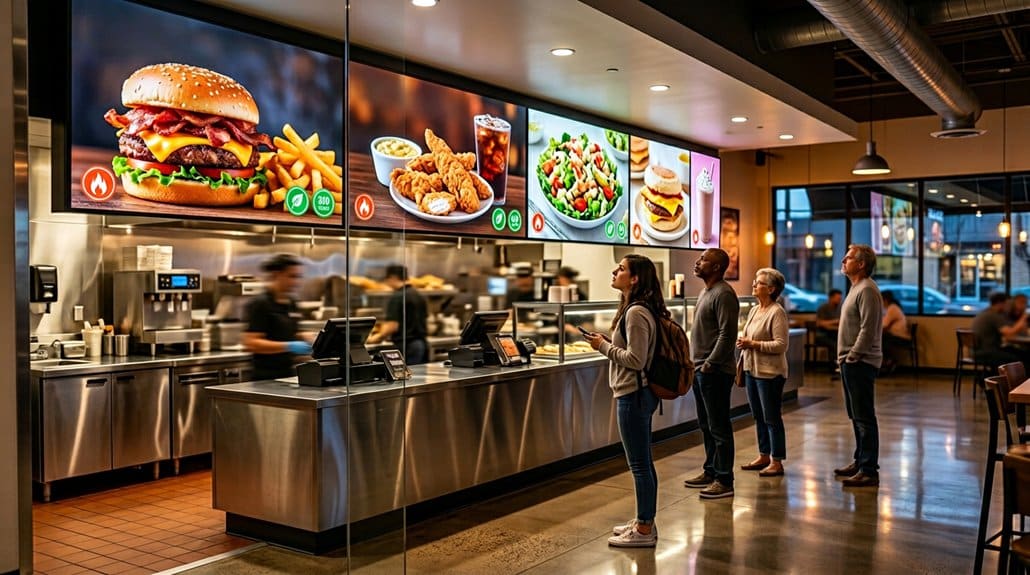
If you’re looking to optimize your quick-service restaurant (QSR), digital menu boards offer a powerful solution. They enable real-time updates, ensuring your menu items and pricing are always accurate, which helps avoid customer disappointment. With features like menu customization, customers can engage directly by browsing and personalizing their orders, aligning perfectly with younger, digital-native clientele. This interactive approach notably boosts customer engagement. Studies reveal that such implementations increase order accuracy by 15% due to clearer visual communication. Additionally, by showcasing suggested items and promotions, you can facilitate upselling, driving up customer spending by about 20%. Moreover, dynamic content that includes estimated wait times can decrease perceived wait times by up to 35%, enhancing overall customer satisfaction.
How to Set Up Digital Menu Boards Effectively
Leveraging the potential of digital menu boards in your QSR requires an effective setup. First, consider your screen types. Opt for commercial-grade screens known for durability and high brightness, ideal for visibility across varied lighting conditions. Your positioning strategies matter too; guarantee screens are at ideal angles where customers can easily view them without glare. Establish a centralized content management system (CMS) to perform real-time updates, seamlessly integrating with point-of-sale systems to reflect accurate menu items and pricing. Aim for software with user-friendly interfaces for effortless content creation and remote management. Regular maintenance, like screen cleaning and software updates, guarantees first-rate performance, minimizing technical issues. This strategic setup enhances operations and guarantees customer satisfaction.
Enhance Customer Experience With Digital Signage
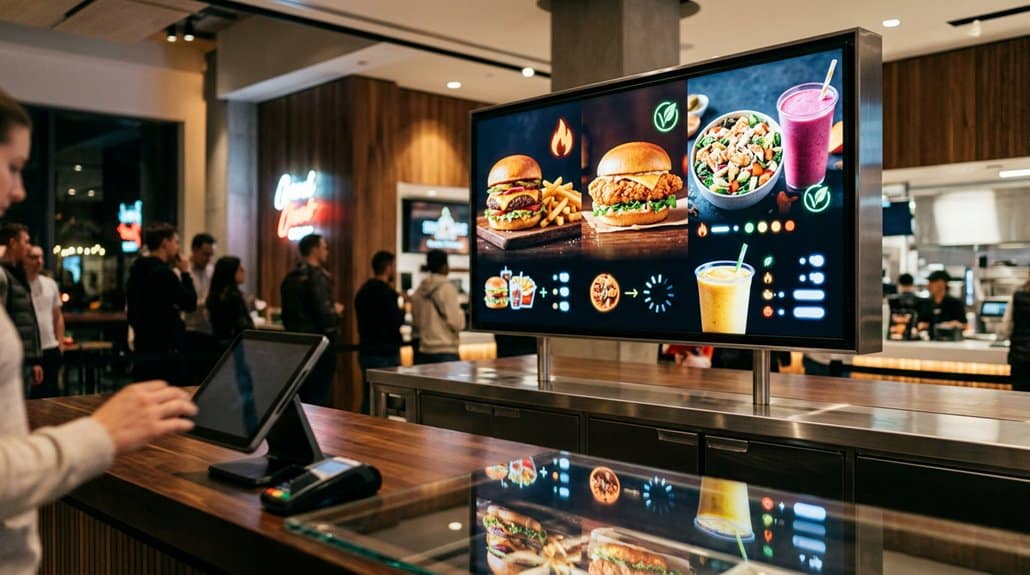
Although traditional menu boards serve their purpose, digital signage elevates the customer experience in Quick Service Restaurants (QSRs) with superior, engaging high-resolution visuals that can boost recall by up to 47%. You’re not just showing menu items; you’re enhancing customer engagement with visual communication. Interactive displays update real-time, ensuring availability and reducing disappointment. Dynamic scheduling adjusts menus for breakfast, lunch, and dinner, perfectly aligning with customer needs.
| Metric | Improvement | Impact |
|---|---|---|
| Customer Recall | 47% | Higher engagement |
| Perceived Wait Time | 35% | Enhanced atmosphere |
| Order Accuracy | 15% | Streamlined process |
Digital signage can turn waiting time into entertainment, reducing perceived wait times by 35%. By improving order accuracy by 15%, your operations benefit from efficiency and increased customer satisfaction.
Use Dynamic Content Management to Streamline Operations
Elevate your QSR operations with the power of dynamic content management. With real-time updates, you’re able to adjust menus, promotions, and pricing instantly, ensuring your customers always see current information. This reduces outdated displays, enhancing operational efficiency and customer trust. Leverage cloud-based management systems for centralized control, allowing seamless coordination across multiple locations. Integrate these systems with your point-of-sale (POS) for immediate updates on menu availability and pricing, bolstering order accuracy and customer satisfaction.
Use automated scheduling to display time-specific menus, such as breakfast or dinner, elevating the customer experience by presenting pertinent options. Additionally, data-driven insights help you optimize marketing efforts, effectively promoting high-margin items based on real-time consumer trends. Embrace these technologies to streamline operations and drive success.
Prepare for What’s Next in QSR Digital Signage
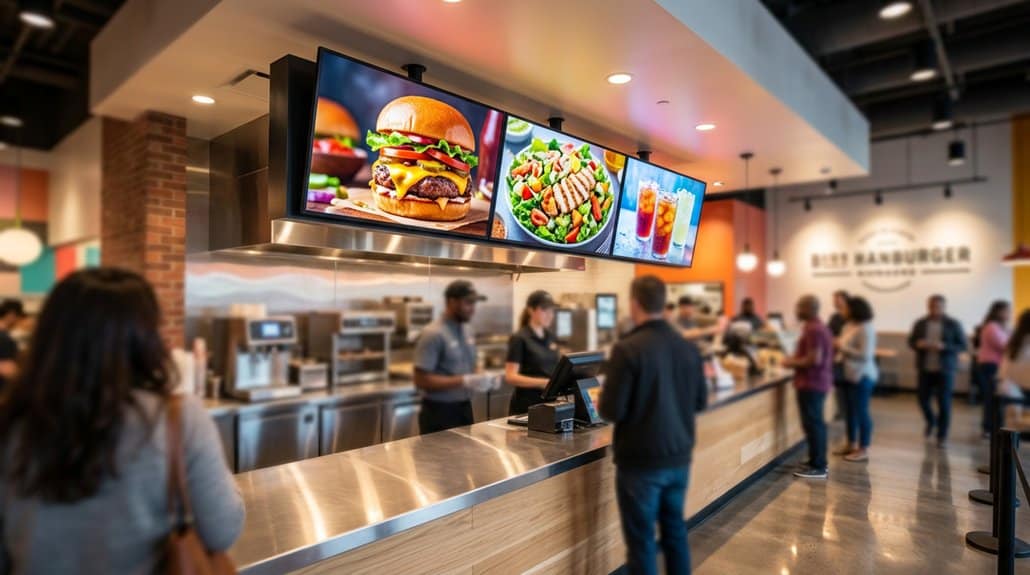
Prepare your QSR for the future by embracing the latest innovations in digital signage. Staying ahead means leveraging future trends and tech advancements. Digital menu boards aren’t just about vibrant displays; they’re a key to streamlining operations and boosting revenue. Here’s how to prepare:
- Adopt Real-Time Updates: Harness the power of real-time data to adjust menus instantly, catering to customer preferences and stock availability.
- Utilize AI-Driven Solutions: Personalize experiences with AI, optimizing promotions and boosting customer engagement, enhancing the dining experience.
- Focus on Efficiency: Centralized management cuts costs and enhances efficiency, letting staff prioritize customer service for better satisfaction.
- Enhance Visual Appeal: Use high-quality visuals and interactive content to make wait times feel shorter, increasing customer satisfaction and potential sales growth.
These steps guarantee your QSR remains competitive and future-ready.
Frequently Asked Questions
What Is the 30/30/30 Rule for Restaurants?
You think menu design is a breeze? The 30/30/30 rule makes it look easy—30% high-margin items, 30% simple dishes, 30% customer-engaging options. It’s a clever balance optimizing profit, streamlining operations, and enhancing customer engagement efficiently.
What Are the Disadvantages of Digital Menus?
Digital menus can lead to higher maintenance costs and potentially impact consumer experience negatively due to technical issues. You might find the initial setup expensive, and some customers prefer traditional menus, avoiding digital interaction altogether.
Do Digital Menus Integrate With POS?
Yes, digital menus integrate with POS, streamlining operations like “kill two birds with one stone.” With digital integration, enjoy seamless menu updates and enhanced accuracy. Customers appreciate up-to-date info, optimizing their experience and boosting operational efficiency.
What Is a Common Feature of Quick-Service Restaurants?
In QSRs, a common feature is digital menu boards, boosting customer engagement and offering menu flexibility. You’ll notice optimized displays that adapt to your needs, promoting high-margin items and enhancing both satisfaction and operational efficiency.
Conclusion
Imagine this: your QSR is optimized, buzzing with satisfied customers, and operating seamlessly—thanks to smart digital menu boards. By harnessing dynamic content management, you streamline operations, enhance customer experiences, and prepare for future innovations. Don’t just keep up; lead the charge in digital signage to drive growth and satisfaction. It’s not just about being current; it’s about being ahead. Invest today in digital transformation, and watch your business thrive tomorrow. Isn’t that the best recipe for success?