

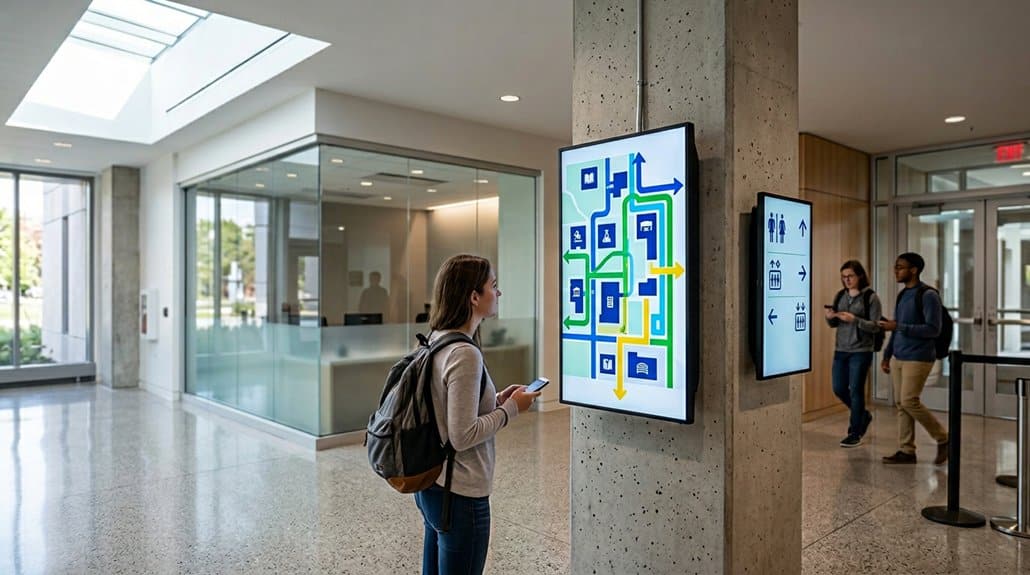
You optimize campus navigation with digital signage by offering real-time updates and interactive features, enhancing operational efficiency. With touchscreens and QR codes, students navigate seamlessly, reducing information desk visits by 40% and boosting satisfaction by 30%. Interactive maps and kiosks personalize the wayfinding experience, minimizing confusion and streamlining movement across campus. As you explore further, discover how campuses like UC Berkeley and Georgetown University successfully implement these transformative technologies for unparalleled navigation efficiency.
Key Takeaways
- Digital signage provides real-time wayfinding updates for efficient campus navigation.
- Interactive maps on digital displays minimize confusion and enhance maneuvering around campus.
- QR codes and touchscreens offer customizable navigation assistance to students and visitors.
- Universities use digital signage to streamline information dissemination and reduce inquiries at help desks.
- Mobile apps integrated with digital signage improve accessibility and provide seamless navigation experiences.
Why Digital Signage Matters on Campuses
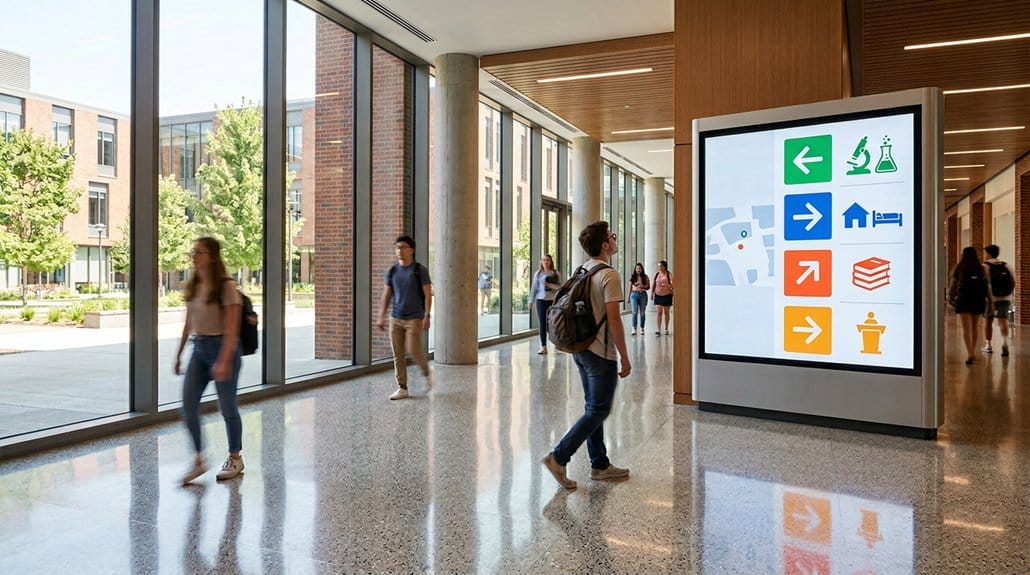
While campuses can be complex landscapes to navigate, digital signage matters for improving operational efficiency and enhancing user experiences. You’re more likely to engage students effectively with dynamic visual communication. By implementing digital signage, you provide real-time updates and opportunities for interaction that static signs simply can’t offer. This immediacy plays a critical role in student engagement, making it easier for them to connect with campus resources and activities.
Moreover, digital signage streamlines information dissemination, positively affecting over 60% of students’ campus experiences when navigation is straightforward. The eco-friendly shift reduces static signage reliance and fosters an aesthetic campus environment. Hence, investing in digital solutions isn’t just about efficiency; it’s about crafting interactive, engaging spaces that resonate with today’s tech-savvy generation.
How Digital Signage Enhances Campus Navigation
Maneuvering a bustling campus can be an intimidating task, but digital signage considerably simplifies the process. With real-time wayfinding updates, you’re guided efficiently across campus, enhancing both user engagement and accessibility. Key features include:
- Real-Time Updates: Keep informed with regular updates, ensuring timely arrival at your destination.
- Customization: QR codes and touch-screen options allow you to tailor directions to personal needs, making your journey more intuitive.
- Reduced Inquiries: Utilizing digital signage can cut down visits to information desks by up to 40%, streamlining communication.
- Improved Satisfaction: Studies show a 30% boost in satisfaction by offering seamless navigation, highlighting its effectiveness.
These features collectively make maneuvering a campus a more enjoyable and less intimidating experience.
Interactive Maps: Transforming Campus Experiences
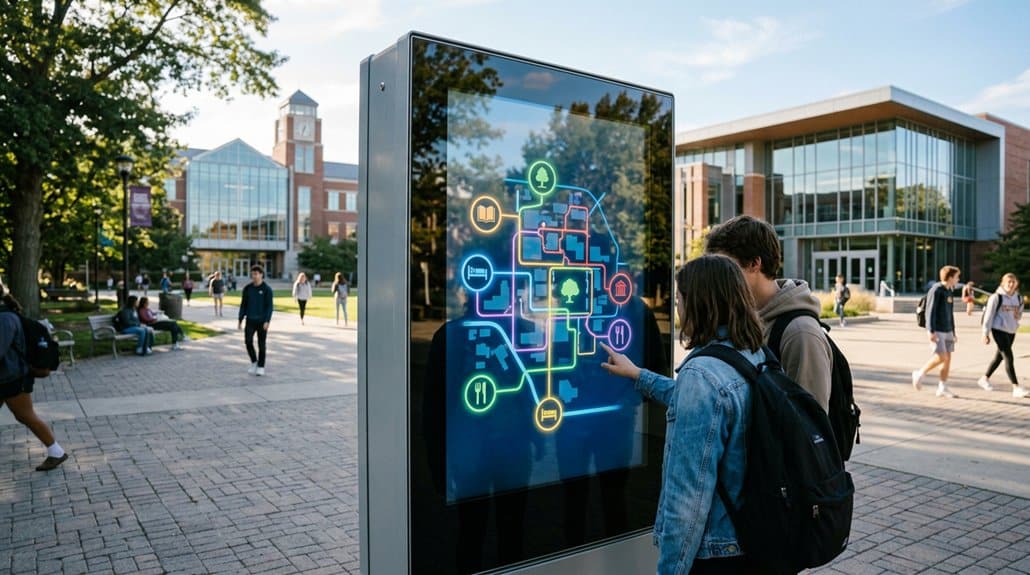
In today’s complex campus environments, interactive maps deployed through digital signage are revolutionizing wayfinding experiences. You can feel confident maneuvering your campus with real-time navigation assistance that minimizes confusion. These maps feature touchscreens for searching locations, viewing detailed floor plans, and obtaining step-by-step directions—enhancing user engagement markedly. Institutions utilizing this technology report streamlined navigation, resulting in more efficient student and visitor movement throughout campus facilities.
Keeping Digital Signage Updated for Current Campus Events
To guarantee seamless communication and up-to-date information flow across campus, it’s crucial that digital signage is maintained with current event details. Leveraging real-time updates guarantees students and visitors always have the latest on activities, classes, and announcements. This is made feasible through content management systems designed for easy scheduling and rapid modifications.
Key strategies include:
- Real-time updates: Dynamically refresh information for enhanced visibility.
- Event reminders: Prompt attendees with timely, targeted messages that boost participation.
- Streamlined communication: Use digital signage to cut through information overload by focusing on specific audiences.
- Interactive features: Allow users to navigate event locations, fostering greater student engagement.
Effectively managed digital signage can lead to increased event attendance and a more interactive campus experience.
Successful Examples of Campus Digital Signage in Action
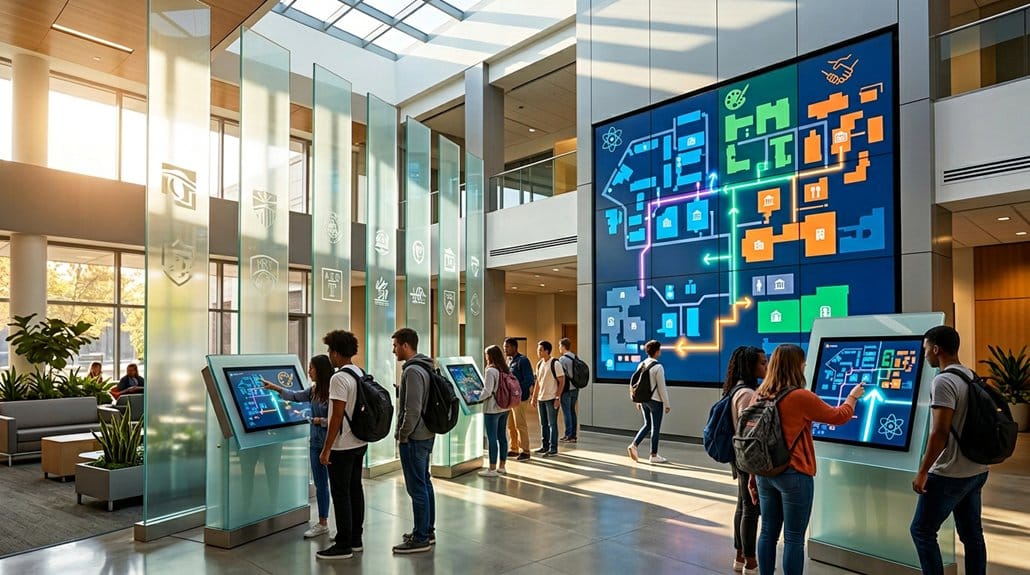
Although digital signage systems have become a staple in enhancing campus navigation and communication, their true potential is realized through well-executed implementations that address specific campus needs. At the University of Denver, signage offers real-time event details and emergency alerts, boosting user engagement and information accessibility. Similarly, the University of California, Berkeley, employs interactive kiosks to improve wayfinding, essential for newcomers. Georgetown University integrates mobile apps with signage for seamless navigation, optimizing location accessibility directly via smartphones. At the University of Massachusetts, digital maps and event schedules have decreased navigation inquiries by 30%, showing the system’s impact. Florida State University’s dynamic maps guide students effectively during large-scale events, ensuring information accessibility and user engagement when it’s needed most.
Frequently Asked Questions
What Is the #1 Least Educated State?
Mississippi ranks as the #1 least educated state based on national state rankings. Due to educational disparities, only 22.3% of adults hold a bachelor’s degree or higher, impacting the state’s overall economic opportunity and workforce readiness.
What Are the 7 Principles of Education?
Did you know active student engagement boosts retention by 60%? The seven learning principles enhance educational effectiveness by guiding curriculum development, refining teacher strategies, shaping assessment methods, and fostering a supportive classroom environment for ideal learning outcomes.
What Are 5 Causes of Slow Learning?
You experience slow learning due to cognitive overload, environmental distractions, lack of engagement, weak foundational skills, and emotional barriers. Address these issues with focused study plans and supportive environments to enhance concentration and retention skills.
What Is the Biggest Problem in Education Today?
The biggest problem in education today is the achievement gap stemming from disparities in educational equity. You’re witnessing digital literacy variances due to unequal resources, leading to performance gaps, which technology integration and targeted interventions can help bridge.
Conclusion
Maneuvering a campus can feel overwhelming, yet digital signage transforms chaos into clarity. While traditional maps confuse, interactive displays guide effortlessly. Stale bulletin boards fade, but dynamic screens keep you updated on events. Where static signs limit, adaptable solutions expand your pathways. Embrace the integration of technology to enhance real-time maneuvering. Through innovation in digital signage, you foster a seamless, informative, and engaging campus experience, ensuring every step you take is in the right direction.