
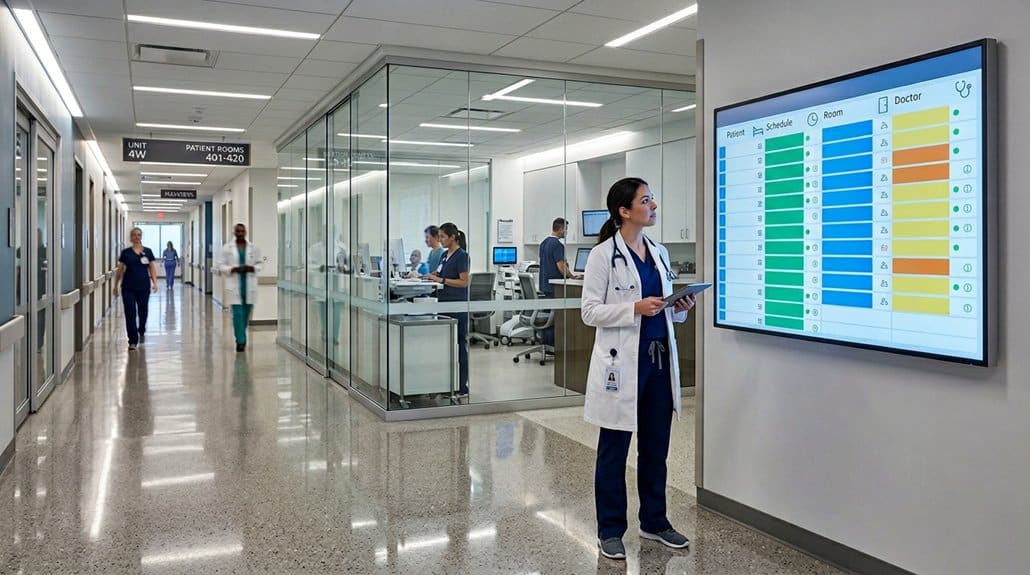
With digital signage, you can effectively enhance doctor-patient communication by providing real-time updates on schedules, ultimately reducing anxiety and building trust. Interactive displays and QR codes streamline check-in processes while offering detailed insights into healthcare professionals, ensuring a smooth experience. By incorporating user-friendly interfaces with color-coded navigation, you optimize patient flow and operational efficiency. These practices not only improve patient satisfaction but also create a more informed healthcare journey, with further insights to discover ahead.
Key Takeaways
- Digital signage provides real-time updates on doctor schedules, reducing patient anxiety and enhancing trust.
- QR codes simplify check-in processes and offer appointments reminders, improving efficiency.
- Interactive displays share detailed bios and specialties, creating connections between patients and healthcare professionals.
- Improved communication through digital signage significantly reduces perceived wait times by up to 35%.
- Monitoring appointment adherence rates assesses the effectiveness and reliability of schedule displays.
How Digital Signage Enhances Doctor-Patient Communication
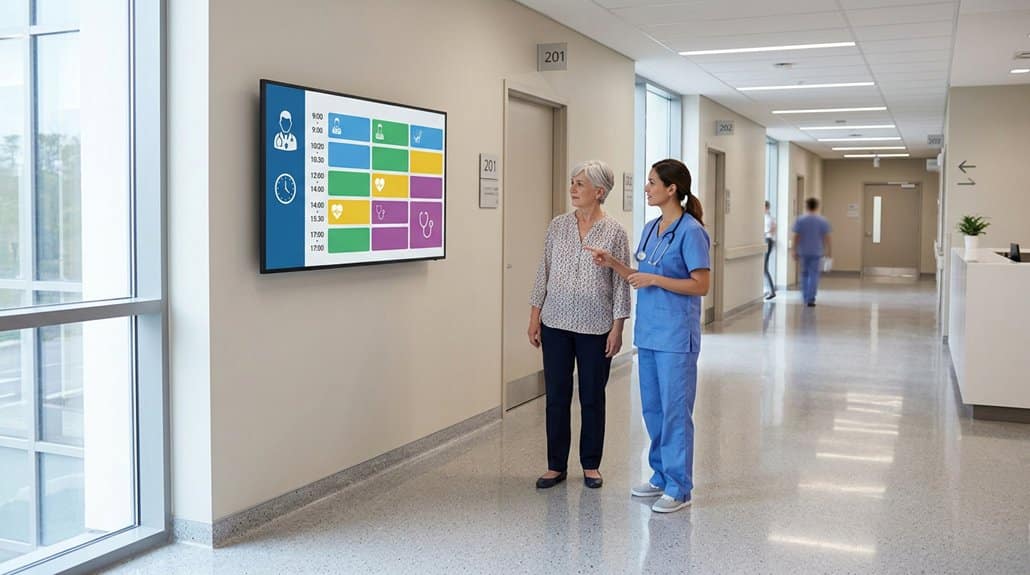
As digital signage becomes increasingly integral to healthcare settings, it’s apparent how greatly it can enhance doctor-patient communication. By utilizing digital technology, you can access real-time updates on doctor schedules and appointment statuses, markedly reducing anxiety about waiting times. Interactive displays empower patients by offering detailed information about the healthcare professionals you’ll be seeing, from photos and specialties to personalized bios, fostering a sense of trust. Additionally, integrating QR codes on these signboards streamlines check-in processes, allowing for virtual progress and providing seamless navigation guidance throughout the facility. Furthermore, while waiting, educational content on these displays can bolster your understanding of healthcare services and wellness tips, ultimately improving treatment outcomes and ensuring a more informed visit.
The Role of Doctor Schedule Boards in Elevating Patient Experience
Digital schedule boards are transforming the patient experience in healthcare facilities through efficiency and engagement. By offering real-time updates on physician availability, these boards help you develop patient familiarity with your healthcare provider before you even meet them. When you see a doctor’s name and specialization displayed clearly, it builds trust and anticipation for your consultation. Additionally, interactive elements, like QR codes, can provide you with appointment reminders or further information on doctors and services, enhancing your understanding of the healthcare process.
Here’s how digital schedule boards elevate patient experience:
- Accurate updates: No more outdated information due to manual entry errors.
- Enhanced communication: Facilitates familiarity with medical staff.
- Engagement tools: Use of QR codes boosts patient interaction.
These advancements make for a more informed and comfortable visit.
Utilizing Real-Time Updates to Reduce Waiting Room Anxiety
When healthcare facilities implement real-time digital signage for updates, they effectively tackle the stress commonly associated with waiting rooms. With real-time notifications on doctor availability and appointment statuses, you experience significant anxiety reduction as uncertainty diminishes. By seeing current wait times and updates on any delays, digital boards promote transparency, alleviating the discomfort of unknowing. Accompanying these displays with calming visuals or ambient sounds can further enhance your waiting experience, making it more pleasant and less stressful. Additionally, the ability to rapidly adjust capacity and streamline patient flow guarantees you receive precise information promptly, without excessive delays. Studies underscore that effective communication through digital signage can reduce your perceived wait times by up to 35%, optimizing comfort during your visit.
Designing User-Friendly Interfaces for Efficient Navigation
Effective interface design for healthcare digital signage hinges on several key principles to guarantee navigational efficiency and user satisfaction. Intuitive navigation is essential; clear and concise layouts enhance patient understanding and minimize confusion. Employ a visual hierarchy to guide patients through interactive touchscreens, allowing them to search by doctor’s name, specialty, or appointment times swiftly. Real-time updates further mitigate patient anxiety.
Implement these strategies to create a user-friendly interface:
- Color-Coded Indicators: Facilitate quicker recognition of departments or specialties.
- Readable Text: Use large fonts and high-contrast colors for accessibility, assisting those with visual impairments.
- Feedback Mechanisms: Provide immediate user feedback for every interaction to enhance confidence.
This design approach guarantees patients access information effortlessly, promoting a seamless experience.
Using Visuals and Messages to Boost Patient Engagement
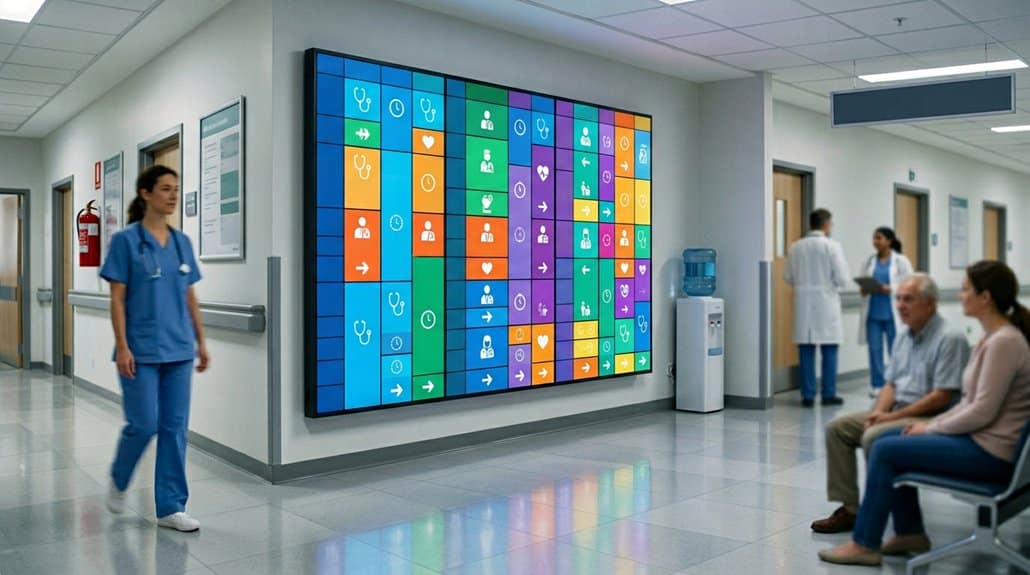
Following well-designed interfaces, the next step is enhancing patient engagement through strategic use of visuals and messages. By displaying clear schedules with visuals, you enable patients to identify their providers easily, fostering calmness and an emotional connection. Personalized messages, like specialties and photos, build trust before the appointment begins. Real-time updates improve transparency, easing wait-time anxiety with visual storytelling.
| Feature | Benefit |
|---|---|
| Clear Schedules | Reduces Anxiety |
| Personalized Messages | Increases Trust |
| Real-Time Updates | Minimizes Uncertainty |
| Health Education | Empowers Patients |
| Dynamic Visuals | Enhances Engagement |
Incorporating health education content alongside schedules can elevate patient empowerment, driving better health outcomes. Transforming doctor schedule boards with dynamic visuals and engaging messaging crafts an interactive tool, boosting satisfaction and patient engagement.
Seamlessly Integrating Doctor Schedules With Hospital Systems
Integrating doctor schedules with hospital systems transforms how healthcare facilities manage and communicate medical appointments. Through effective system integration, digital signage guarantees schedule accuracy, minimizing administrative errors and enhancing operational efficiency. You’ll benefit from automated updates that not only streamline workflow but also empower staff to focus on patient care rather than manual schedule tasks.
Key advantages include:
- Real-Time Updates: Synchronization with hospital management systems provides instant updates on physician availability and appointment changes.
- Enhanced Communication: Digital signage improves inter-departmental communication, providing immediate clarity on clinical availability.
- Patient Empowerment: By incorporating touchless interfaces or QR codes, patients conveniently access updated schedule information, reducing anxiety about wait times.
This strategic integration fosters a more informed, efficient healthcare environment.
Streamlining Patient Flow With Digital Wayfinding
Although charting a healthcare facility can often feel challenging, digital wayfinding systems offer a transformative solution by optimizing patient flow through thorough guidance tools. By enhancing your patient journey, you’re presented with interactive maps and directional guidance that ease navigation challenges. These systems also provide real-time updates on wait times and appointment statuses, reducing patient anxiety and increasing overall satisfaction. Integrated with appointment schedules, they boost operational efficiency, shifting the staff’s focus from managing foot traffic to patient care.
| Feature | Benefit |
|---|---|
| Interactive Maps | Improved navigation |
| Real-Time Updates | Reduced anxiety |
| Integrated Schedules | Enhanced operational efficiency |
| Strategic Digital Directories | Minimized confusion |
| Reduced Wait Perception | Smoother healthcare experience |
This synchronized journey not only directs you effectively to your destination but also guarantees an informed, oriented visit.
Ensuring Trust Through Transparent Communication Practices
With patient flow optimized through digital wayfinding systems, the next step in elevating the healthcare experience involves fostering trust via transparent communication. Digital signage offers transparent scheduling, ensuring patients have instant access to real-time updates on doctor availability. This practice builds trust and mitigates anxiety, providing assurances on wait times and medical consultations.
Transparent scheduling is key to trust building, as patients can easily view up-to-date information about healthcare providers’ schedules and changes, enhancing their overall satisfaction. Furthermore, engaging content on digital boards, like health management tips or appointment reminders, establishes a continuous communication channel between you and your healthcare provider.
- Real-time updates reduce patient anxiety.
- Doctor bios and specialties foster connection.
- Clear schedule changes enhance satisfaction.
Effective Practices for Implementing Digital Schedule Boards
Adopting digital schedule boards can revolutionize patient flow and communication in healthcare settings. By implementing real-time updates on doctor availability, you streamline operations and alleviate patient anxieties. Integrating digital interaction through touch screens enables patients to access appointments and navigate facilities effortlessly. Utilizing data analytics, you can optimize content and placement, ensuring these boards provide immediate updates and are strategically located in high-traffic areas like waiting rooms and lobbies.
Dynamic content enhances communication by conveying policy changes and scheduling updates instantaneously. Encourage patient engagement by supplementing scheduling information with educational materials to create an informative waiting experience. This multifaceted approach not only improves patient experience but also operational efficiency, ensuring everyone remains informed and engaged throughout their healthcare journey.
Key Metrics for Measuring Success and Gathering Feedback
Enhancing patient flow using digital schedule boards sets the stage for evaluating their impact effectively. To measure success, focus on key metrics: tracking patient wait times and appointment adherence. Metrics reveal how well the system reduces perceived wait times—by up to 35%—and maintains schedule efficiency. Gathering feedback post-visit further uncovers patient satisfaction levels with schedule board clarity.
Leverage digital signage analytics to identify high-traffic departments, ensuring ideal board placement for timely updates. Implement feedback mechanisms like QR codes for real-time ratings, aligning content with patient needs. Regularly monitor the frequency of appointment-related inquiries to quantify how effectively digital boards communicate essential information.
- Track patient wait times and appointment adherence
- Analyze department foot traffic for strategic placement
- Use feedback and inquiries as performance indicators
Frequently Asked Questions
How Do Digital Boards Ensure Accurate Real-Time Updates for Doctor Schedules?
You guarantee accurate real-time updates using digital boards through real time synchronization and automated updates. This system instantly integrates schedule changes with existing databases, minimizing errors while keeping everyone informed, leading to efficient and streamlined healthcare operations.
What Are the Data Privacy Concerns With Digital Signage in Healthcare?
Imagine the consequences if patient confidentiality’s breached. You’re concerned, right? With digital signage, data encryption’s your ally, protecting sensitive information. But, encryption alone isn’t enough; consistent vigilance and robust protocols guarantee privacy’s uncompromised amidst technological advances.
How Does Weather or Power Outages Affect the Operation of Digital Schedule Boards?
Weather impact and power reliability are essential for digital schedule boards. If there’s a power outage, boards may become non-functional, disrupting operations. For uninterrupted service, consider backup power solutions and robust weather-resistant installations to guarantee reliability.
Are There Cost Differences Between Traditional and Digital Schedule Boards?
You’ll notice digital boards can save 20% in long-term costs compared to traditional ones. Budget analysis should consider installation costs, but digital options often lead to efficiency and reduced maintenance, offering significant value in healthcare settings.
Can Patients Access Digital Schedule Information Remotely via Personal Devices?
Yes, patients can access digital schedule information remotely using personal devices. This enhances patient convenience by offering remote access, mobile notifications, and boosts digital engagement, enabling seamless interaction with healthcare schedules from anywhere.
Conclusion
By embracing digital signage for doctor schedule boards, you’ll transform patient experience as effortlessly as a river carving its path. Real-time updates alleviate waiting room anxiety, while intuitive interfaces guarantee seamless navigation. Visuals and messages engage patients, guiding them like signposts on a journey. Transparent communication builds trust, enhancing patient satisfaction. Implementing best practices and measuring key metrics will help you refine this digital strategy, securing a successful integration that optimizes healthcare delivery.